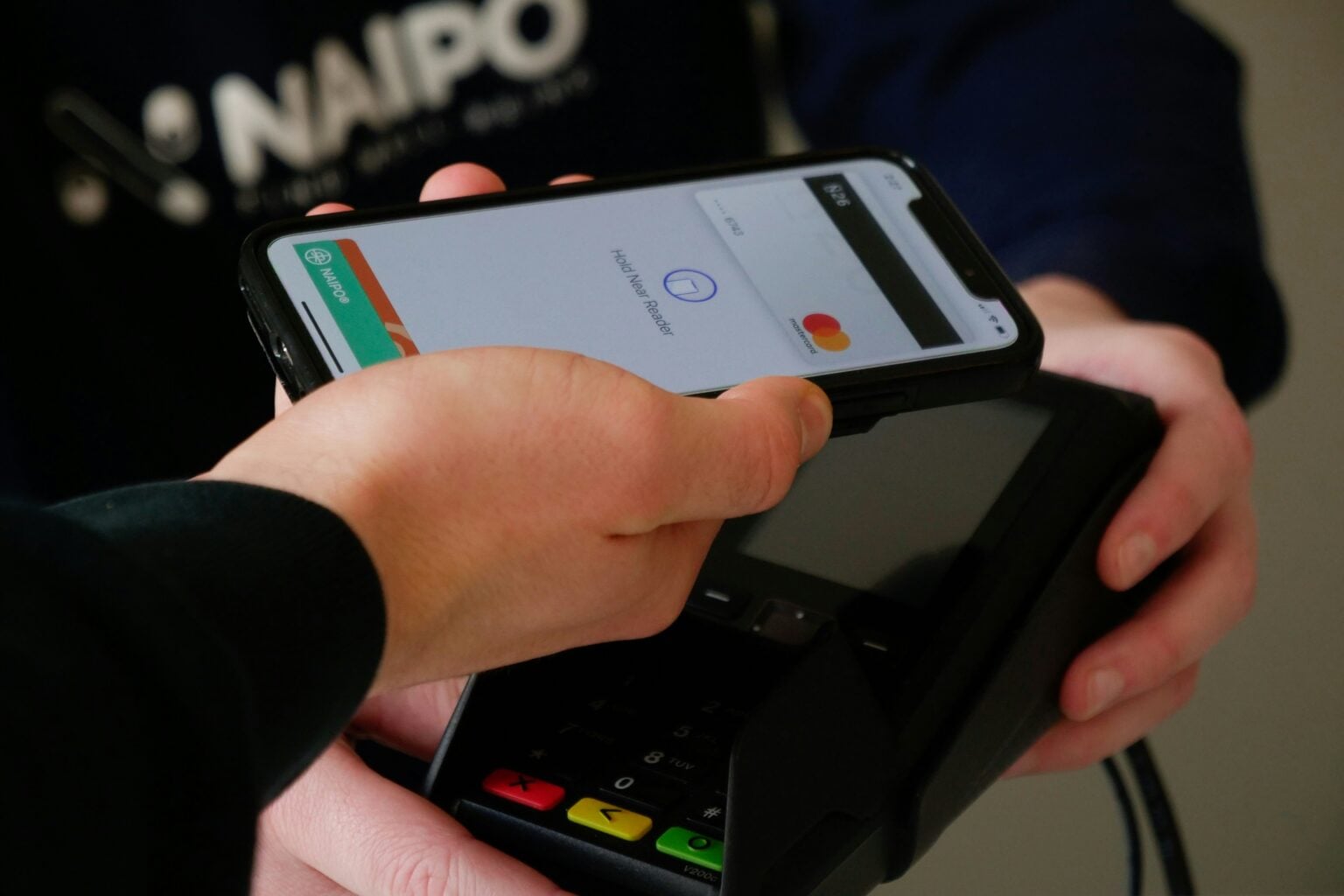

Spain’s tax authorities are now receiving monthly information about Bizum and card payments made to autonomos and businesses.
It comes after an expansion of the Hacienda’s ability to scrutinise the income of the self-employed.
Since January 1, 2026, banks and payment providers have been required to report transactions involving professionals and businesses through the Modelo 170 declaration.
Crucially, there is no minimum payment threshold for reporting under the new system.
That means transactions made through payment systems linked to a mobile phone number, such as Bizum, as well as card payments, can be documented and broken down by the banks for the Agencia Tributaria (AEAT).
The change does not mean that every Bizum received by an ordinary individual automatically becomes taxable income.
But for autonomos and businesses registered to receive payments through these systems, it gives the Hacienda significantly more information with which to compare money received against income declared for tax purposes.
According to business publication Diario A y E, letters have already been sent to self-employed traders asking them to explain discrepancies in their Bizum payments.
Modelo 170 was changed under Royal Decree 253/2025 and Order HAC/747/2025, becoming a monthly declaration covering businesses and professionals using card and mobile-number-based payment systems.
Payments are reported separately according to the method used and identify the business receiving them, with no minimum threshold.
And Modelo 170 is only one part of the information available to Hacienda.
Other banking declarations provide information about accounts, cash payments above €3,000, certain card operations above €25,000 and loans exceeding €6,000, among other financial activity.
Why autonomos could face questions from Hacienda
Tax specialist Luis Miguel Larriba, of LRB Tax and Legal, told Diario A y E that Hacienda can cross-reference information reported under Modelo 170 with an autonomo’s quarterly Modelo 303 VAT declarations.
But the two figures do not necessarily have to be identical.
Modelo 170 records amounts processed through particular payment methods, while Modelo 303 records the taxable bases for VAT purposes.
As a result, there are several entirely legitimate reasons why Hacienda could see a discrepancy.
These include refunds, tips, money collected on behalf of third parties, VAT-exempt transactions and even personal Bizum payments being received through an account or phone number associated with the business.
Be careful mixing personal and business Bizum
One potentially important issue for autonomos is using the same Bizum setup for their personal and professional finances.
If a phone number or account has been registered as belonging to a business, personal payments received through it could potentially be included as business turnover in Modelo 170.
This can create a discrepancy between what the bank reports to Hacienda and what the autonomo actually declares as business income.
Tax experts therefore recommend separating personal and professional Bizum arrangements.
The AEAT can also receive broader information about movements through an account under Modelo 196.
Tips can also cause discrepancies
Tips provide another example.
They do not form part of the taxable consideration for a service for VAT purposes, but they may nevertheless pass through a card terminal or Bizum.
That means they can appear among the amounts reported under Modelo 170 without forming part of the corresponding VAT taxable base.
Refunds can produce a similar problem.
Modelo 170 reflects payment-terminal flows each month, while a refund for VAT purposes requires a corrective invoice and modification of the taxable base.
If a purchase and its subsequent refund occur in different quarters, the figures being compared can therefore temporarily diverge.
Not everything entering your account is necessarily your income
The problem can become more complicated when autonomos receive money on behalf of somebody else.
A gestor, for example, could charge a client €250 but use €60 or €70 of that money to pay a Mercantile Registry fee on the client’s behalf.
Likewise, businesses selling tickets or other products on behalf of third parties may receive the full payment even though only a commission ultimately constitutes their own revenue.
Larriba said there could be ‘hundreds of cases’ in which the amount entering an autonomo’s bank account differs significantly from the income ultimately declared for VAT, IRPF or corporation tax.
VAT-exempt businesses can face another mismatch.
Healthcare services and dental prostheses, for example, can be paid for by card while qualifying as VAT-exempt transactions, meaning the payment may appear in Modelo 170 without generating an equivalent VAT declaration.
What should autonomos do?
The key is being able to explain where the money came from and why the figures reported by a bank might differ from the figures contained in a tax return.
Autonomos are advised to retain their sales and issued-invoice records, card-terminal settlement reports, bank statements, refund records and corresponding corrective invoices, as well as documentation relating to tips, payments made on behalf of clients and VAT exemptions where applicable.
Larriba summarised the principle as keeping clear evidence of the money coming in, the money going out and the invoice issued by the autonomo for the amount they actually retain.
This could prove particularly important because discrepancies between card-terminal receipts reported by banks and VAT declarations are already resulting in checks, according to the tax specialist.
What happens if Hacienda asks questions?
If an autonomo receives a formal request from Hacienda, the advice is to provide the information clearly and in an organised manner rather than simply handing over large quantities of unstructured bank statements, receipts and other documents.
Reconciliation tables accompanied by numbered supporting documents can make it easier to demonstrate why apparently different figures are nevertheless correct.
Ignoring a formal Hacienda request can itself result in a penalty of between €250 and €600 under Article 203 of Spain’s General Tax Law.
Some sectors are particularly exposed to apparent discrepancies, especially businesses combining cash and card payments.
They include bars and restaurants, dental clinics, veterinary practices, hairdressers, retailers and passenger transport businesses, where tips, refunds, different VAT rates, third-party platforms or VAT exemptions can make payment data and declared taxable income look different.