
Households in Spain could save an average of €1,310 per year simply by switching to the cheapest supermarket in their area, according to a major new consumer study.
The latest analysis by the Organisation of Consumers and Users (OCU) found enormous differences between stores selling essentially the same basket of groceries.
The potential saving was even greater in Madrid, where choosing the cheapest supermarket over the most expensive could leave a household as much as €4,381 better off over the course of a year.
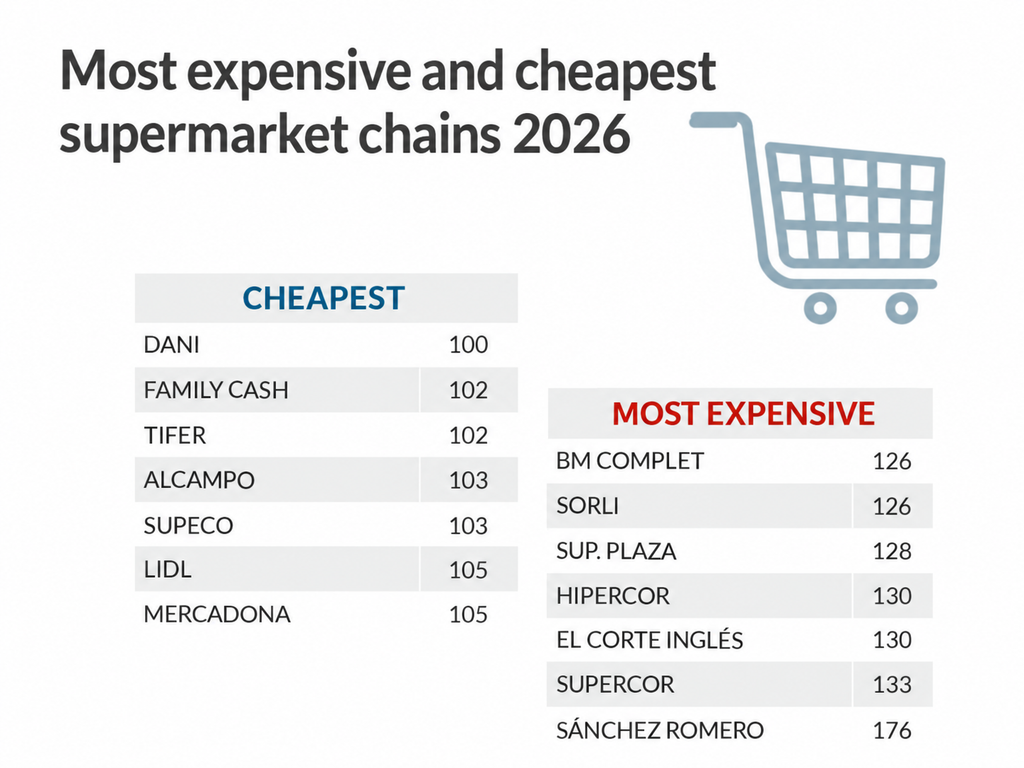
Granada-based chain Dani was named the cheapest supermarket group in Spain, followed by Family Cash and Tifer. Alcampo and Supeco also appeared among the country’s most affordable options.
However, the biggest change concerned German discount giant Lidl.
It was identified as the cheapest supermarket in 60 of the locations studied, compared with just 18 last year, marking a significant improvement in its position.
The OCU also found that the cost of filling a shopping trolley varied considerably depending on where consumers lived.
Torrent, in Valencia, recorded the lowest average prices of all the locations examined.
At the opposite end of the scale were Getxo in Bizkaia and the affluent Madrid municipalities of Pozuelo de Alarcon and Majadahonda.
Barcelona, Bilbao and San Sebastian were meanwhile identified as the provincial capitals with the highest average supermarket prices.
Food prices continue to climb
Although the overall rate of food inflation has slowed, the typical OCU shopping basket was still 1.8% more expensive than last year.
Fresh food prices rose much faster, increasing by an average of 4.7%.
Fish recorded the largest rise and was 8.6% more expensive than a year ago. Meat prices increased by 3.7%, while fruit and vegetables rose by 3.5%.
The figures mean the cost of the OCU’s shopping basket has surged by 39.5% since 2021, placing continued pressure on household budgets despite the recent moderation in inflation.
The organisation conducted its research during April and May, comparing prices at 690 physical supermarkets across 38 Spanish cities as well as online retailers.
Its principal basket contained 244 commonly purchased products, including food, cleaning supplies and personal hygiene items.
The OCU stressed that the ranking should be treated as a guide, because prices and available supermarket chains vary between locations.