It’s not the kind of place you would typically find a Scotsman.
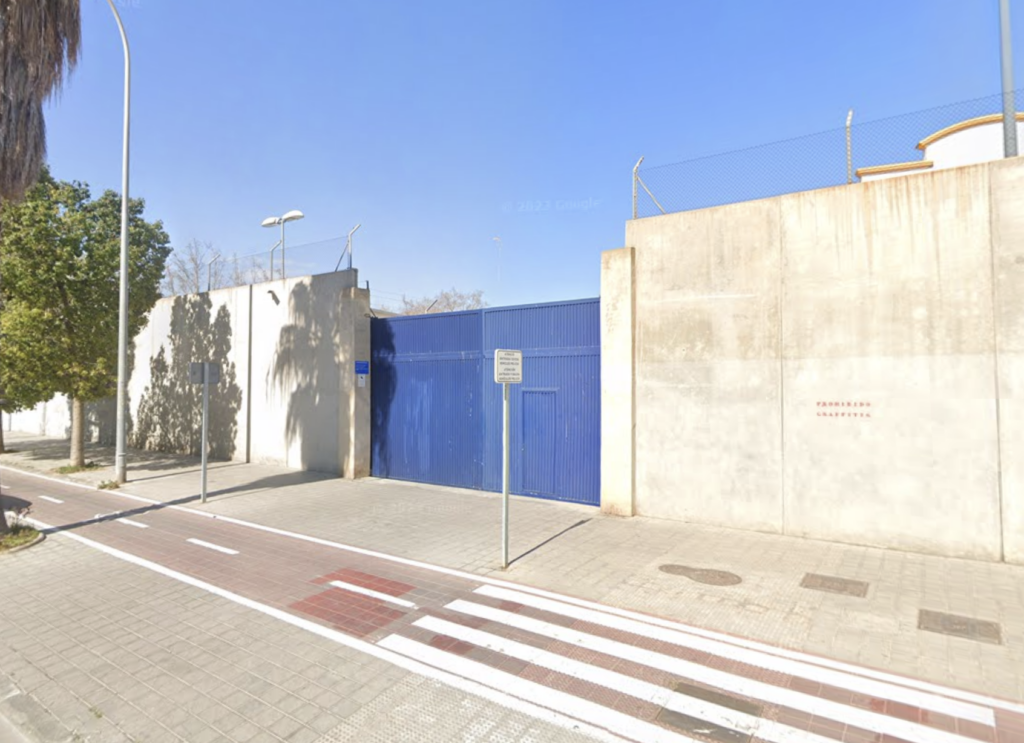
But the immigration detention centre (CIE) in Valencia has been housing James Farquhar for weeks alongside dozens of irregular migrants – with many of them having arrived via boat, and none of them, he claims, speaking English.
The 42-year-old says he has been left ‘in limbo’ for over two weeks after being arrested by immigration officers in Benidorm – where he had been living for the past 10 years.
Unfortunately for Farquhar, he never secured residency and his UK passport had expired.
The Glaswegian is due to be deported, but says his removal has been delayed because of an outstanding allegation relating to an incident at a pub in Benidorm in which a man’s finger was bitten.
He denies any wrongdoing and insists it is a case of mistaken identity.
‘I’m stuck in limbo’
‘I feel that I’m stuck indefinitely, in a state of limbo, in a cell with five other men and with no updates on how long I’ll be in here,’ Farquhar told the Daily Record.
‘I’ve been stuck here for more than two weeks awaiting deportation to the United Kingdom and I’ve been given no updates on how long I could be here.’

He admitted he bears some responsibility for his situation.
‘I allowed my passport to run out and I am over my permitted time in Spain. But the way I’m being treated is totally disproportionate.’
Claims he waived his right to appeal
Farquhar, who says he has lived in Spain for more than a decade working as a graphic designer for bars and restaurants, claims he voluntarily presented himself to police after officers visited his parents’ home in Benidorm.
He says he was told that if he waived his right to appeal his deportation order, he would be removed to the UK more quickly.
‘I agreed to do so and formally waived those rights. Despite this, I remain in detention with no clear timeframe for my removal and very limited information about my case,’ he said.
According to Farquhar, the British Consulate informed him that his deportation is currently awaiting a judicial decision because of the unresolved assault allegation.
He says he has not been convicted of any offence in Spain.
‘This is a scary place’
Farquhar described conditions inside the detention centre as difficult, claiming he is the only English speaker in a unit housing up to 120 detainees and has not yet been assigned a legal aid solicitor.
‘This is a scary place,’ he said, alleging there are frequent tensions between detainees and repeated lockdowns.
‘The conditions aren’t great and neither is the food. But I am terrified I get stuck in here and forgotten about by authorities, who seem to put very little priority on my situation.’
His long-term partner is a legal resident in Spain, but he says his own residency application has been blocked while the criminal allegation remains unresolved.
A spokesperson for the UK’s Foreign, Commonwealth and Development Office (FCDO) confirmed: ‘We are supporting a British national detained in Spain and are in contact with the local authorities.’
Spain’s controversial CIE system
Spain currently has seven Centros de Internamiento de Extranjeros, or CIEs, where foreign nationals can be held while awaiting deportation.
They are officially administrative detention centres rather than prisons, but human rights groups have previously denounced them as opaque, prison-like spaces where people can be deprived of their liberty despite not necessarily having committed a criminal offence.
According to a 2024 report, CIEs had held more than 83,000 people since 2011, yet more than half were ultimately not deported, raising serious questions over why so many people were detained in the first place.
Rights groups have also raised concerns over conditions inside the centres, including allegations of poor food, lack of information, deteriorating mental health, violence, and inadequate medical care.
The Valencia CIE where Farquhar is being held, known as Zapadores, has previously been the subject of complaints by campaigners over conditions and alleged monitoring of visits to detainees.
Stark reminder
The case is a stark reminder of what can happen to non-resident Brits who overstay their 90 in 180 day limit post-Brexit – although Farquhar’s example is on the extreme end.
Unless they hold Spanish residency or another valid long-term visa, UK nationals can only spend 90 days within any rolling 180-day period in Spain and the rest of the Schengen Area.
Those who overstay risk being fined, issued with an order to leave the country, detained by immigration authorities or, in more serious cases, deported and handed a temporary ban on re-entering the Schengen zone.
While Farquhar’s case is complicated by an unresolved criminal allegation – which he denies – his detention also highlights the additional difficulties that can arise if a Brit is found to be overstaying without valid travel documents or legal immigration status.
Anyone approaching their 90-day limit should ensure they leave the Schengen Area in time or obtain the appropriate residency or visa before their permitted stay expires.