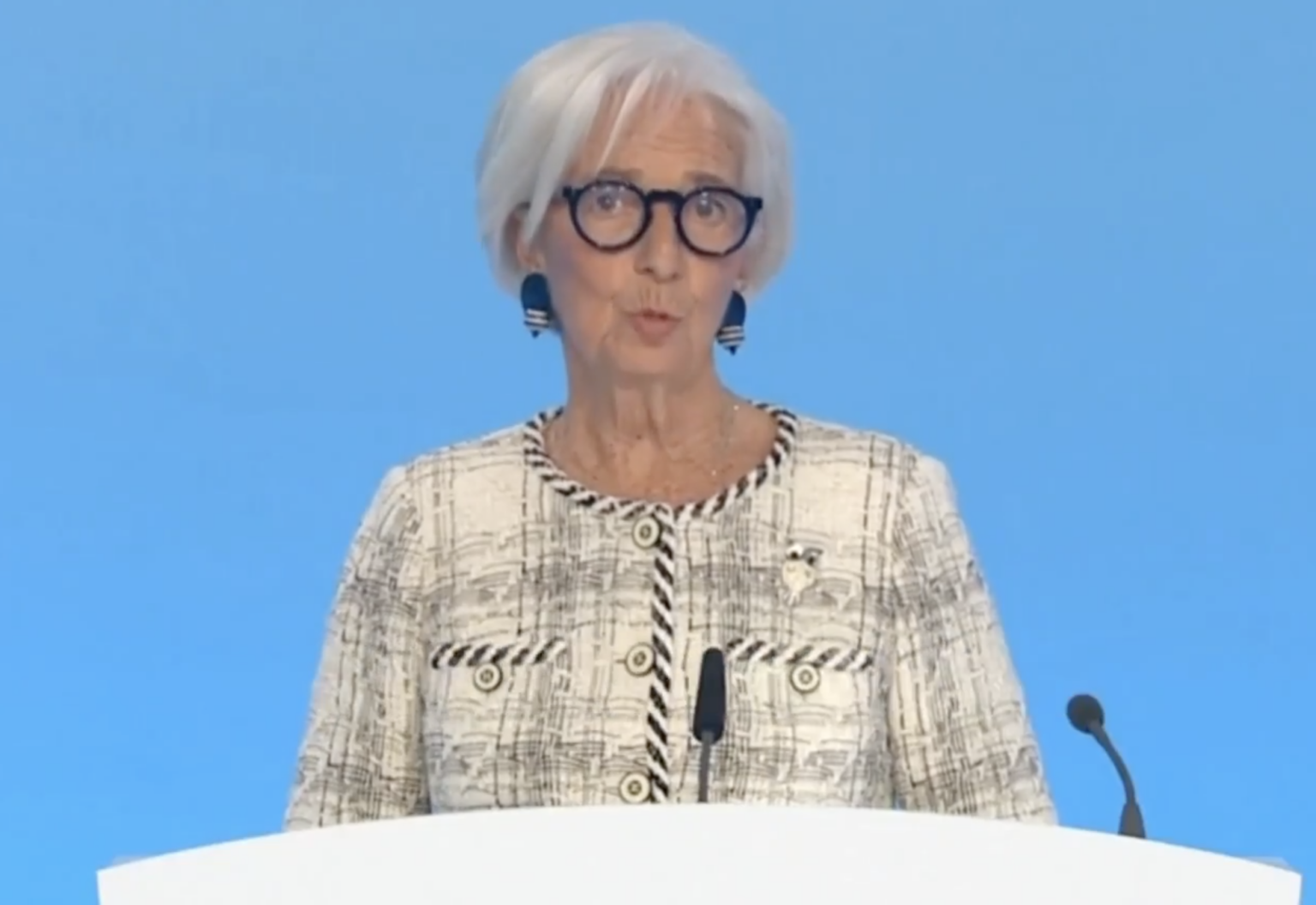

The European Central Bank (ECB) has raised interest rates for the first time in almost three years, warning that the conflict in Iran is pushing up energy prices and creating fresh inflation risks across the eurozone.
The ECB announced a 0.25 percentage point increase in its key deposit rate, taking it from 2.0% to 2.25%.
The move, which had been widely expected by economists, marks a significant shift after years of stable or falling borrowing costs and reflects growing concerns over the economic impact of turmoil in the Middle East.
From June 17, the ECB’s main refinancing rate will rise to 2.4%, while the marginal lending facility rate will increase to 2.65%.
The bank said the war in the region is creating strong inflationary pressures, primarily through rising energy costs, and that tighter monetary policy is necessary to prevent those increases from becoming entrenched across the wider economy.
ECB president Christine Lagarde said the decision was approved unanimously by the Governing Council.
She also dismissed speculation that policymakers had considered a larger rate hike, stressing that the quarter-point increase was the only option discussed.
Lagarde said future decisions would be taken on a meeting-by-meeting basis and would depend on incoming economic data.
The ECB has simultaneously revised its economic forecasts, painting a more pessimistic picture for both inflation and growth.
The bank now expects inflation across the eurozone to average 3% in 2026, up from previous estimates, largely due to the impact of higher energy costs filtering through to food, goods and services.
Inflation is now not expected to return to the ECB’s 2% target until 2028.
Economic growth forecasts have also been downgraded.
The ECB now expects the eurozone economy to grow by just 0.8% in 2026, while growth in 2027 has been cut to 1.2%.
The central bank warned that prolonged disruption to energy supplies, further instability in financial markets, trade tensions or interruptions to major shipping routes could weaken growth even further.
Despite the gloomier outlook, Lagarde pointed to some positive signs.
She noted that domestic demand and exports had supported economic activity earlier this year, while increased spending on defence and infrastructure could help offset some of the economic damage caused by the conflict.
Among the eurozone’s largest economies, Spain continued to outperform its neighbours in the first quarter, recording growth of 0.6%, compared with 0.3% in both Germany and Italy. France, meanwhile, contracted by 0.1%.
The ECB said the coming months will be crucial in determining whether the inflation shock remains temporary or develops into a more persistent problem for European households and businesses.
What it means for homeowners in Spain
If you have a variable-rate mortgage in Spain, a hike of the ECB rate is generally bad news.
Spanish variable mortgages are usually linked to the Euribor, which tends to follow ECB interest rate movements.
If the ECB is entering a rate-hiking cycle, Euribor could rise, pushing up monthly mortgage repayments when your loan is next reviewed.
If you have a fixed-rate mortgage, there is no immediate impact on your monthly payments. However, anyone looking to remortgage or take out a new loan may face higher borrowing costs.
For prospective buyers, higher rates typically mean more expensive mortgages, lower borrowing capacity, tougher affordability calculations by banks and potentially less competition among buyers.