
A British child born and raised in Spain is at the centre of a legal challenge after immigration authorities refused his residency application, citing his mother’s financial circumstances.
The seven-year-old, who has lived in Spain his entire life, resides with his mother in l’Alfas del Pi in Alicante province.
He is enrolled in school locally and has been diagnosed with Autism Spectrum Disorder (ASD), requiring ongoing educational and healthcare support.
The case is due to be heard on June 16 at Alicante’s Administrative Court, where a judge will examine whether the residency refusal was lawful.
The boy’s mother, a British national identified as J.A.M.B., has been living legally in Spain since 2019.
She holds a Foreign Identity Card (TIE) issued under the Brexit Withdrawal Agreement, which protects the residency rights of UK citizens who were living in Spain before the UK’s departure from the European Union.
Despite this, Spain’s immigration office in Alicante rejected the residency application submitted on behalf of her son, arguing that certain financial requirements had not been met.
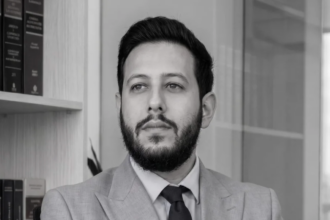
The family’s lawyer, Alvaro Vico, argues that the decision is based on an incorrect interpretation of the law and that the child should not be treated as a standard residency applicant.
‘This case is not simply about a residence permit,’ Vico told regional newspaper El Periodico.
‘It is about whether the administration can overlook rights that are recognised under the Withdrawal Agreement by applying requirements that, in our view, do not apply in these circumstances.’
According to the legal team, the child’s residency rights stem directly from his mother’s protected status under the agreement and should not be subject to the same economic criteria imposed on first-time applicants under EU residency rules.
Vico added that decisions involving children who derive their rights from parents protected by the Withdrawal Agreement must be handled with particular care and in accordance with European law.
After the initial application was refused, the family lodged an administrative appeal, which was also rejected. They subsequently took the matter to court, where the case has now been formally accepted for consideration.
Alongside the immigration dispute, the family says they have faced difficulties securing the support the child requires for his autism diagnosis. The mother has submitted evidence relating to her son’s schooling, social integration, family stability and the resources available to meet his needs.
A complaint has also been filed with the Valencian Ombudsman, the Síndic de Greuges, requesting an investigation into what the family describes as a lack of response from education authorities despite medical and educational reports outlining the child’s specific support requirements.
‘I’m not asking for special treatment for my son or for myself,’ the mother said. ‘I simply want our rights to be respected and for the authorities to listen to our situation.
‘For years I have tried to obtain the help, information and support my son needs. I’ve done everything I can as a mother, but there comes a point when one person cannot do any more.’
The family’s legal team maintains that immigration officials applied financial requirements too rigidly and failed to properly consider both the protections offered by the Withdrawal Agreement and the individual circumstances of the child.
The case will be heard in Alicante on June 16.