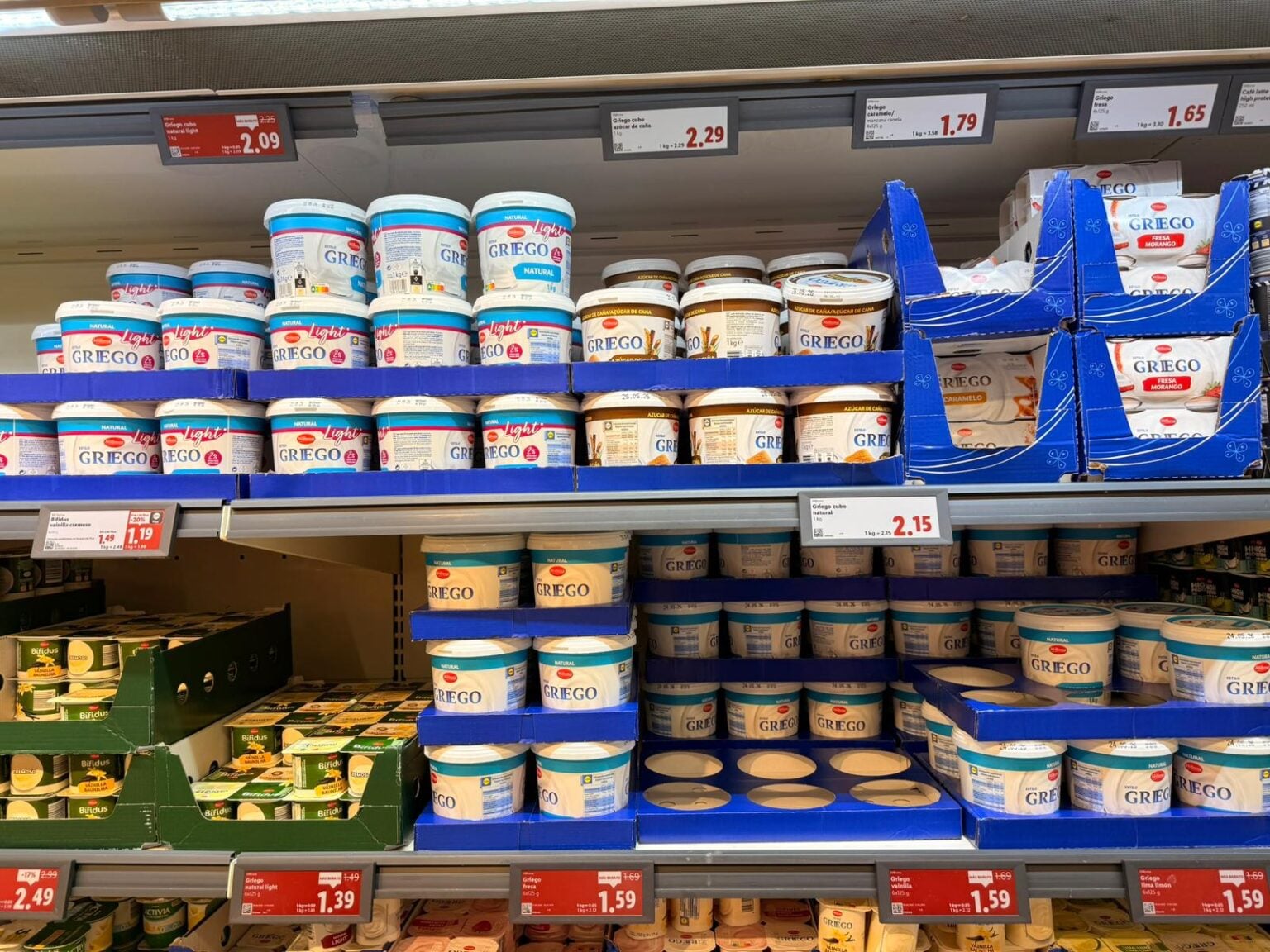

If you regularly pick up ‘Greek yoghurt’ in Spain thinking it’s the real thing, you might want to take a closer look at the label.
Most of the products sold in Spanish supermarkets are not actually authentic Greek yoghurt. Instead, they are labelled ‘estilo griego‘ – or ‘Greek-style’ – which means they are made using a different process.
At first glance, the difference isn’t obvious. The texture is thick, the taste is creamy, and the packaging often leans heavily on Mediterranean imagery. But nutritionally, they’re not the same.
What’s the difference?
Authentic Greek yoghurt is made by straining regular yoghurt to remove whey.
This process concentrates the product, giving it its characteristic thickness while naturally increasing its protein content and reducing sugar.
‘Greek-style’ yoghurt, on the other hand, is often thickened using added cream, milk powder or stabilisers. It mimics the texture, but not the traditional production method.
Because it’s strained, real Greek yoghurt is typically higher in protein. This makes it more filling and beneficial for muscle maintenance and overall satiety.
Greek-style versions often contain less protein and more fat, but it all depends on how they’re made, which makes checking the label important.
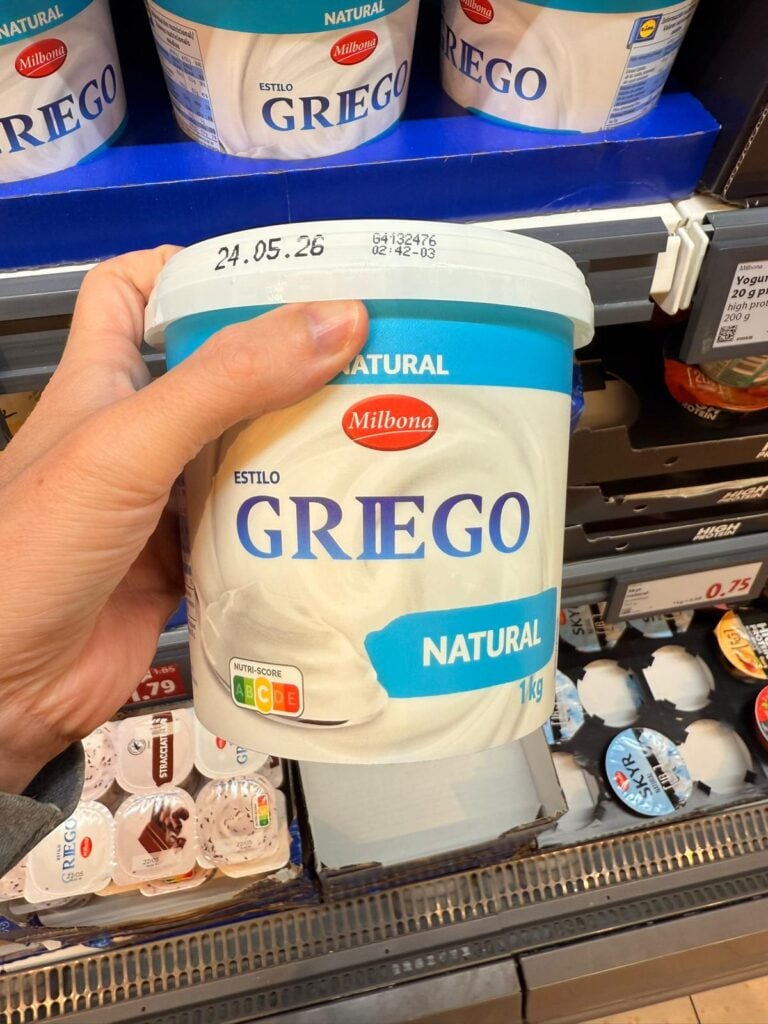
Authentic Greek yoghurt tends to be lower in natural sugars because some of the lactose is removed with the whey. Greek-style products can contain higher sugar levels, especially if ingredients are added to improve taste and texture.
Another key factor is probiotics, as traditional Greek yoghurt contains live cultures that support gut health.
While some Greek-style yoghurts also include these, the added processing and ingredients can reduce their presence or effectiveness.