Spain’s ruling PSOE party is facing a crisis amid an ongoing corruption scandal, multiple sexual harassment allegations and a series of high-ranking resignations
Javier Izquierdo, a senior member of the party’s current leadership and a key ally of Prime Minister Pedro Sanchez, is the latest to leave.
Izquierdo, who was responsible for Studies and Programmes on the PSOE’s Federal Executive Committee, stepped down on Thursday, before announcing the move in a post on X.
He said he had informed the party leadership of his decision to resign both from the executive and from his seat in the Senate.
He framed the move as a personal choice, citing the desire to pursue ‘other professional and personal tasks’, and thanked the party after ‘years in public and organisational roles.’
According to party sources cited by El Pais, however, the real reason is the emergence of a new allegation, although no other details on this claim have emerged.
His resignation comes at a particularly sensitive moment for the PSOE, which has faced mounting criticism over how it has handled internal complaints in recent months.

Who is Izquierdo?
A senator since July 2023, Izquierdo was one of the few remaining figures from the team that surrounded PM Sanchez after his return to the party leadership following the 2017 primaries.
His sudden exit raised eyebrows inside the party. According to colleagues quoted by El País, Izquierdo left the PSOE leadership’s WhatsApp group at 6.41pm on Thursday, having already missed several engagements earlier in the day, including a breakfast meeting in Brussels-linked circles and a local party assembly in Valladolid.
Izquierdo has held a long list of senior posts. He served as PSOE general secretary in Valladolid between 2012 and 2017, later joining the federal executive as secretary for training, and then as secretary for strategy and electoral action.
In the current legislature, he was a senator for Valladolid, spokesman on housing and urban agenda issues, vice-spokesman on interior affairs, and a member of several parliamentary committees.
His resignation follows closely on the heels of another high-profile departure: that of Jose Tome, president of the Lugo provincial council and PSOE provincial secretary, who stepped down just a day earlier. The party is now attempting to draw a line under the controversy.
On Friday, the PSOE scheduled the first press conference of Rebeca Torro since she took over as secretary of organisation in July, replacing Santos Cerdan.
The move is seen as part of an effort to stabilise the party after criticism over its handling of harassment complaints against Francisco Salazar, a former senior PSOE and Moncloa figure.
The Salazar scandal
Salazar was forced out of the executive before a key party meeting on the weekend of December 6, after allegations surfaced, including questions over why formal complaints had gone unaddressed for months.
The allegations against Salazar first surfaced in early 2025, when several women linked to the PSOE filed formal complaints describing behaviour they considered to be sexual harassment and inappropriate conduct in a professional and party setting.
These complaints were submitted to the PSOE’s internal anti-harassment office, the body responsible for assessing and acting on such cases.
According to party sources, the complaints remained unresolved for around five months, during which time no effective action was taken.
During this period, Salazar continued to hold influence within the party and government orbit. In July 2025, despite the existence of these unresolved complaints, he was being lined up for promotion as one of the deputy secretaries under the newly appointed PSOE organisation secretary, Rebeca Torró.
The situation escalated publicly in late November and early December 2025, when details of the complaints and the delay in addressing them became known inside the party.
The revelation triggered anger among party members and equality officers, particularly over the fact that the anti-harassment mechanism had failed to act for months. An emergency videoconference was held in the first week of December, during which senior figures acknowledged the breakdown in internal procedures.
Facing mounting pressure, Salazar stepped aside from his intended role before a key meeting of the PSOE’s Federal Committee, the party’s highest decision-making body between congresses. His withdrawal was confirmed publicly shortly afterwards, marking the first visible consequence of the scandal.
In the days that followed, the fallout widened. This week the PSOE announced internal meetings to review its handling of harassment complaints, while senior figures began to resign, including Javier Izquierdo.
The party’s equality secretary, Pilar Bernabe, convened an in-person meeting at PSOE headquarters to address the failures exposed by the Salazar case and to promise changes to internal safeguards.
Salazar has not been criminally charged, and the case remains an internal party matter.
However, the combination of the original allegations, the months-long delay in responding to them, and the attempted promotion despite unresolved complaints has turned the episode into one of the most damaging internal crises the PSOE has faced in recent years.
The Koldo case continues
It comes amid the so-called Koldo case, which is one of the most damaging corruption scandals to hit the PSOE in recent years.
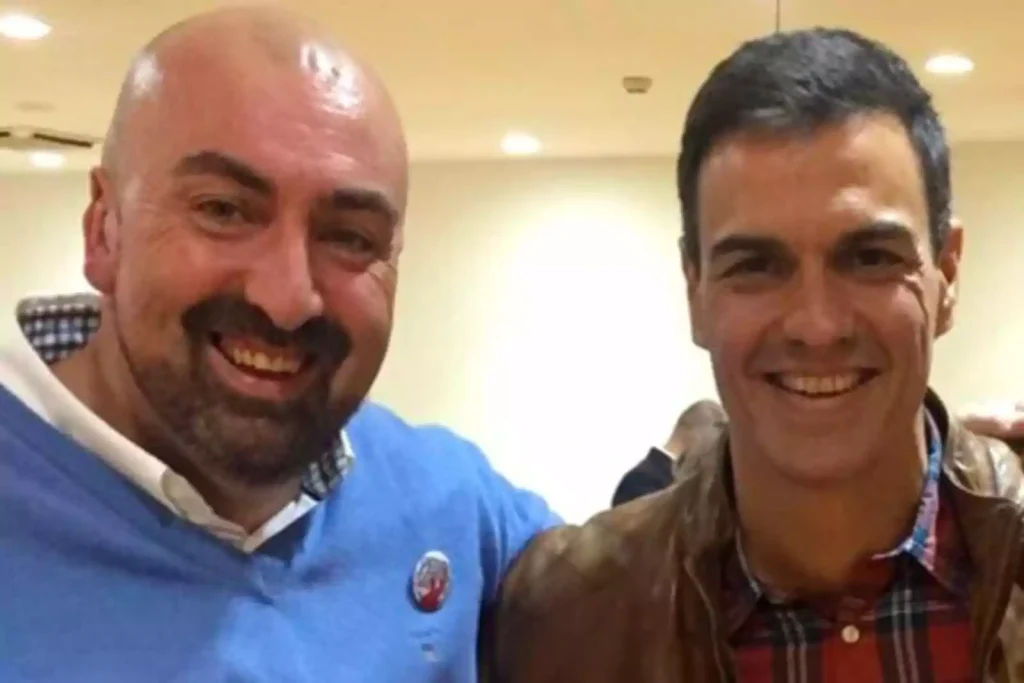
At its core, the investigation centres on alleged irregularities in public contracts awarded during the Covid-19 pandemic, with possible political influence reaching into the highest levels of government.
The case takes its name from Koldo García Izaguirre, a former adviser and close aide to Jose Luis Abalos, who served as Spain’s transport minister and was one of PM Sanchez’s most trusted allies until his dismissal in July 2021.
The investigation was triggered by contracts awarded in 2020 and 2021 for the emergency purchase of face masks and other medical supplies at the height of the pandemic.
Prosecutors suspect that commissions were paid in exchange for facilitating contracts through public bodies, particularly Puertos del Estado and Adif, both dependent on the Ministry of Transport.
In February 2024, the Guardia Civil arrested Koldo García, accusing him of acting as an intermediary between suppliers and public officials. Investigators allege that García received kickbacks and channelled influence using his proximity to Abalos.
THe fallout is wide and ongoing as it continues to make its way through the courts.
Read more Spain news at the Spanish Eye.