

Brits heading to Spain this summer are being warned that overstaying rules will be enforced far more strictly.
It comes after EU’s new biometric border system flagged at least 7,000 travellers who stayed beyond the permitted 90 in 180 days during its first months in operation.
According to a new European Commission report on the state of the Schengen zone in 2026, the bloc’s Entry/Exit System (EES) is now fully operational across all external Schengen borders.
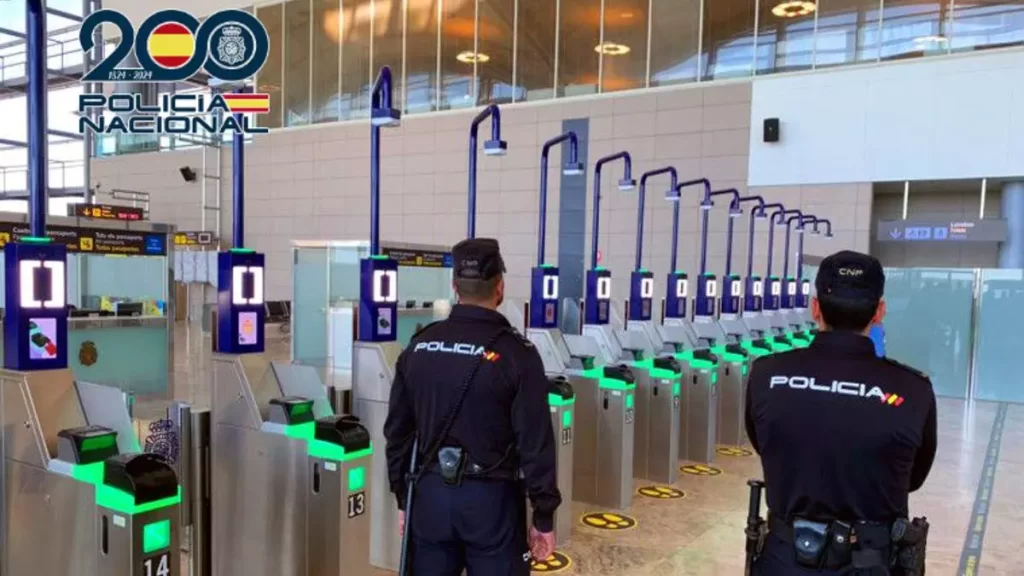
The digital system replaces traditional passport stamping with biometric tracking, automatically recording the facial images, fingerprints, entries and exits of non-EU visitors travelling into countries including Spain, France, Italy and Portugal.
European authorities say the system has already processed more than 60 million border crossings since its rollout began and has identified around 7,000 people accused of overstaying their permitted time inside the Schengen area.
Officials also revealed that approximately 32,000 travellers were denied entry during the same period.
The changes are expected to have major implications for British second-home owners, retirees and long-stay visitors to Spain, many of whom continue to rely on the post-Brexit 90-day rule allowing non-EU citizens to spend up to 90 days within any rolling 180-day period inside the Schengen zone.
Under the old system, overstays were often difficult to monitor consistently because checks relied heavily on manual passport stamps.
However, EES now digitally records every border crossing in real time, making it significantly easier for authorities to detect anyone who exceeds the limit – even by a short period.
The Commission said the system is designed to strengthen security, reduce document fraud and crack down on illegal stays within Europe.
It comes ahead of the planned launch of ETIAS later this year – the EU’s new online travel authorisation scheme for visa-exempt visitors including Britons, Americans and Canadians.
The ETIAS system will function similarly to the US ESTA programme, requiring travellers to apply online for approval before boarding flights or ferries to Europe.
Airlines and transport operators will also be legally required to verify passengers have valid ETIAS authorisation before allowing them to travel.
Despite the security benefits touted by Brussels, the rollout of the EES system has not been entirely smooth.
The European Commission admitted several countries experienced operational problems during peak travel periods, including long queues, technical issues at self-service biometric kiosks and delays during fingerprint and facial recognition procedures.
Travellers using major European transport hubs such as Paris Charles de Gaulle and Frankfurt Airport have also been warned to allow additional time for connections due to possible border bottlenecks.
The report noted that Europe is moving decisively towards a fully digitised border control system, warning that the era of relaxed and lightly enforced travel limits inside the Schengen zone is rapidly coming to an end.