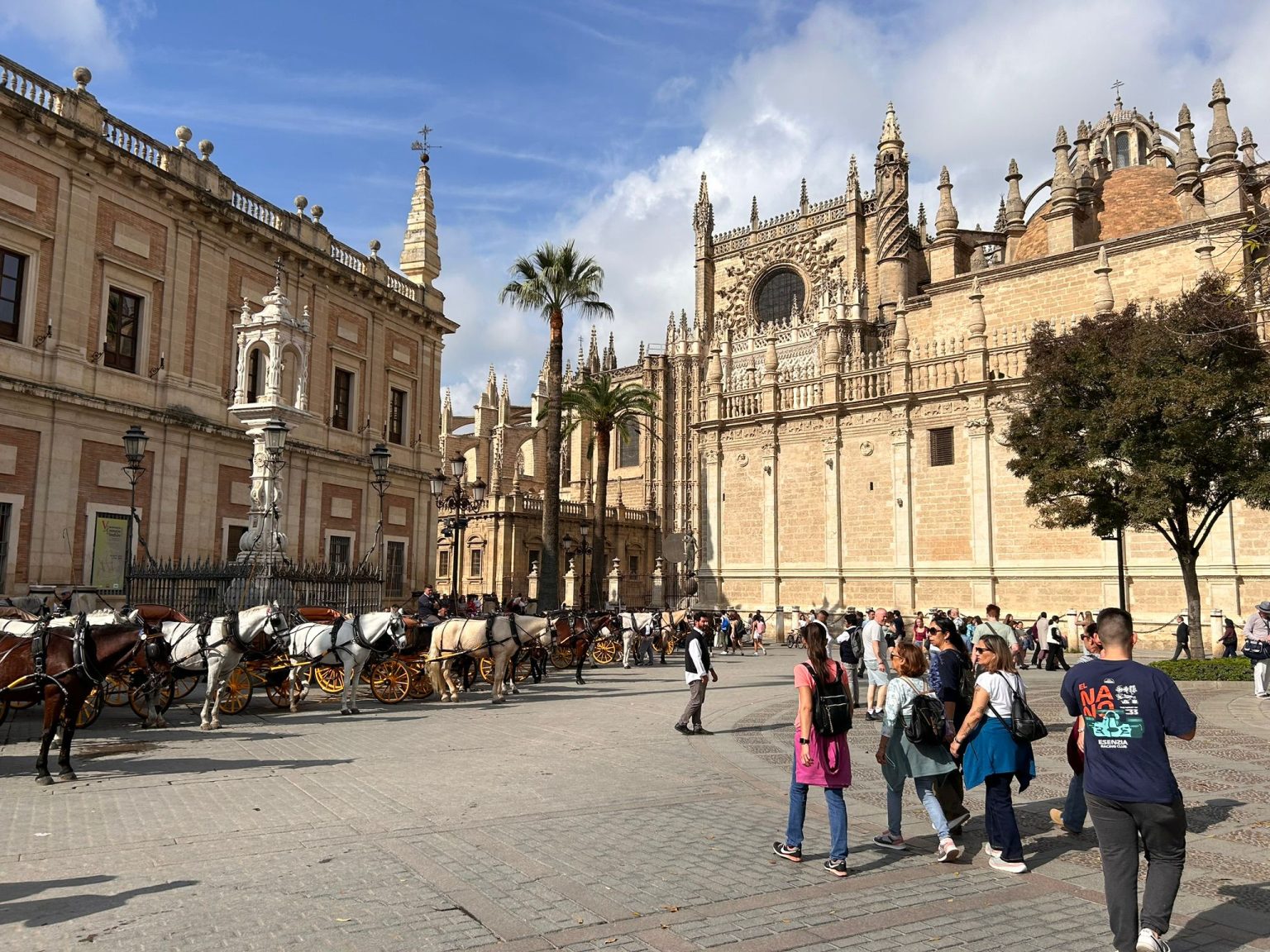

Tour guides in Sevilla have warned the city is becoming a ‘circus’ overwhelmed by mass tourism, illegal operators and out-of-control tour groups, despite repeated promises from the council to crack down on the chaos.
Industry professionals say the historic Andalucian capital is now at risk of ‘dying from success’ as overcrowding, noise and unregulated tourism continue to spiral across the city’s most famous areas.
Under rules promoted by Sevilla City Council over the past two years, tourist groups should be limited to a maximum of 30 people, while guides are supposed to use audio headsets instead of loudspeakers or amplification systems.
Visitors are also expected to respect residents’ rest hours, avoid blocking entrances to buildings and support local businesses.
Special restrictions were even introduced in the iconic Santa Cruz district, the heart of Sevilla’s tourism industry, following agreements between the council and major tourism companies.
But guides claim the reality on the ground is very different.
‘It is becoming uncontrollable,’ warned Enrique Dueñas to El Correo, president of Auits, Sevilla’s main tourist guide association.
‘There is less and less regulation and lower-quality tourism. It’s a circus and the image of the city is being damaged.’
Dueñas said guides repeatedly hear promises from local authorities about ‘quality tourism’, but claimed there is little enforcement.
He accused illegal ‘free tour’ operators of flooding the city with unlicensed guides working for tips, often without proper tax controls or accreditation.
‘It’s a totally precarious situation,’ he said. ‘Many young people accept it because they feel it’s the only way to work.’
Tour guides also claim bots are buying up tickets for major attractions including Sevilla Cathedral and the Alcazar, making it increasingly difficult for legitimate operators to secure access for visitors.
One anonymous guide described the situation in Sevilla’s historic centre as ‘a jungle where everyone does what they want’.
He claimed police are overstretched and often unable to intervene when groups break the rules.
‘We constantly see groups larger than 30 people, guides using loudspeakers and people without accreditation leading tours,’ he said.
The rise in bike tours has become another major flashpoint.
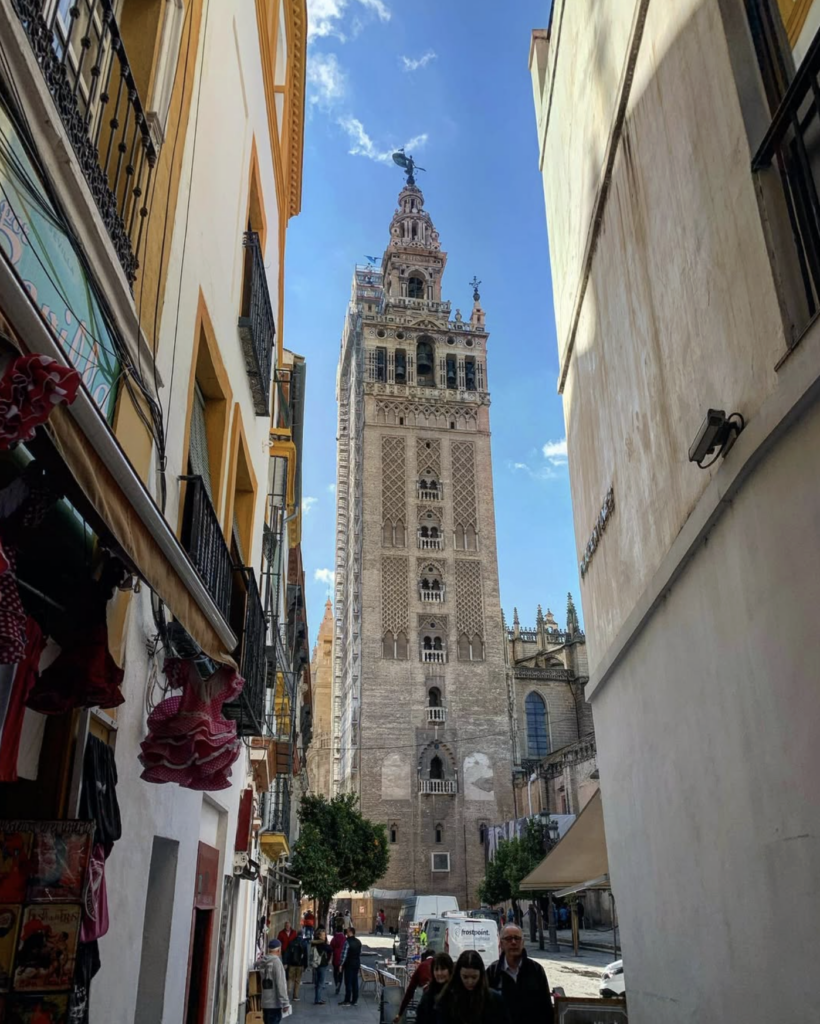
Guides say huge groups of cyclists regularly clog narrow streets and ignore regulations.
‘It sounds healthy and modern, but many are not qualified guides at all,’ Dueñas added.
The Sevilla council insists it is working closely with the sector through regular tourism governance meetings and says measures have already been introduced to combat ticket resale scams and suspicious mass purchases.
Officials also defended local policing efforts, although guides insist the number of officers has failed to keep pace with the tourism boom.
The complaints come as Sevilla continues to experience record visitor numbers and prepares to open dozens of new hotels across the city.
But many working within the industry fear the city risks sacrificing quality for quantity.
‘We are heading towards more tourism but worse tourism,’ one guide warned.
Read more Andalucia news at the Spanish Eye.