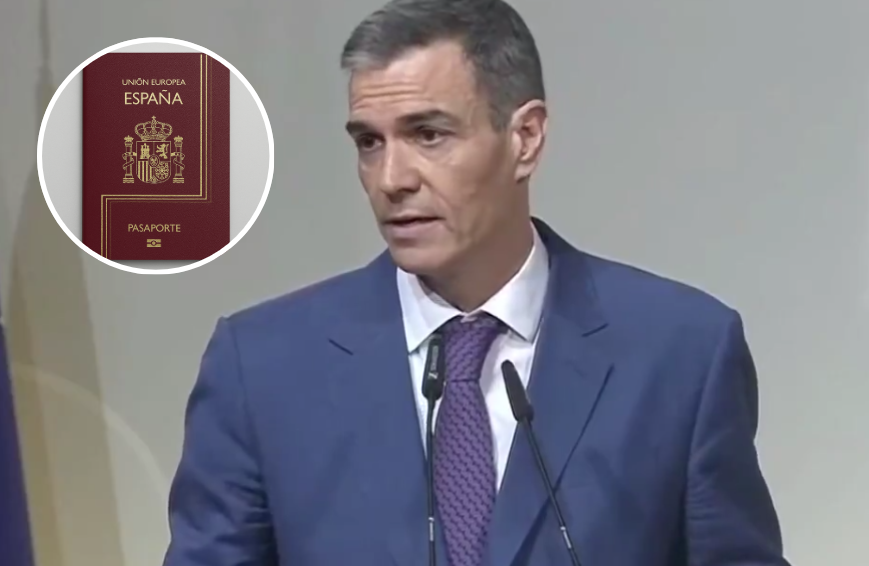

Spain has granted citizenship to 170 descendants of the men and women who risked – and often gave – their lives fighting fascism during the Spanish Civil War.
The move recognises the legacy of the International Brigades, made up of thousands of volunteers from across the world who came to Spain between 1936 and 1939 to support the Republican cause against the uprising led by General Franco.
Among them were around 2,500 British volunteers, including poets, trade unionists, students, miners and war veterans.
Many joined the British Battalion of the XV International Brigade and fought in some of the war’s bloodiest battles, including at Jarama, Brunete, Teruel and the Ebro. An estimated 500 never returned.
Now, nearly 90 years on, Spain has opened the door to their descendants – in what’s seen as a symbolic reversal of the discrimination and vilification the brigadistas once faced.
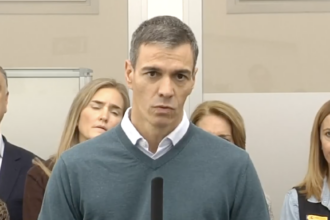
At a ceremony in Madrid granting citizenship to the first 170, prime minister Pedro Sanchez said: ‘It will be an honour to call them compatriots. We call for the defence of the same democracy as they did at a time when it is under threat around the world.’
Honouring a legacy
This offer is part of Spain’s Democratic Memory Law, approved in 2022, which aims to ‘recognise and repair’ the victims of Francoism and honour those who defended democracy during the Civil War.
The law specifically allows descendants of International Brigade fighters to apply for Spanish citizenship without the need to renounce their current nationality – a significant shift from earlier, more restrictive nationality rules.
The announcement was welcomed by organisations such as the International Brigade Memorial Trust (IBMT) in the UK, which preserves the memory of British volunteers.
Many see the measure not only as a long-overdue gesture of gratitude, but also a chance for families to reconnect with the country their relatives died defending.
Who can apply?
To qualify, applicants must prove that they are direct descendants of someone who fought in Spain as part of the International Brigades.
Spanish officials are reportedly working to simplify the process for descendants, particularly those from the UK, US, Ireland, Canada and Australia – where the brigades drew many of their recruits.
The law also allows Spanish citizenship to the descendants of Spaniards who fled the country due to the Civil War or dictatorship, many of whom settled in Latin America.
British battalion: a history of courage
The British contingent of the International Brigades attracted volunteers from all walks of life. Notable names included the writer George Orwell, who wrote Homage to Catalonia based on his experiences, and Jack Jones, who later became one of Britain’s most influential trade union leaders.
Some had military experience from World War I. Others, including working-class volunteers from cities like Liverpool, London, Glasgow and Manchester, joined out of a deep ideological commitment to anti-fascism and social justice.