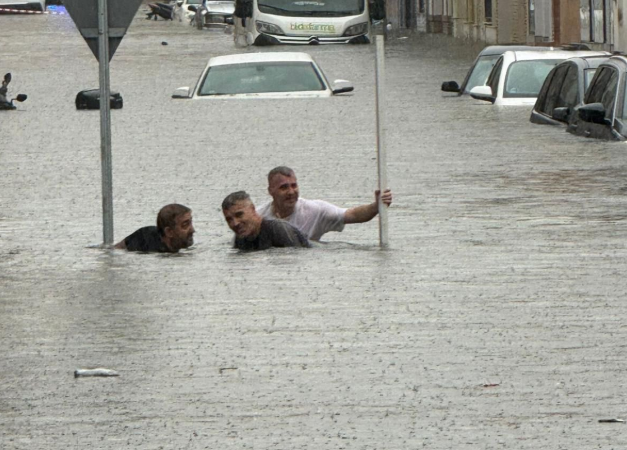

Sevilla has recorded the highest daily rainfall in its history, with the municipal water company Emasesa confirming that 115 litres per square metre fell between midnight and 3pm on Wednesday.
At peak intensity, the storm delivered 25 litres in just one hour, according to the city council.
The torrential downpour caused over 600 incidents across the city, overwhelming stormwater tanks and paralysing traffic in multiple areas.
‘In just one hour, Sevilla received around 20% of its average annual rainfall,’ the City Council noted on X.
State weather agency Aemet confirmed that the volume of rain exceeded anything on record at Sevilla Airport’s official weather station – a record-keeping site since 1951.
Remarkably, the 115 litres fell within 13 hours, smashing the city’s previous daily record of 109.3 litres, set in November 1997.
While Wednesday’s storm broke records for rainfall volume, its impact has so far been less severe than the devastating 1997 floods, which led to mass evacuations across the province.
Back then, swollen rivers – including the Guadalquivir and the Genil – burst their banks in December, forcing around 1,000 people from their homes, especially in the town of Ecija. The flooding was worsened by simultaneous snowmelt in the mountains.
This week’s disruption has not reached those levels, but it did cause major traffic and transport chaos, especially in Sevilla and Huelva.
Rail services between the two provinces were suspended due to severe weather, including a reported waterspout off the Huelva coast.
In Sevilla, key roads like Ronda del Tamarguillo, Kansas City Avenue, and the SE-20 ring road were completely submerged. On Reyes Catolicos street, a passer-by rescued a man trapped inside his flooded car.
Emergency Services Stretched
By 4pm, Sevilla’s local police control centre had logged 228 incidents, including:
- 59 flooding reports
- 55 traffic disruptions
- 34 fallen tree branches
- 8 rescues
- 4 traffic accidents
City parks and the municipal cemetery were closed pre-emptively on Tuesday evening as part of the emergency response.
The Territorial Emergency Plan was activated in its pre-alert phase, and a large-scale deployment of police, fire services, and civil protection units was mobilised.
As the rain eased, traffic conditions began returning to normal, but local authorities have warned that further showers could still cause localised problems as ground saturation remains high.
Read more Andalucia news at the Spanish Eye.