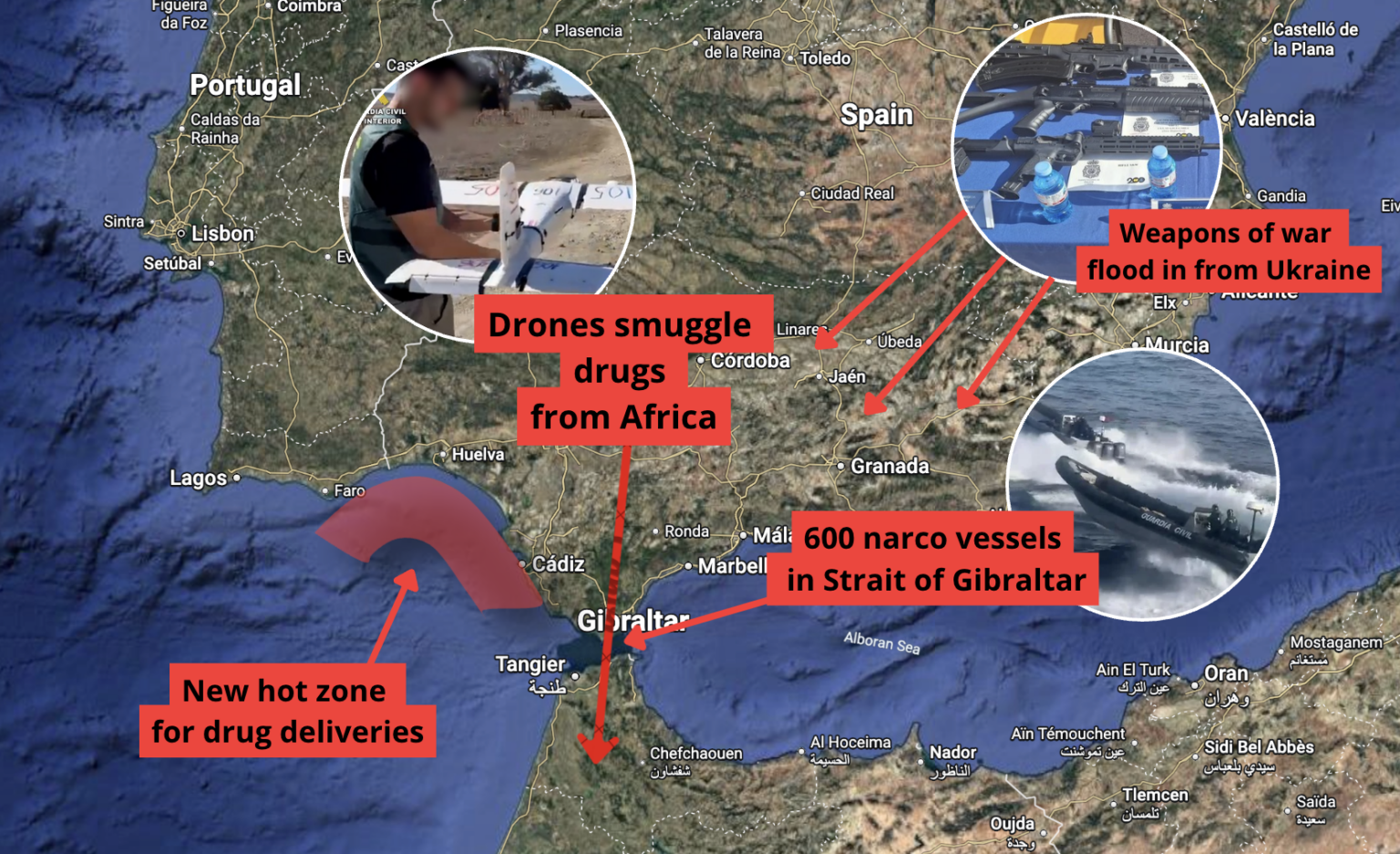

The Spanish government has revealed more than 600 suspected narco boats are now operating in the waters off Andalucia as drug gangs become increasingly violent and begin using ‘weapons of war’.
The alarming figures were revealed in a new report by the Department of National Security (DSN), published just days after two Guardia Civil officers were killed while chasing a drug boat 80 miles off the coast of Huelva.
The report paints a stark picture of how organised crime has evolved across southern Spain, warning that traffickers are becoming more aggressive, more sophisticated and more heavily armed.
‘Drug trafficking maintains a high capacity for adaptation and violence,’ the document states.
Authorities say gangs are now willing to deliberately ram police boats and patrol vehicles if they fear losing shipments or being intercepted.
While the number of attacks on officers has not dramatically increased, the government admits criminal groups are displaying ‘greater offensive capability’ than in previous years.
The report even references the use of ‘weapons of war’ and highlights a recent incident on the Guadiana River in which a Portuguese Gendarmerie officer died after a narco boat smashed into an official vessel.
Security concerns are now heavily focused on the Strait of Gibraltar and the Atlantic route near the Canary Islands, which officials describe as particularly vulnerable zones.
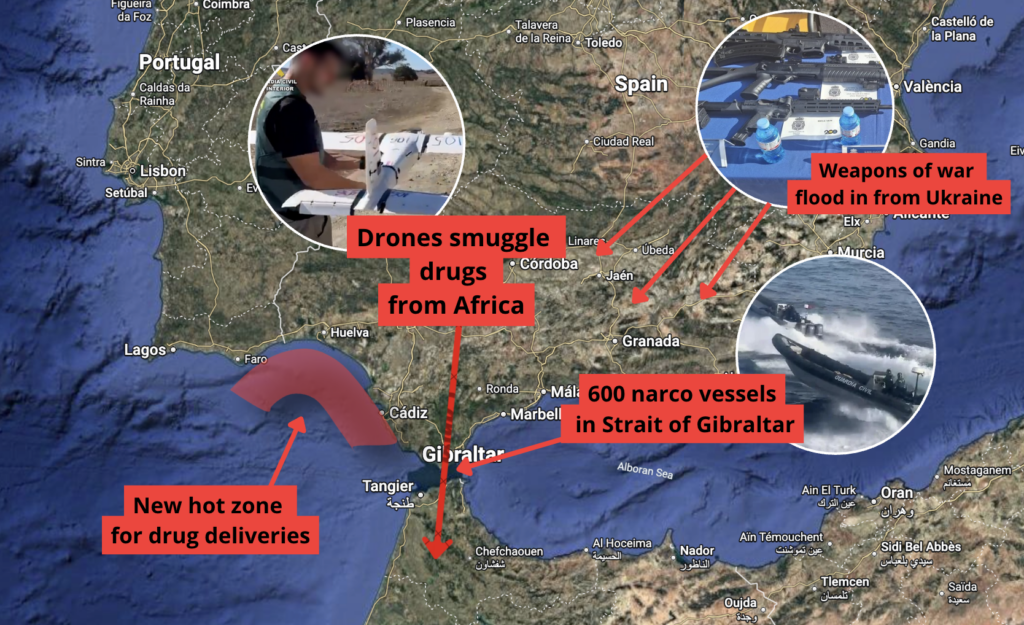

According to the report, Spain’s Maritime Surveillance and Operations Centre (COVAM), run by the Navy, has identified more than 600 high-speed boats suspected of involvement in drug trafficking operations.
The government also warns that the historic hashish route between Morocco and Spain has ‘reactivated’ after several quieter years.
Morocco remains the world’s largest producer of hashish, and traffickers have adapted their methods to avoid police detection and financial losses.
Rather than risking large narco boats close to the Spanish coast, many criminal networks now operate directly from Morocco using smaller vessels, fishing boats and rigid inflatable craft to ferry drugs across the water.
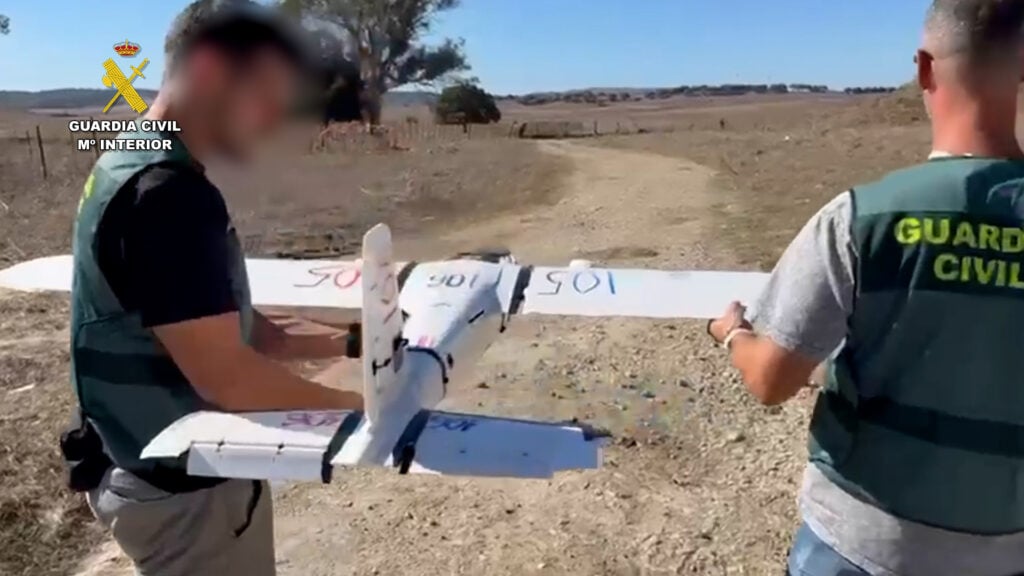
Authorities are also seeing the return of airborne trafficking methods, including drones and clandestine flights between Morocco and Spain.
Increased police pressure in Cadiz and around the Guadalquivir River has meanwhile pushed traffickers into new territories.
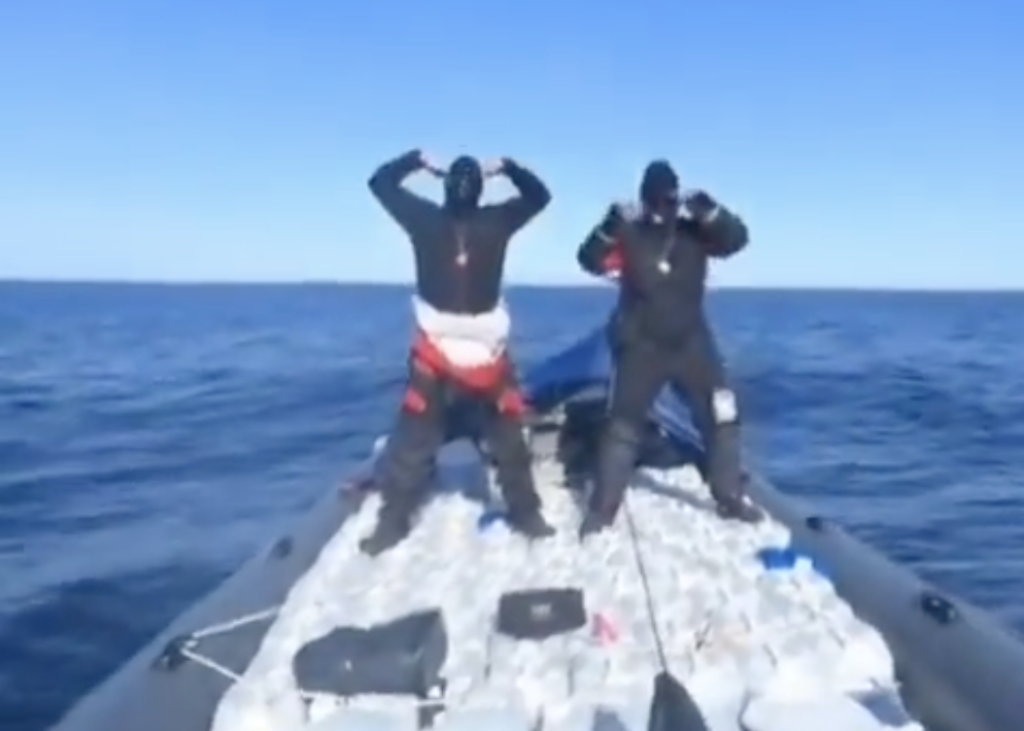
The government says gangs are increasingly expanding operations into Huelva, the Guadiana River, Portugal’s Algarve and along the Mediterranean coast from Murcia to Catalonia and the Balearic Islands.
Spanish authorities have additionally detected drug-linked vessels reaching southern France and Italy, underlining the growing international reach of the networks.
Another growing concern is the explosion in fuel smuggling linked to narco boats.
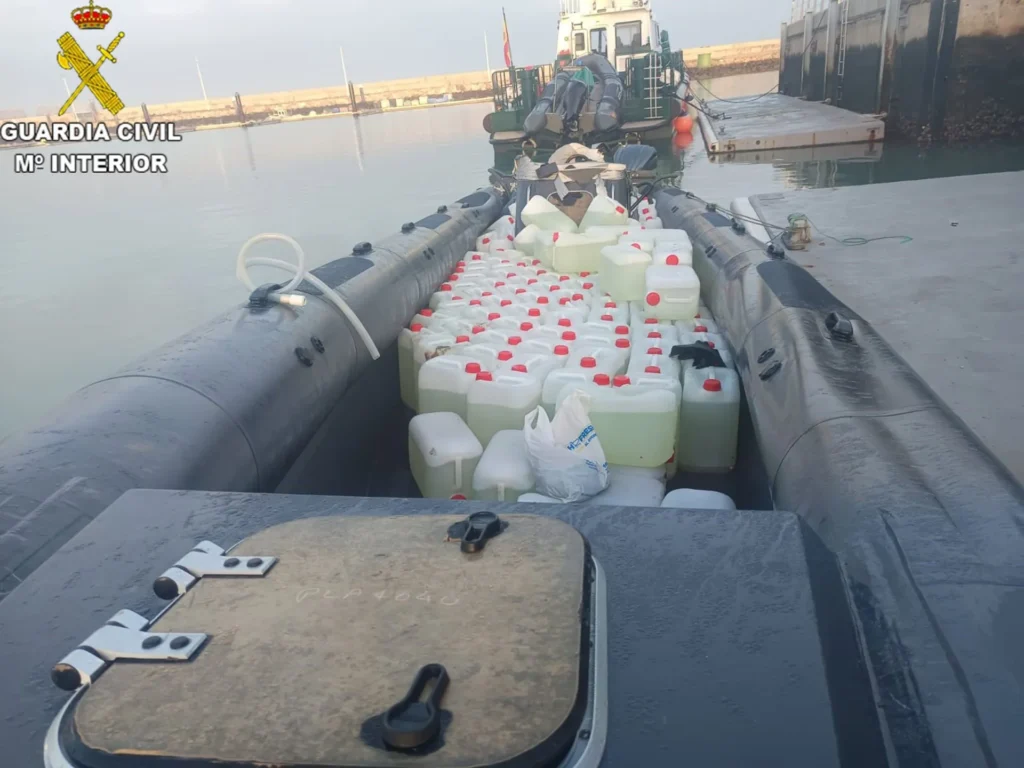
Huge quantities of petrol destined for trafficking vessels are now regularly being seized in Cadiz and Huelva, where so-called petaqueros – fuel smugglers supplying the boats at sea – have become a major part of the criminal economy.
The report also warns that trafficking routes originally created for drugs are increasingly being used for illegal migration operations.
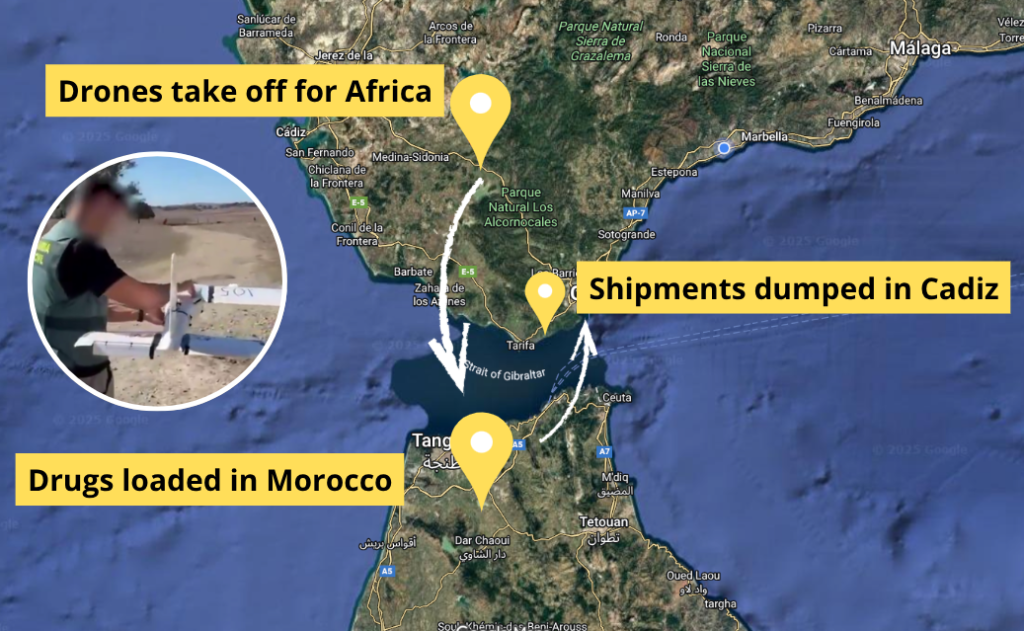
Investigators are particularly concerned about the expanding ‘Atlantic hashish route’, where drugs leave Morocco’s Atlantic coast for countries including Senegal, Guinea-Bissau and Guinea Conakry before travelling overland through the Sahel and Libya towards Europe and the Middle East.
Authorities say some gangs are now operating barter-style trafficking systems, transporting cocaine in one direction before returning with hashish shipments to maximise profits and reduce traceable money flows.
Read more Andalucia news at the Spanish Eye.