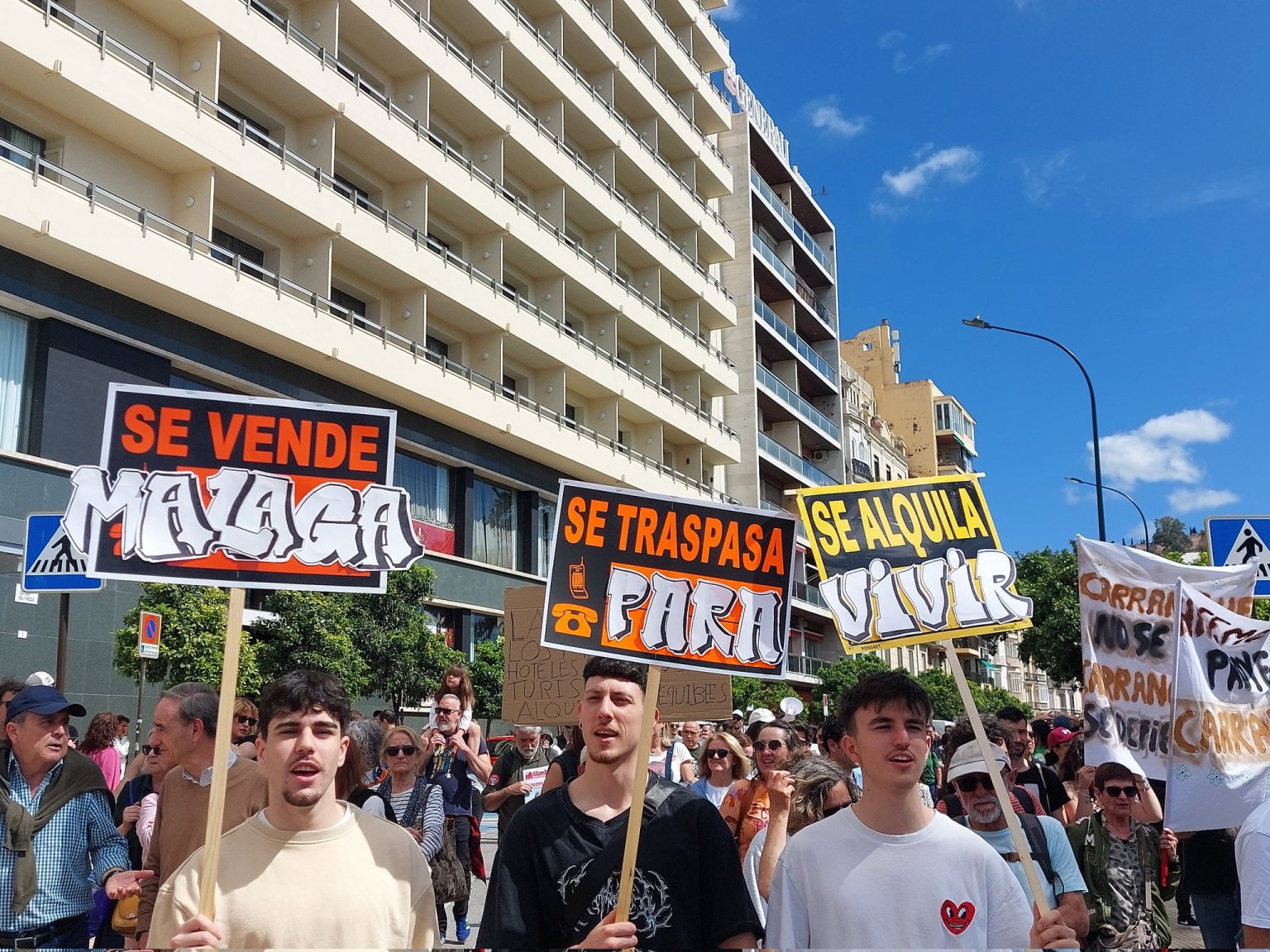

Malaga’s mayor has called for a tourist tax for holidaymakers staying in Airbnb-style properties.
Francisco de la Torre is urging the central government to amend Spain’s Local Tax Law to allow town halls to apply a levy on overnight stays in tourist rental properties (VUTs).
According to De la Torre, the tax would be modest – ‘two, three, or four euros per night’ – but its purpose would be made clear to visitors.
The money, he said, would go towards addressing the city’s housing challenges, which he blamed in part on a national legal framework that discourages long-term renting.
Linking tourism to the housing crisis
Speaking to SER Malaga, the mayor defended the move as a necessary response to mounting housing pressures fuelled by short-term lets.
He pointed to Malaga’s status as having the third largest public housing rental stock in Spain, behind only Madrid and Barcelona, and stressed the city council’s efforts to free up land for new development.
De la Torre argued that a tourist tax would be a fair and targeted tool, helping to balance the economic benefits of tourism with the urgent needs of local residents.
This is especially true in a city where the popularity among digital nomads, second-home buyers, and investors has pushed rental prices beyond the reach of many locals.
Affordable housing for youth
The mayor also defended recent proposals to expand housing options for young people, including plans to build compact units often referred to as ‘microflats’.
However, De la Torre distanced himself from that label, insisting these would be ‘one- or two-bedroom homes’, not the 20-square-metre apartments once proposed by former minister Maria Antonia Trujillo.
He described the homes as temporary solutions, offering younger residents a way to secure affordable rental housing early in life, with the possibility of moving on to larger homes or protected housing (VPO) later.
A city in high demand
Malaga, the mayor noted, has become a highly desirable city for both living and working, particularly among newcomers from other regions and countries.
While this has boosted the local economy, it has also intensified pressure on the housing market, as supply struggles to keep up with demand.
To address this imbalance, De la Torre called for coordinated regional planning. He suggested increasing housing availability in neighbouring municipalities such as Rincon de la Victoria, Benalmadena, Alhaurin de la Torre, and Cartama.
But that expansion, he noted, must go hand-in-hand with improved infrastructure, most notably, better commuter train service.
One concrete proposal is improving the frequency of the C2 Cercanias line, with trains running every 30 minutes, would make it easier for residents to live outside Malaga while still working or studying in the city.
Read more Costa del Sol news at the Spanish Eye.