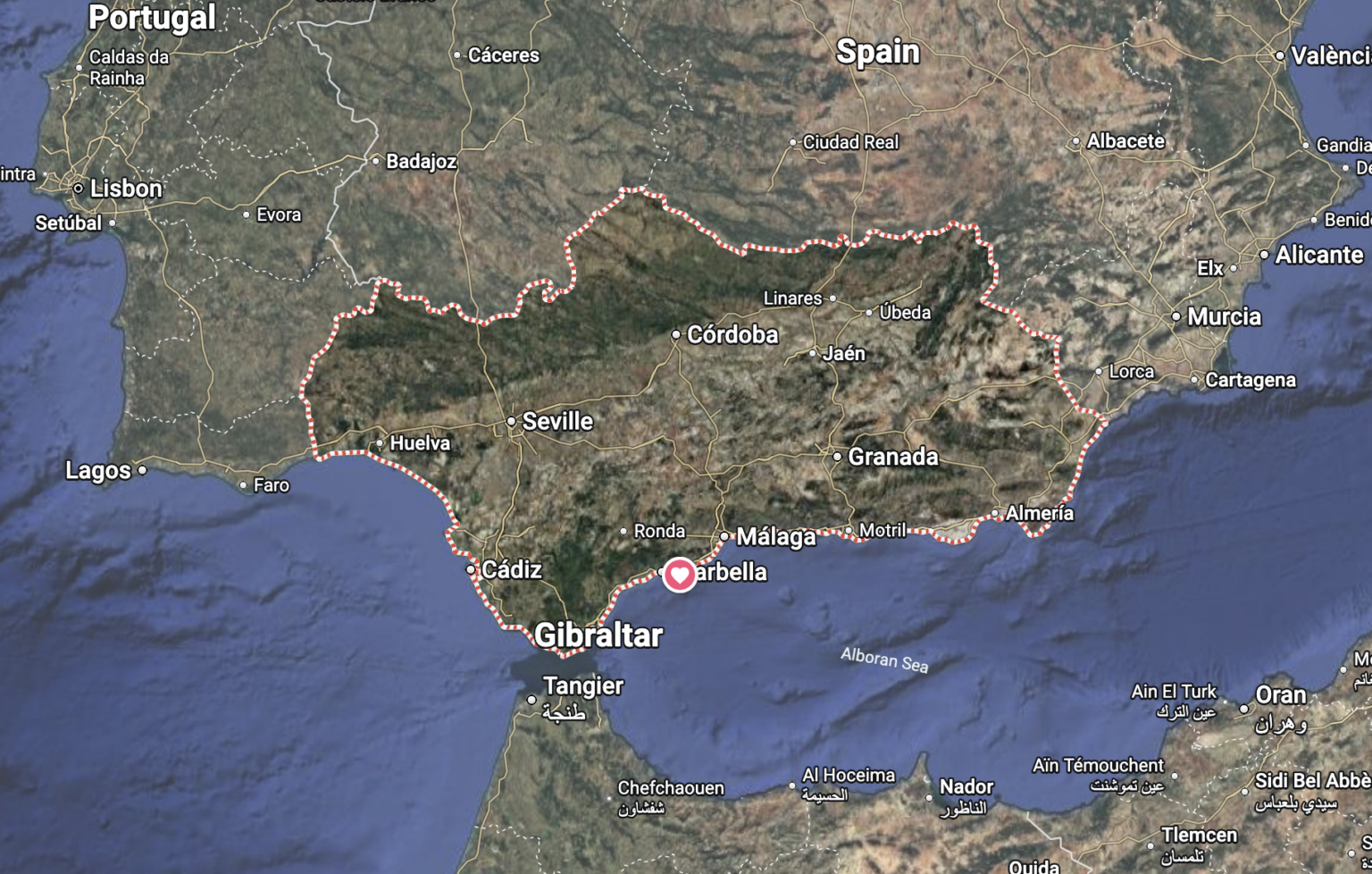

Andalucia will once again become a vital battleground at the upcoming snap general election in Spain.
While it will be fought across every corner of Spain, no region will matter more than what is the most populous in the country.
Around 6.7 million eligible voters live in the southernmost community, which sends the largest delegation of MPs to the Congress of Deputies.
Andalucia elected 61 MPs at the previous general election in 2023. That figure is expected to fall to 60 on November 29 because Cadiz will lose one of its nine seats following changes in the population register, with Madrid gaining an additional representative.
Even after that reduction, Andalucia will still elect more MPs than any other autonomous community—and more than enough to decide whether the left can remain in power.
National polling currently points towards victory for Alberto Nuñez Feijoo’s Partido Popular, with most surveys suggesting the PP and Vox could comfortably exceed the 176 seats required for an overall majority.
But Pedro Sanchez has defied gloomy forecasts before. His strategy will depend heavily on limiting the losses in Andalucia, historically one of the PSOE’s most important sources of votes.
The PP’s southern breakthrough
Andalucia was once regarded as the great Socialist stronghold of Spanish politics.
The PSOE governed the region continuously for nearly four decades before losing control of the Junta in 2018. Since then, the balance of power has moved decisively to the right.
At the July 2023 general election, the PP emerged as the largest party in Andalucia with 1.59 million votes, equivalent to 36.4% of the total. It secured 25 of the region’s 61 seats.
The PSOE was not far behind, winning 1.47 million votes, or 33.5%, and 21 MPs. Vox took nine seats with 15.3%, while the Sumar alliance secured six with just under 12%.
That four-seat gap between the PP and PSOE may now expand considerably.
Andalucia held its regional election only six months before the forthcoming national vote, providing the freshest major electoral test in Spain.
Juanma Moreno’s PP won 41.6% and 53 seats in May, falling two short of an overall majority. Vox obtained another 15 seats, allowing the two parties to form Andalucia’s first PP-Vox coalition government.
The PSOE, led by Maria Jesus Montero, suffered its worst-ever regional result, securing just 22.7% of the vote and 28 seats.
Regional and general elections produce different voting patterns, so May’s result cannot simply be replicated on November 29. Nevertheless, it revealed the scale of the challenge facing Sanchez.
If the PP can repeat anything close to Moreno’s performance while Vox retains its support, Andalucia could provide the right-wing bloc with a substantial share of the seats it needs to take power nationally.
Why every seat matters
Spain’s electoral system makes Andalucia particularly important.
Rather than treating the country as one national constituency, Congress seats are distributed separately across each province using the D’Hondt formula.
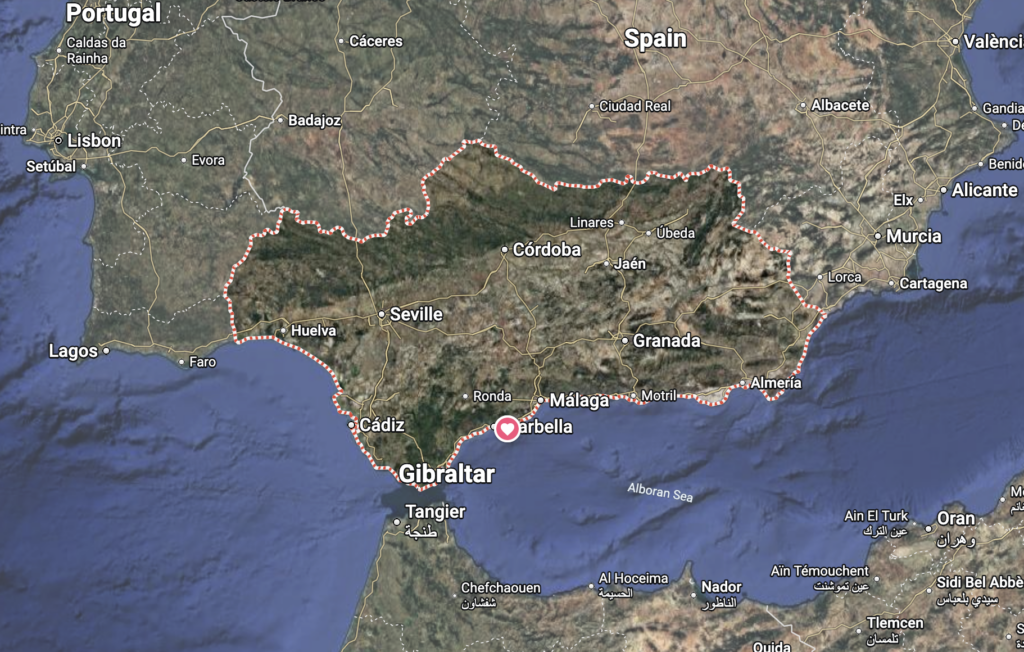
Sevilla and Malaga elect the largest Andalucian delegations, with 12 and 11 MPs respectively. Granada and Cordoba elect seven and six, while Almeria has six. Huelva and Jaen have five each, and Cadiz is expected to elect eight this time.
This creates dozens of individual contests in which relatively small changes in support can hand the final seat in a province from one political bloc to another.
The PP’s objective will be to maximise its margin over the PSOE in places such as Malaga, Almeria and Granada while breaking further into the Socialists’ remaining support in Sevilla, Huelva and Jaen.
For Sanchez, preventing a rout could be the difference between retaining a possible path to government and handing PP and Vox an unassailable national majority.
A divided left faces an electoral penalty
The fragmentation of the left presents another significant problem for Sanchez.
In 2023, Sumar won six Andalucian MPs by bringing several parties to the left of the PSOE under one banner.
This time that space is more divided. Sumar is preparing to contest the election through a new Frente Amplio, while Podemos has yet to settle its role.

Adelante Andalucia has already announced that it will stand independently after winning eight seats at the May regional election.
Standing separately may give voters more options, but it could also reduce the number of MPs won by the left.
In smaller provinces such as Jaen and Huelva, parties can secure a significant proportion of the vote and still fail to win a single seat. If Frente Amplio, Podemos and Adelante divide the progressive vote, they risk all being excluded from the allocation of MPs while the PP, PSOE and Vox take the available seats.
The threat is especially serious because support for parties to the left of the PSOE has fallen sharply in national surveys.
Polling averages currently place the PP at around 33%, the PSOE at 26%, Vox at 18%, Frente Amplio or Sumar at approximately 6% and Podemos close to 3%.
Most conventional polling, excluding the government-run CIS, therefore suggests that the PP and Vox are heading for a parliamentary majority.
Housing, unemployment and immigration
The campaign in Andalucia will also be shaped by issues that are particularly acute in the region.
Sanchez called the election after Congress rejected two emergency housing decrees introduced in response to nationwide protests over soaring rents and evictions.
Housing could help the PSOE mobilise younger and urban voters, particularly in Malaga, Marbella, Sevilla and Cadiz, where rents and property prices have risen sharply.
However, the government will face accusations that it failed to solve the crisis during its years in office.
Unemployment remains higher in Andalucia than the Spanish average, while pressure on public healthcare helped dominate the regional election campaign.
The Costa del Sol and other tourist areas must also reconcile record visitor numbers and economic growth with concerns over access to housing, overcrowding and infrastructure.
Vox, meanwhile, is expected to focus heavily on immigration, border security and the recent crisis in Ceuta. Drug trafficking and organised crime will also feature prominently, particularly in Cadiz, Malaga, Huelva and Almeria.
Juanma Moreno’s role
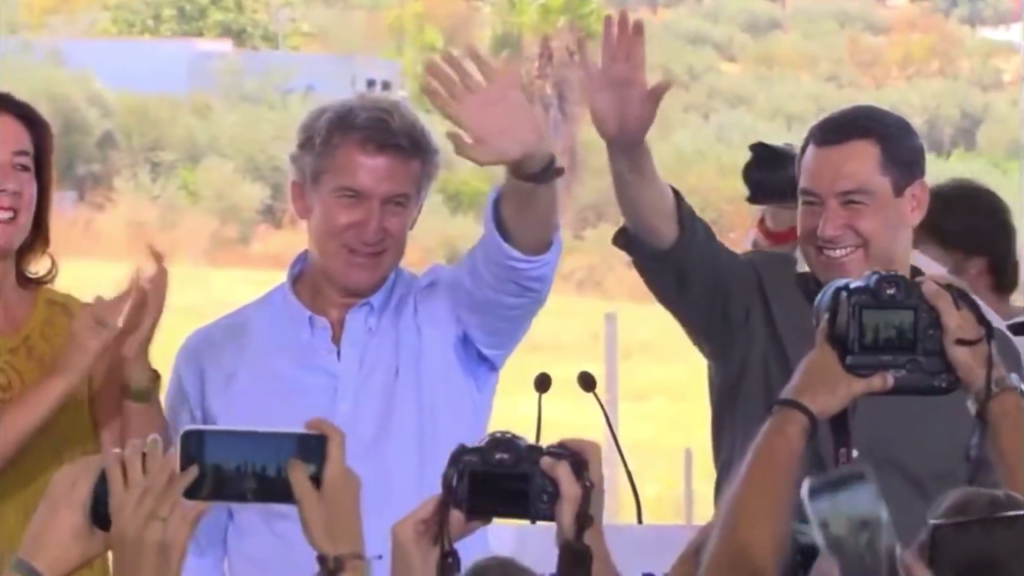
Although Feijoo is the PP’s candidate for prime minister, Juanma Moreno is likely to become one of the party’s most prominent campaigners.
The Andalucian president has already promised to involve himself fully in the election, describing the region as ‘the most important’ because of the number of MPs it contributes.
Moreno will attempt to transfer his regional appeal to Feijoo while arguing that Andalucia has been treated unfairly by the Sanchez government.
He has ruled out leaving the Junta for a role in Madrid, saying his recently renewed commitment is to Andalucia.
His influence could nevertheless prove decisive. A strong PP performance in the south would bring Feijoo much closer to Moncloa, although it may also strengthen Vox’s hand in negotiations over a future national government.