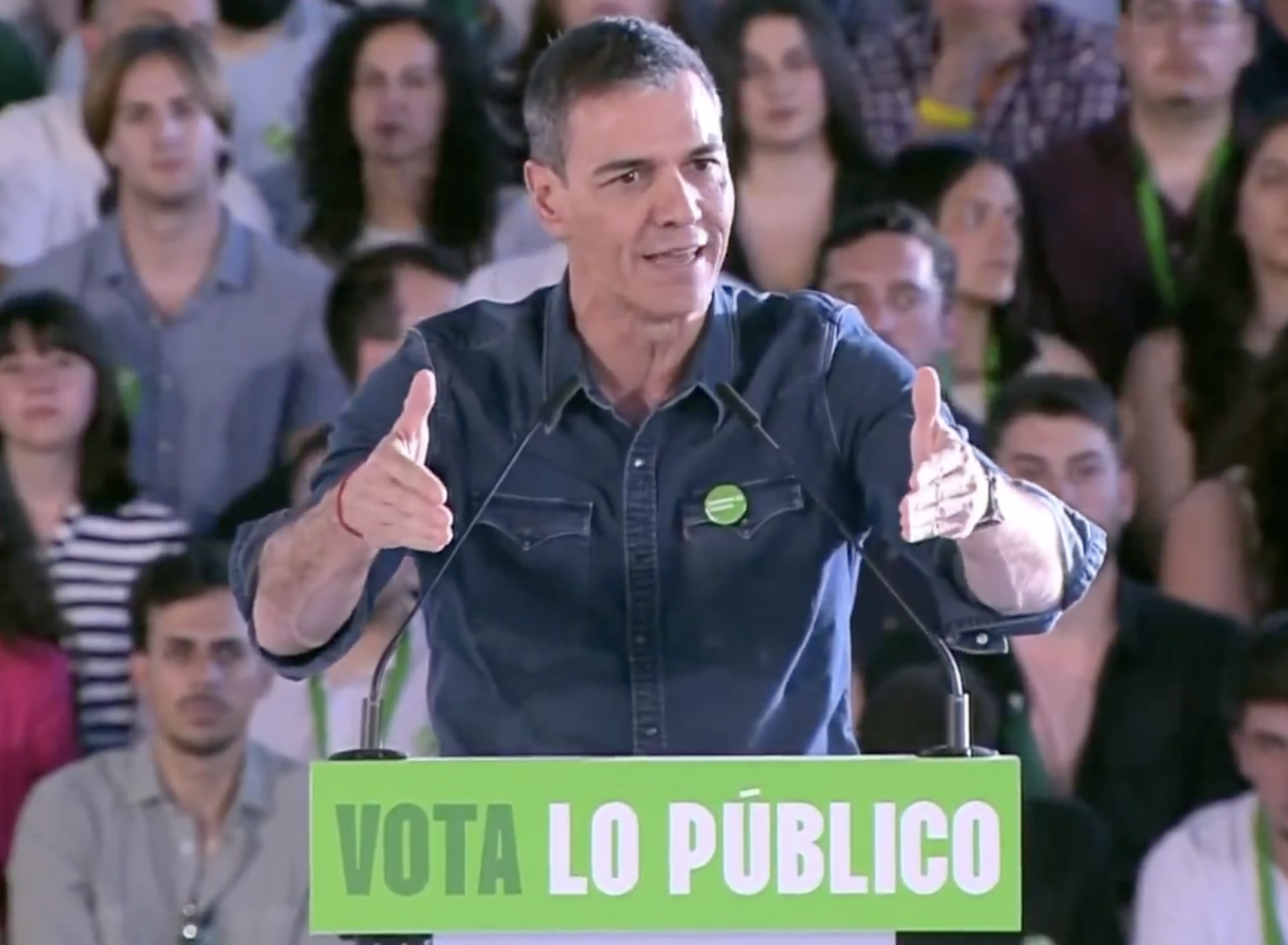

Pedro Sanchez has called a snap general election while his party is trailing the opposition and the polls predict a crushing right-wing majority.
The prime minister announced on Monday that Spain would go to the polls on November 29, eight months earlier than required, following the collapse of his two housing decrees in Congress.
It’s an enormous political gamble as recent polls put Alberto Nuñez Feijoo’s Partido Popular (PP) ahead of the PSOE, while support for Santiago Abascal’s Vox has surged to new heights.
But anyone writing Sanchez’s political obituary may want to look back just three years.
What happened three years ago?
On May 29, 2023, Sanchez shocked even members of his own government by calling a snap general election for July 23.
The announcement came one day after the PSOE and its allies suffered heavy defeats in regional and municipal elections.
The PP had won about 760,000 more votes than the Socialists and seized control of several key regions and cities, including Valencia and Sevilla.
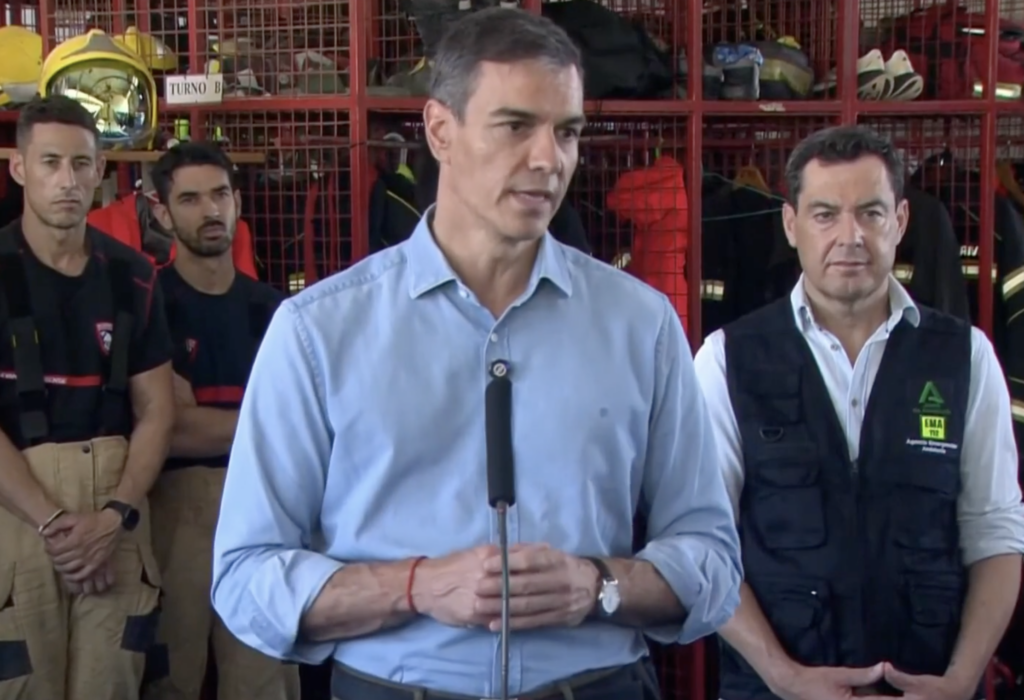
Sanchez portrayed the result as a vote of no confidence in his coalition and said he would accept ‘personal responsibility’ by putting the country’s future directly to voters.
At the time, the decision appeared almost politically suicidal.
Reuters reported that the early election was an attempt to catch his opponents off guard and give a ‘flagging’ Socialist Party a chance of survival before its support weakened further.
The polls initially appeared to confirm the scale of the danger.
A 40dB survey published three weeks after the election was called placed the PP on 33.1%, compared with just 27.4% for the PSOE, a gap of almost six points. It projected 136 seats for Feijoo’s party and only 106 for Sanchez.
Combined with Vox, the right was within touching distance of the 176 seats required for an absolute majority.
Two weeks before polling day, another survey put the PP on 35% and the PSOE on 28%.
Even the average of the final five major polls predicted exactly 176 seats for the PP and Vox combined, just enough to take power.
How Sanchez defied the polls
Sanchez did not win the 2023 election. The PP finished first, taking 33.1% of the vote and ultimately 137 seats.
But the PSOE performed far better than forecast, securing 31.7% and 121 seats, which was only 16 fewer than the PP and one more than it had won in 2019.

Crucially, the expected PP-Vox majority failed to materialise. Together, the parties finished with 170 seats, six short of the 176 required.
The result left Feijoo unable to form a government and allowed Sanchez to negotiate another term with Sumar and several regional parties, including the Catalan separatist Junts.
Academic analysis of the election concluded that the PSOE performed better than polls had predicted and that the left, with the support of regional parties, retained the stronger position in Congress.
Sanchez’s strategy had just about worked.
He transformed an expected heavy defeat into a narrow route back to office by mobilising progressive voters around the prospect of Vox entering the national government.
Negotiations between the PP and Vox in several regional administrations also helped Sanchez make the possible arrival of the far right in government the central issue of the campaign.
Is the 2026 situation the same?
There are clear similarities between 2023 and 2026.
Once again, Sanchez is behind in most non-government polling and is asking left-wing voters to mobilise against the prospect of a PP-Vox coalition.

However, the numbers facing him now are significantly more difficult.
The latest 40dB poll gives the PP 31.6% and the PSOE 27.4%, putting Feijoo’s party 4.2 points ahead.
That gap is actually narrower than the nearly six-point lead recorded for the PP in one of the first major surveys after the 2023 election was called.
The more troubling figure for Sanchez is Vox’s support, as the party is now polling at 18.4%, compared with the 12.4% it ultimately received in 2023.
Together, the PP, Vox and SALF currently command 52% of the estimated vote in the 40dB survey. The PSOE, Sumar and Podemos collectively account for just 35.7%.
One current polling model places the PP on 140 seats, Vox on 64 and the PSOE on 102. On those figures, the PP and Vox would have a commanding majority of more than 200 MPs.
The left is also more fragmented than it was in 2023. Sumar and Podemos face a race against time to agree on a unified platform, leadership and candidate lists before the election.
Spain’s electoral system punishes divided parties, particularly in smaller provinces where only a handful of seats are available.
Housing could change the campaign
Sanchez’s greatest potential advantage is the housing crisis.
The snap election follows the rejection of government decrees containing protections for vulnerable tenants, automatic rental extensions and restrictions targeting investment funds.
Housing has also become the dominant issue for many younger voters after soaring rents, evictions and protests in dozens of Spanish cities.
A recent 40dB survey found that 67.5% of respondents supported limits on rents even if they reduced landlords’ profits, including a majority of voters on the right.
Sanchez will likely now attempt to frame the election as a referendum on those protections, arguing that the PP, Vox and Junts blocked measures designed to help tenants.
Whether that is enough to overturn the right’s lead is another question.
Never count Sanchez out
In 2023, the polls overstated the strength of the right-wing bloc and underestimated Sanchez’s ability to mobilise his supporters, polarise the campaign and construct a governing majority after election day.
He therefore does have a precedent for recovering from a seemingly disastrous starting position.
But November’s contest begins with Vox substantially stronger, the wider left divided and many of Sanchez’s former parliamentary allies less willing to support him.
Sanchez turned a six-point polling deficit into another term in office in 2023. To survive this time, he will need an even more remarkable comeback.