
More than 3,500 healthcare workers will receive specialist emergency training under a new cross-border project involving Andalucia, Galicia and Portugal, it has been announced.
The SIM4UE initiative will use realistic clinical simulations to prepare medical teams for adult, paediatric and obstetric emergencies.
Running from 2026 until the end of 2028, the project has a total budget of €4.72million, of which approximately €3.54million is being provided by the EU through the Interreg Spain-Portugal programme.
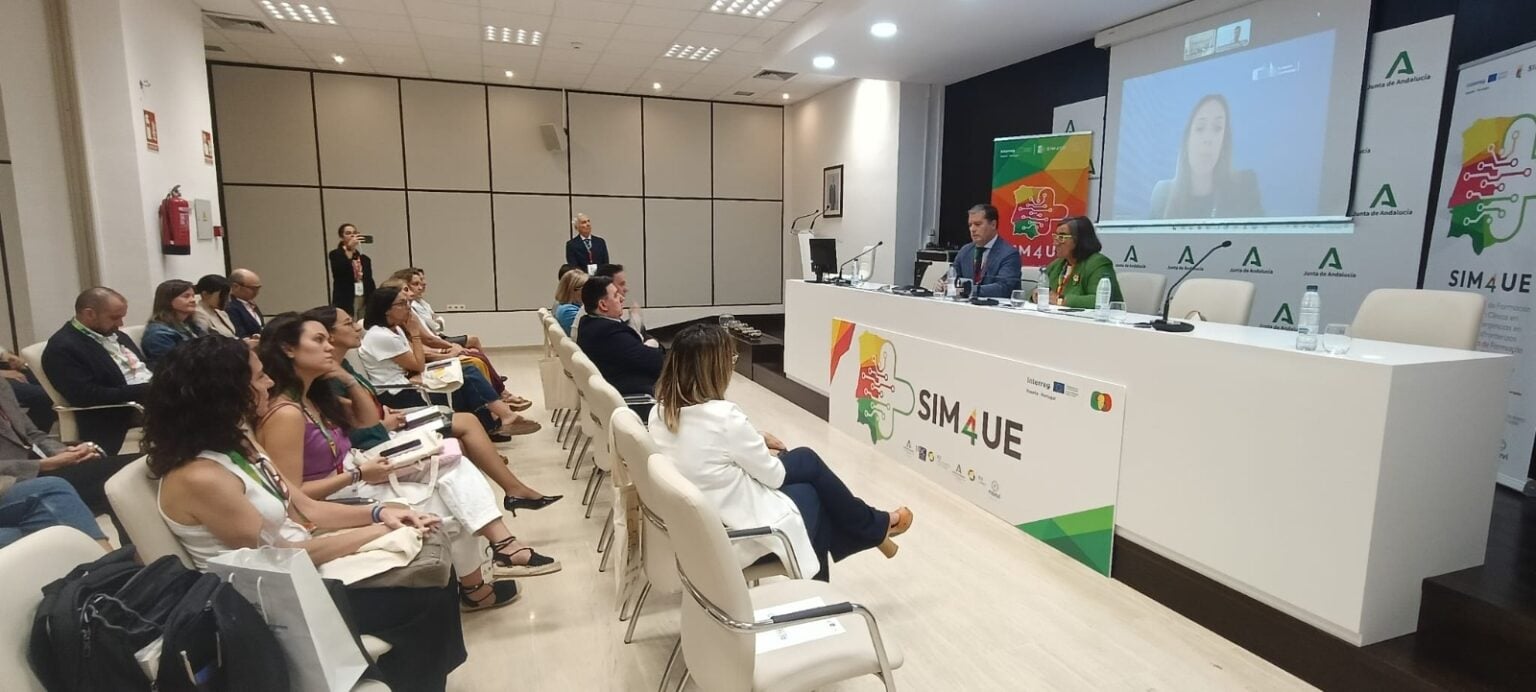
The project was formally presented in Sevilla alongside a demonstration showing how simulation technology can recreate critical medical situations.
A mobile training unit was used to stage three emergency scenarios involving an adult, a child and a pregnant patient. Medical simulators and equipment normally found in hospitals and ambulances allowed professionals to practise their response without placing real patients at risk.
‘Clinical simulation and joint training will allow us to prepare healthcare professionals and move towards a more coordinated and consistent cross-border response to urgent and emergency situations,’ said Maria Jose Sanchez, the Junta’s director general for research, innovation and training.
‘With this project, we want to reinforce patient safety and improve the quality of healthcare.’
SIM4UE brings together six organisations from Andalucia, Galicia and Portugal.
It is being led by the Junta-backed Progreso y Salud Foundation through its IAVANTE medical training division.
The other participants are the University of Santiago de Compostela, Sevilla’s Virgen del Rocio University Hospital, the Sevilla Foundation for Health Research Management, and hospital organisations in Tras-os-Montes and Coimbra.
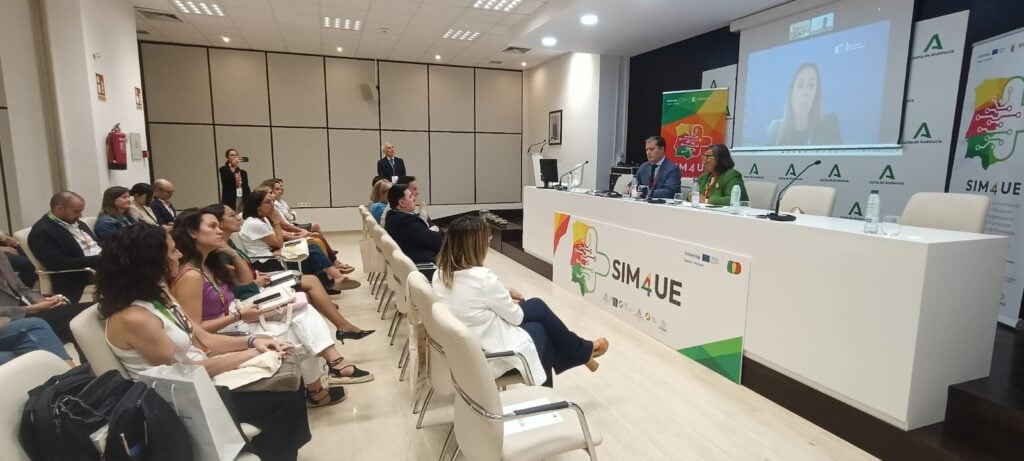
Together, they will develop shared clinical scenarios, teaching resources and training methods that can be used in different hospitals and regions.
The University of Santiago de Compostela will contribute its expertise in paediatric emergencies and help evaluate whether the training produces measurable improvements.
Virgen del Rocio Hospital and the Sevilla health research foundation will be responsible for training involving obstetric and gynaecological emergencies.
The Portuguese organisations will contribute experience in both hospital-based and out-of-hospital emergency care. They will also work with IAVANTE to train the instructors who will subsequently teach other healthcare professionals.
Preparing teams for rare but critical cases
The project is particularly aimed at territories where doctors, nurses and emergency responders have limited access to advanced simulation facilities.
It will also allow teams to practise managing serious situations that occur too infrequently for professionals to build up extensive real-world experience.
According to the programme’s official project description, clinical errors and insufficient preparation can pose a greater risk in areas with limited resources or a low incidence of particular medical emergencies.
Training will cover both technical procedures and skills such as communication, teamwork and decision-making under pressure.