
Marbella’s current debt stands at a sizeable €266million, it has emerged.
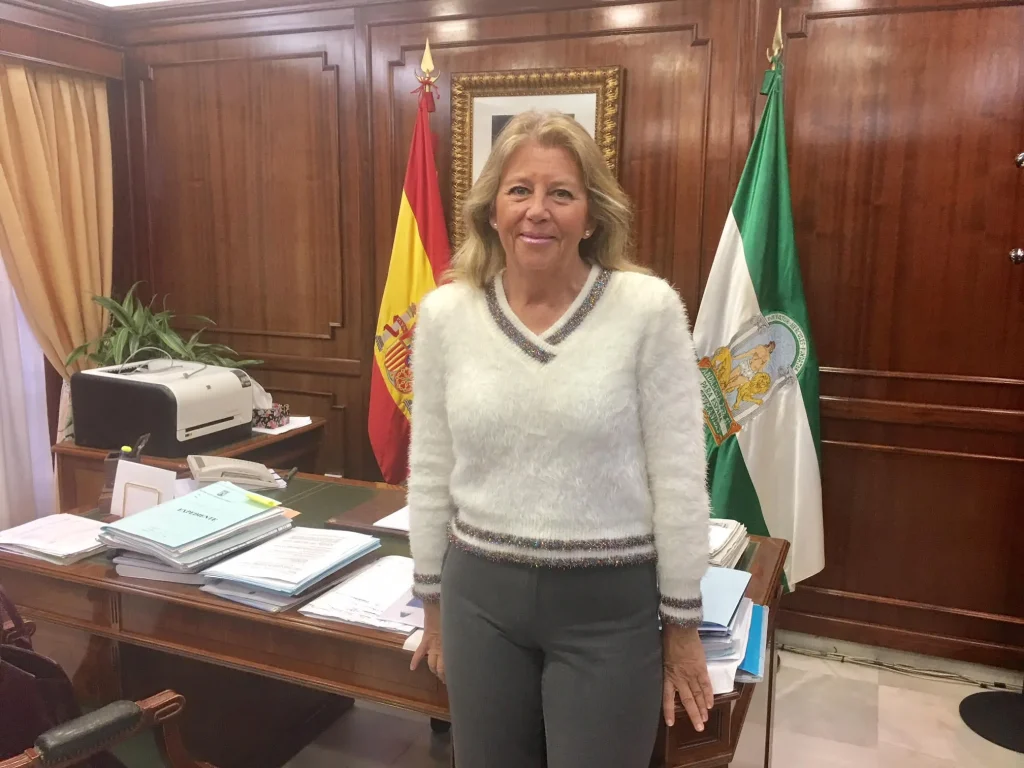
Mayor Angeles Muñoz revealed the figure on Monday during the first State of the City debate in five years.
Of the remaining debt, €109million is owed to Spain’s Social Security system and €24million to the tax office.
A further €50million is still owed to the Junta de Andalucia from a €100million emergency advance granted after the council was dissolved in 2006, while €80million relates to a state financing scheme used to pay court judgments inherited from previous administrations.
While the amount owed may sound large, it is nothing compared to the €700million debt the City Council was straddled with following the corrupt Jesus Gil era.
Muñoz recalled that when the Partido Popular took control of the council in 2007, it inherited an authority that had been ‘looted, bankrupt and seized as far as the cemetery’.
The council was unable to pay staff or suppliers and was carrying around €600million in debt linked to the GIL era, in addition to almost €100million generated through subsequent state financing arrangements.
Marbella’s municipal budget has meanwhile increased from €185million in 2007 to €450million this year.
However, opposition parties challenged the PP’s presentation of the figures, pointing to approximately €130million in recently requested loans and an austerity plan that will remain in place until 2040.

Housing and transport challenges
The debate, which had not been held since June 2021, saw the PP identify access to housing and transport as the two principal challenges facing Marbella.
Muñoz highlighted the recent approval of the city’s new General Municipal Development Plan, or PGOM, which will guide Marbella’s growth over the coming decades.
The plan recognises more than 53 million square metres of urban land, compared with approximately 40 million under the planning document dating from 1986.
It also attempts to provide legal certainty for innocent third-party buyers whose homes were constructed illegally during the GIL era.
According to the mayor, 20% of all homes planned under the new framework will be subject to controlled prices.
The increased availability of land should allow the council to promote more affordable housing while securing new public facilities and infrastructure, she said.
Projects supported by the plan include a new courthouse, fairground, football stadium, the expansion of La Bajadilla marina and a third lane on the A-7 between San Pedro and Puerto Banus.
Marbella issued 1,257 planning licences during the first six months of this year, representing an annual increase of 27%.
Muñoz also highlighted €200million of investment across 90 projects covering health, education, sport, infrastructure and housing.
Tourism, jobs and luxury investment
The mayor claimed Marbella had strengthened its position as a high-quality destination while reducing its traditional dependence on the summer season.
International visitor numbers rose by 8% between January and June 2026, while overnight stays by foreign tourists increased by 9.2%.
Luxury hotel investment has included the reopening of Los Monteros following an €87million refurbishment and the €45million overhaul of the Don Carlos.
Future projects include the restoration of the Incosol hotel and the planned Four Seasons Marbella, which carries an estimated investment of €650million and could create 3,000 jobs.
Muñoz said Marbella’s unemployment rate now stands at 7.37%, with 5,863 people registered as unemployed in August – 877 fewer than a year earlier.
The city recorded 87,179 Social Security contributors in September and around 15,833 self-employed workers during July and August.
There are now 20,829 businesses operating in Marbella, with the city reportedly accounting for a quarter of all new companies created across Malaga province.
Opposition attacks
PSOE councillor Isabel Perez branded the council’s record during the current term ‘very deficient’.
She criticised the administration for borrowing around €130million and questioned why Marbella was paying for projects she argued should be funded by the Junta, including health centres, improvements to the Istan road and access to the future courthouse.
Perez also accused the council of mishandling public land and said affordable housing and community facilities should take priority over additional hotels and private developments.
Vox councillor Eugenio Molto focused on crime, traffic congestion and cleanliness, while calling for a new location for the La Ermita industrial estate.
He also criticised what he described as repeated tax increases linked to the state financing schemes and urged Spain’s central government to take firmer action against organised crime.
OSP councillor Manuel Osorio said the debate had arrived ‘five years late’.
He criticised the shortage of parking in San Pedro de Alcantara and delays affecting projects including its new bus station and School of Music and Dance.
Read more Andalucia news at the Spanish Eye.