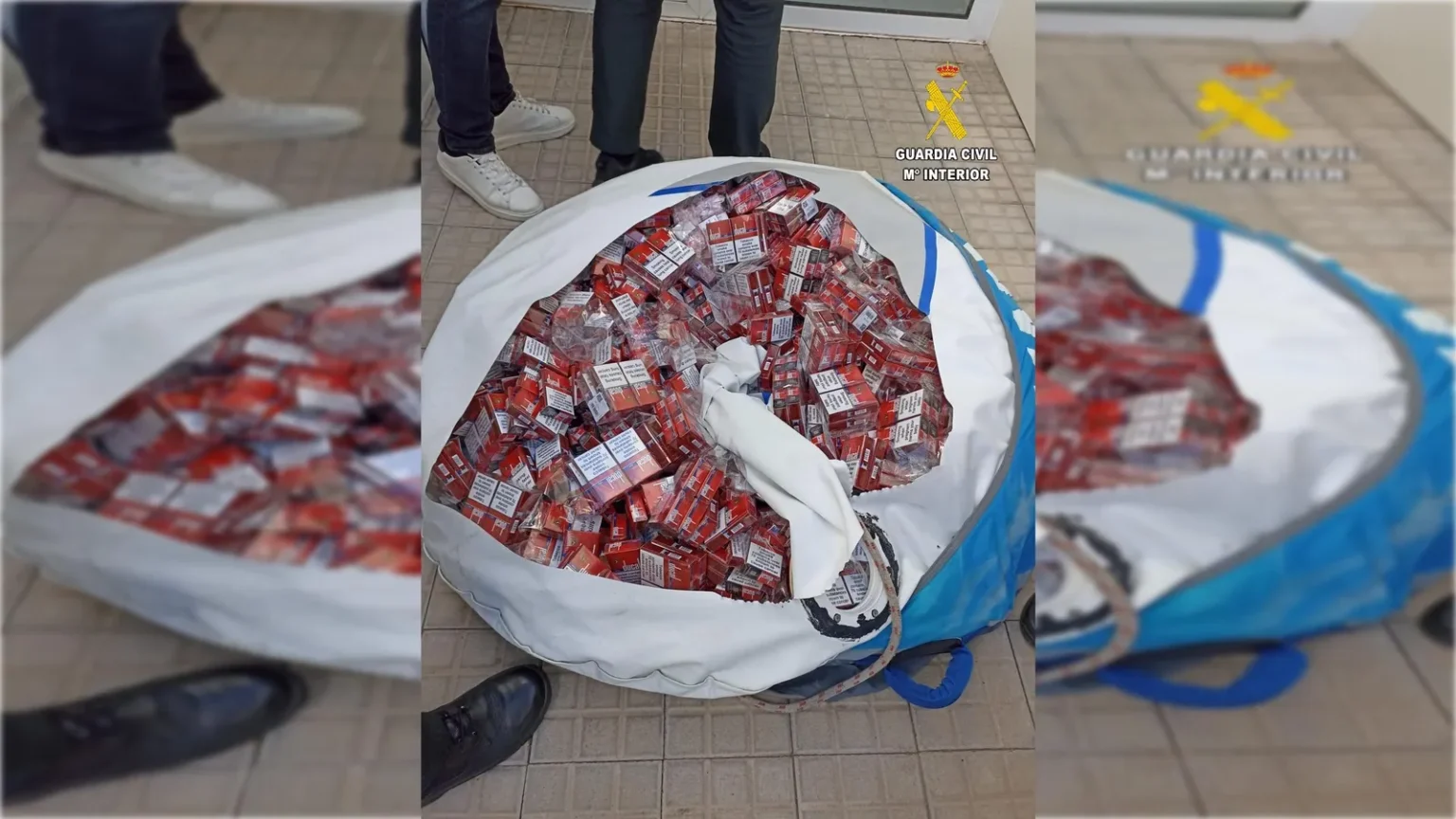

Tobacco smugglers are continuing to move thousands of cigarettes from Gibraltar to Spain following the historic removal of the border fence two months ago.
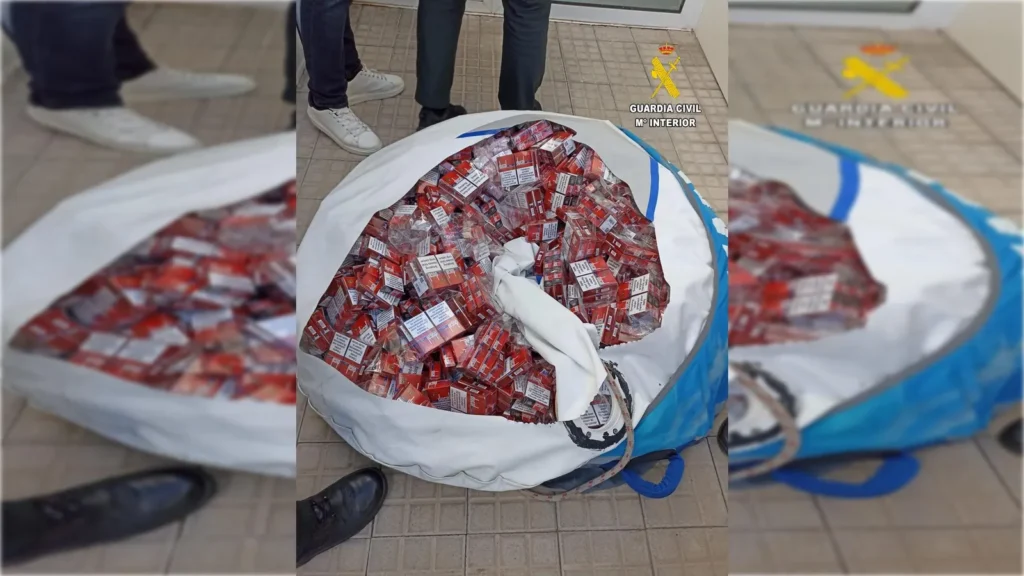
The Guardia Civil has seized 9,580 packets in just four operations in La Linea over the space of a week, in an indication that the illicit trade has survived the transformation of the Gibraltar border.
Police sources say the way smugglers operate appears to be changing.
The large boats once used to move substantial quantities around the Strait have become a much less common sight, while smaller consignments can now be transported overland in ordinary vehicles.
The seizures were carried out by the Guardia Civil’s Fiscal and Borders Section in La Linea.
In the first operation, officers discovered 1,080 packets in the boot of a high-end vehicle.
The female driver was identified and officers established that the cigarettes had come from Gibraltar and did not carry the required Spanish tax markings.
Three further seizures involved 3,000, 2,500 and another 3,000 packets respectively.
Together, the 9,580 packets were valued at more than €20,100, according to the Guardia Civil.
The seizures come exactly two months after the physical border fence – known locally as the Verja -ceased operating on July 15 under the provisional implementation of the new Gibraltar arrangements.
Why hasn’t smuggling disappeared?
Removing the Verja does not mean cigarettes bought in Gibraltar can simply be brought into Spain in unlimited quantities for resale.
For decades, attempting to move large quantities of tobacco overland meant confronting customs controls at the border.
That encouraged smugglers to find alternative routes, including using boats to move cigarettes around the coastline surrounding Gibraltar and La Linea.
According to police sources cited by Europa Sur, those tobacco boats have now virtually disappeared from the area, although some maritime operations may have shifted their landing points elsewhere.
Instead, authorities are increasingly confronting a different problem as relatively small consignments are being transported by private vehicles over land.
The Guardia Civil is therefore maintaining controls aimed at detecting the routes being used to transport and distribute illicit tobacco.

The money is still there
Another reason the trade has survived is because there remains a financial incentive.
The new Gibraltar arrangements are intended to progressively reduce the tax and price differences that have historically made cigarette smuggling lucrative.
The framework includes mechanisms designed to bring Gibraltar’s taxation closer to European standards and restrict the difference between cigarette retail prices in Gibraltar and Spain.
But that convergence is being implemented progressively rather than overnight.
As long as a sufficient price difference remains, there is still potential profit for people prepared to illegally transport cigarettes into Spain for resale.
Viagra and other medicines
Police sources have also witnessed how other small, high-value products have become increasingly attractive to smugglers.
These include Viagra, other sexual-enhancement drugs and certain generic medicines.