Granada has witnessed yet another earthquake as a prolonged seismic swarm continues to shake the province.
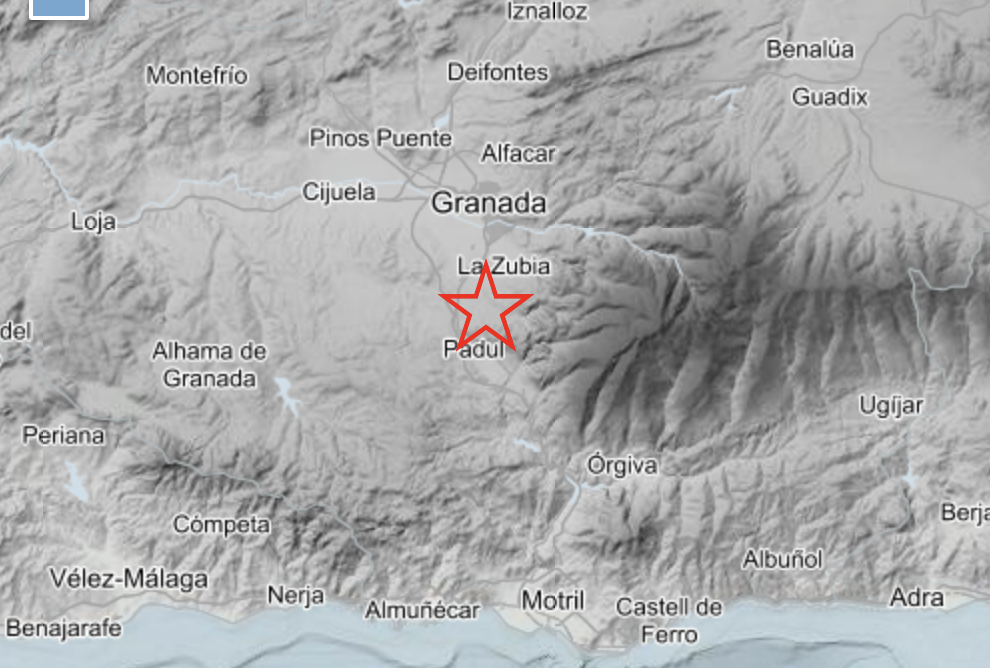
The latest tremor struck during the early hours of Thursday, August 20, and recorded a magnitude of 3.4, according to Emergencias 112 Andalucia.
Its epicentre was located in Dilar, in Granada’s metropolitan area.
The earthquake was felt across several nearby municipalities, prompting seven calls to the emergency services from Granada city, Armilla, Maracena, Las Gabias and Alhendin.
No damage has been reported following the latest tremor.
It comes as Granada enters another day of extraordinary seismic activity that began last Saturday and has since produced hundreds of earthquakes across the Vega de Granada.
Most have been relatively weak, but a number have been strong enough to be clearly felt by residents.
Experts have described the episode as a complex seismic series involving the interaction of different faults beneath the area and have stressed that it is impossible to predict how or when it will end.
Hundreds of tremors since Saturday
The current episode began dramatically during the early hours of Saturday, August 15, when a magnitude 5 earthquake with its epicentre near Alhendin woke residents across much of Granada’s metropolitan area.
Three days later, on Tuesday, August 18, the province was shaken by another succession of powerful tremors.
These included a magnitude 4.8 earthquake and several other quakes exceeding magnitude 4.
That day’s seismic activity left three people with minor injuries, caused damage to buildings and prompted precautionary evacuations.
Las Gabias was particularly affected, where hundreds of residents were ordered out of their homes while technicians checked apartment blocks for possible structural damage.
Hundreds of homes inspected
Authorities have since carried out extensive inspections of properties affected by the earthquakes.
By Wednesday, 580 homes had been examined, of which 14 required safety measures before residents could be allowed to return.
Damage detected so far has largely involved cracks, cornices, wall coverings and other non-structural elements.
Authorities have not identified widespread structural damage.
Major sites including the Alhambra have also been gradually returning to normal operations while maintaining precautionary measures.
Experts cannot say when it will end
The continuing tremors have understandably caused concern among residents, but seismologists have repeatedly stressed that earthquakes cannot currently be predicted.
Although scientists can monitor the seismic series and study how it is evolving, they cannot determine when the next earthquake will strike or how powerful it will be.
Emergencias 112 Andalucia has urged residents to continue following earthquake safety guidance and to rely on official sources for information as the seismic activity continues.
Read more Andalucia news at the Spanish Eye.