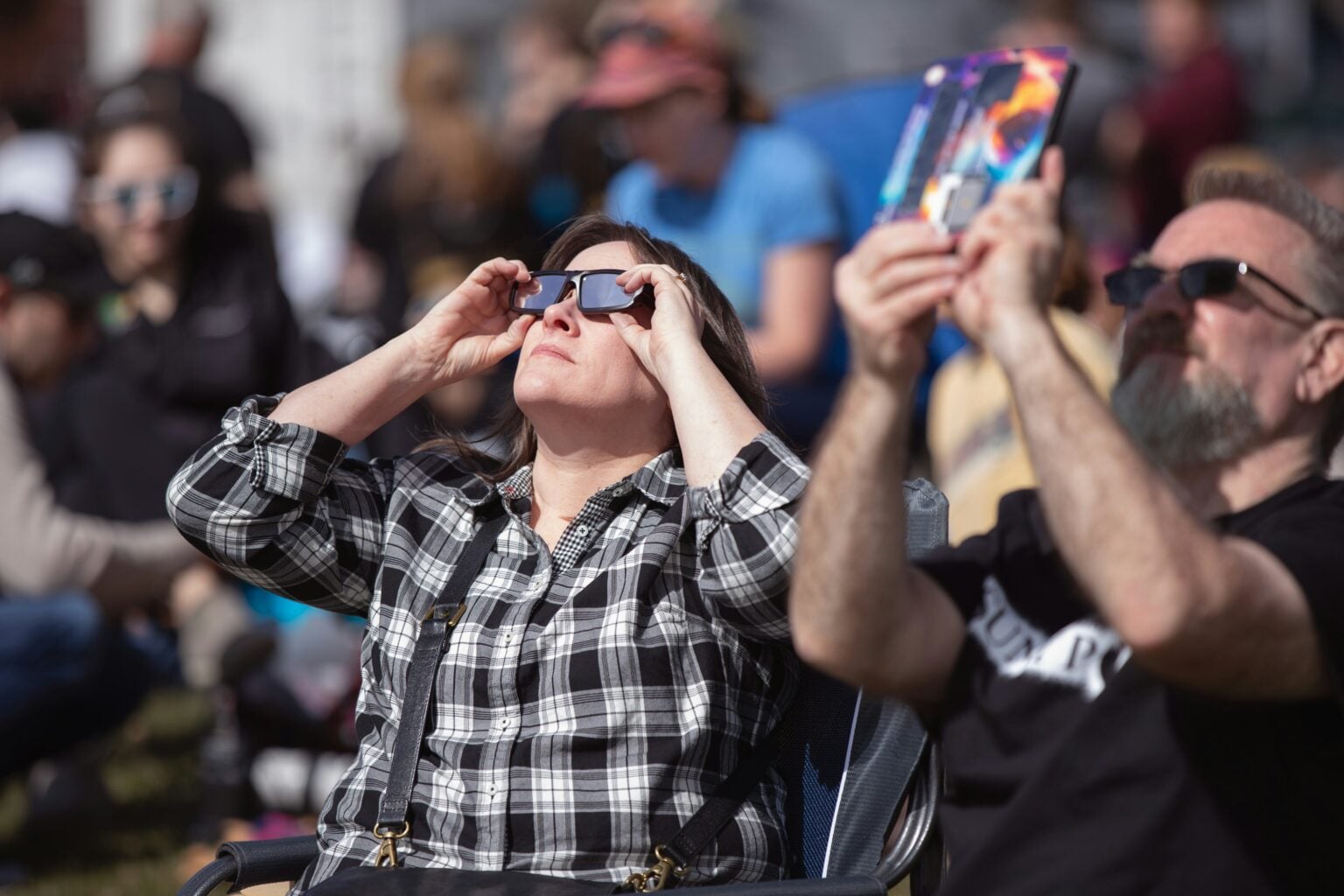

Spain is giving away two million pairs of certified glasses ahead of the total solar eclipse next week.
With millions of people expected to watch the August 12 event, the Ministry of Science and the ONCE Foundation have launched a nationwide campaign to distribute free pairs of ISO-certified solar viewing glasses.
The initiative, called ‘Una vista unica. Cuidala’ (‘One unique view. Protect it’), aims to ensure people can safely watch what will be one of Spain’s biggest astronomical events in decades.
Around 1.7 million pairs are being distributed through ONCE’s nationwide network of lottery kiosks and coupon sellers, while a further 300,000 pairs are being handed out by the Ministry of Science through the Spanish Foundation for Science and Technology (FECYT).
The free glasses have been available since August 3 and will continue to be distributed while stocks last.
To get a pair, simply visit an ONCE kiosk or authorised coupon seller and ask if they still have glasses available.
They are completely free of charge and you do not need to buy an ONCE lottery ticket or any other product.
Additional pairs are also being distributed through participating science museums, planetariums, universities and research centres across Spain.
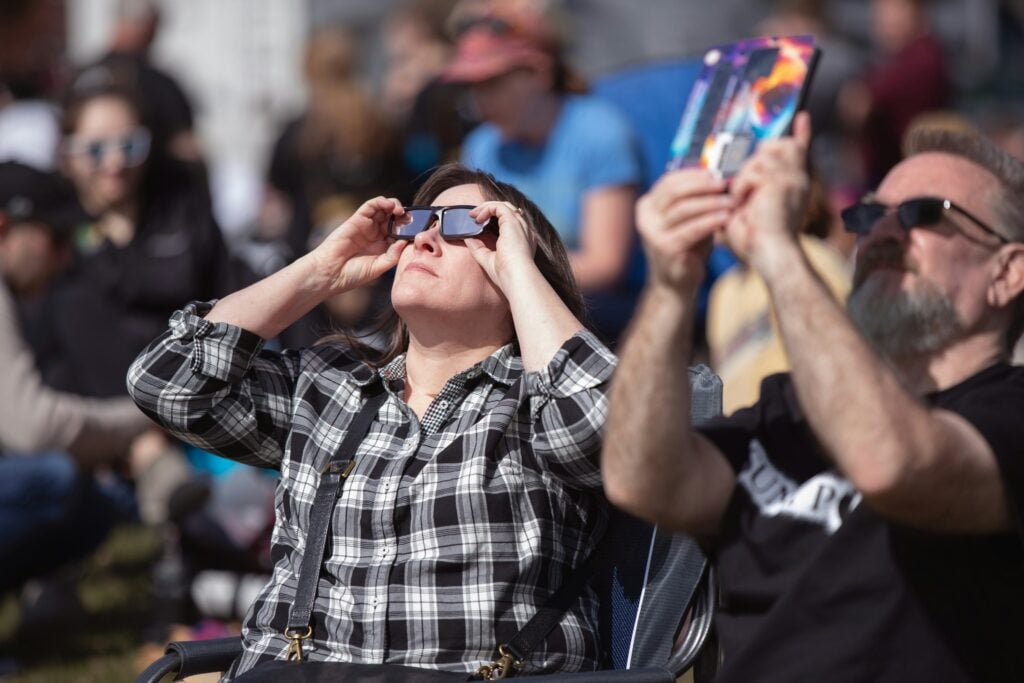
Why ordinary sunglasses are dangerous
Experts warn that ordinary sunglasses are not safe for viewing a solar eclipse, no matter how dark they appear.
Standard sunglasses do not block the intense ultraviolet and infrared radiation emitted by the Sun and can cause permanent retinal damage within seconds.
Only eclipse glasses certified to the ISO 12312-2:2015 international safety standard provide adequate protection, blocking virtually all harmful solar radiation while allowing safe observation.
Looking directly at the Sun without certified protection can cause solar retinopathy, a permanent burn to the retina.
Because the retina has no pain receptors, many people do not realise damage is occurring until it is too late.
How to check your glasses are genuine
Before using eclipse glasses, make sure they display the ISO 12312-2:2015 certification and the manufacturer’s name.
The lenses should be free from scratches, holes or tears. If the filter is damaged in any way, it should not be used.
A simple test is to look briefly at a bright LED light through the glasses. You should only see a faint glow. If the light appears bright or clear, the glasses are unlikely to provide adequate protection.
Where to buy eclipse glasses if free supplies run out
If the free stock is exhausted, certified eclipse glasses are available from many opticians, specialist astronomy retailers and some pharmacies, although availability varies.
They can also be purchased online, but buyers should always verify that the glasses clearly state they comply with ISO 12312-2:2015, as not every product sold online meets the required safety standard.
With demand expected to surge in the final days before the eclipse, experts recommend obtaining certified glasses as soon as possible.