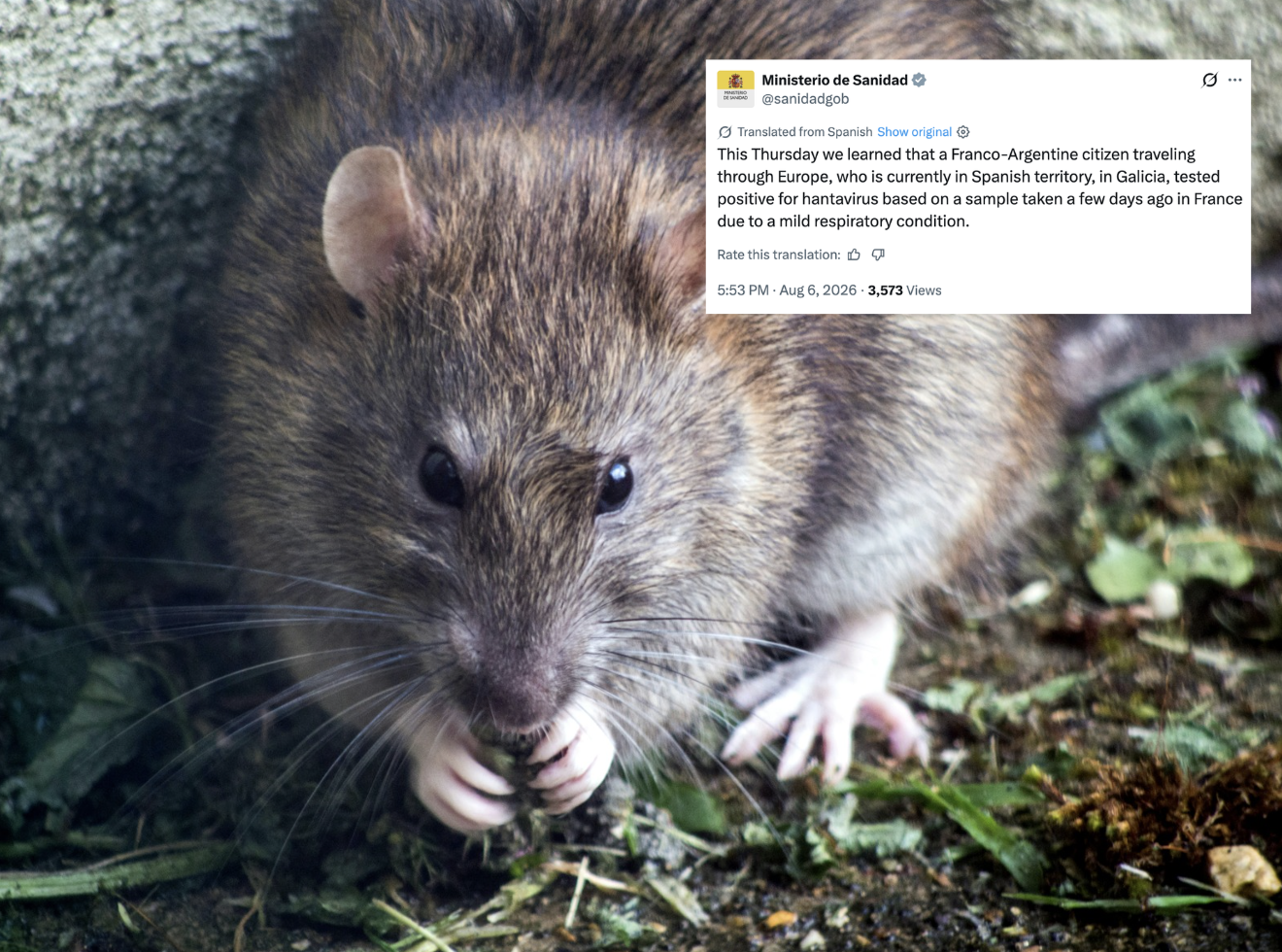

Spanish health authorities have confirmed a case of the rare Andes strain of hantavirus.
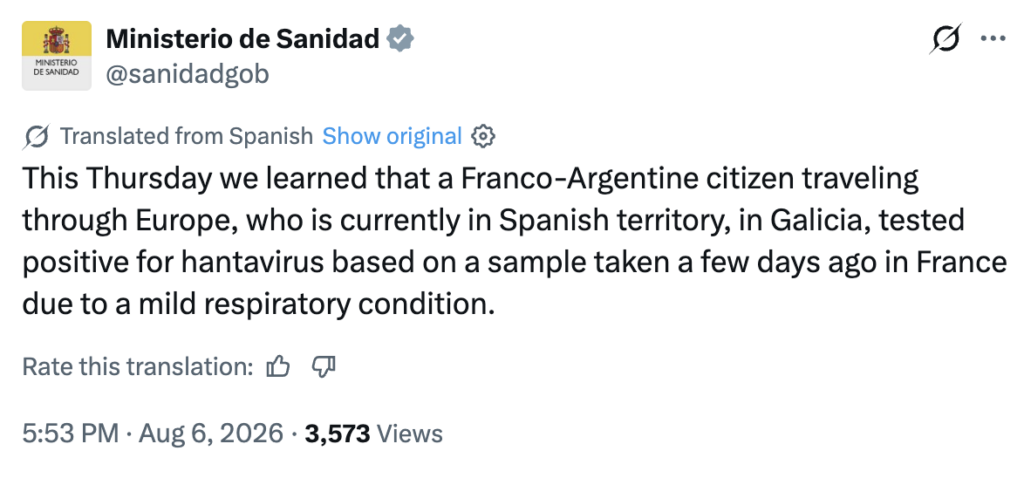
It comes after a Franco-Argentinian tourist who recently visited France tested positive before travelling to Spain.
The patient, who is currently in Galicia, has been isolated as a precaution, although the Ministry of Health stressed he is now asymptomatic and no longer contagious.
According to the ministry, the man sought medical treatment in France after developing mild respiratory symptoms during a trip in the second half of July.
French health authorities later confirmed he had contracted the Andes strain of hantavirus, prompting officials in both countries to coordinate their response.
Spanish authorities say there is no immediate risk
The Ministry of Health said it has been in contact with public health officials in Galicia and their French counterparts.
‘The patient attended medical services in France with very mild symptoms, which were subsequently identified as hantavirus,’ the ministry said.
‘He later travelled to Spain while asymptomatic and was therefore no longer capable of transmitting the virus.’
French authorities have advised the patient to remain isolated at his accommodation while public health investigations continue.
Spain’s Centre for the Coordination of Health Alerts and Emergencies (CCAES) and Galicia’s public health service are now assessing whether any further measures are required under Spain’s infectious disease protocols.
Why the Andes strain is different
Most hantavirus infections are caught directly from infected rodents and cannot spread between people.
However, the Andes strain is the only known variant capable of person-to-person transmission, making it a particular concern for health authorities.
According to the World Health Organisation, the incubation period can be as long as 42 days, although symptoms most commonly develop within the first four weeks after exposure.
Spain has established protocols for managing confirmed cases, including laboratory confirmation by the National Centre for Microbiology and specialist treatment where necessary.
Follows cruise ship outbreak
The case comes just weeks after the WHO declared an outbreak of Andes hantavirus aboard the MV Hondius cruise ship over.
That outbreak, which began after the vessel sailed from Ushuaia in Argentina, resulted in 13 confirmed cases, including three deaths, before being officially declared over on July 2.
Although tens of thousands of hantavirus infections occur globally each year, they are overwhelmingly caused by contact with infected rodents.
The Andes strain remains exceptionally rare because of its ability to spread between people.