
More than half of Spain’s land is already showing signs of desertification.
That’s the stark warning made by a new report from the European Commission, which labels Spain as the worst-affected country in Europe.
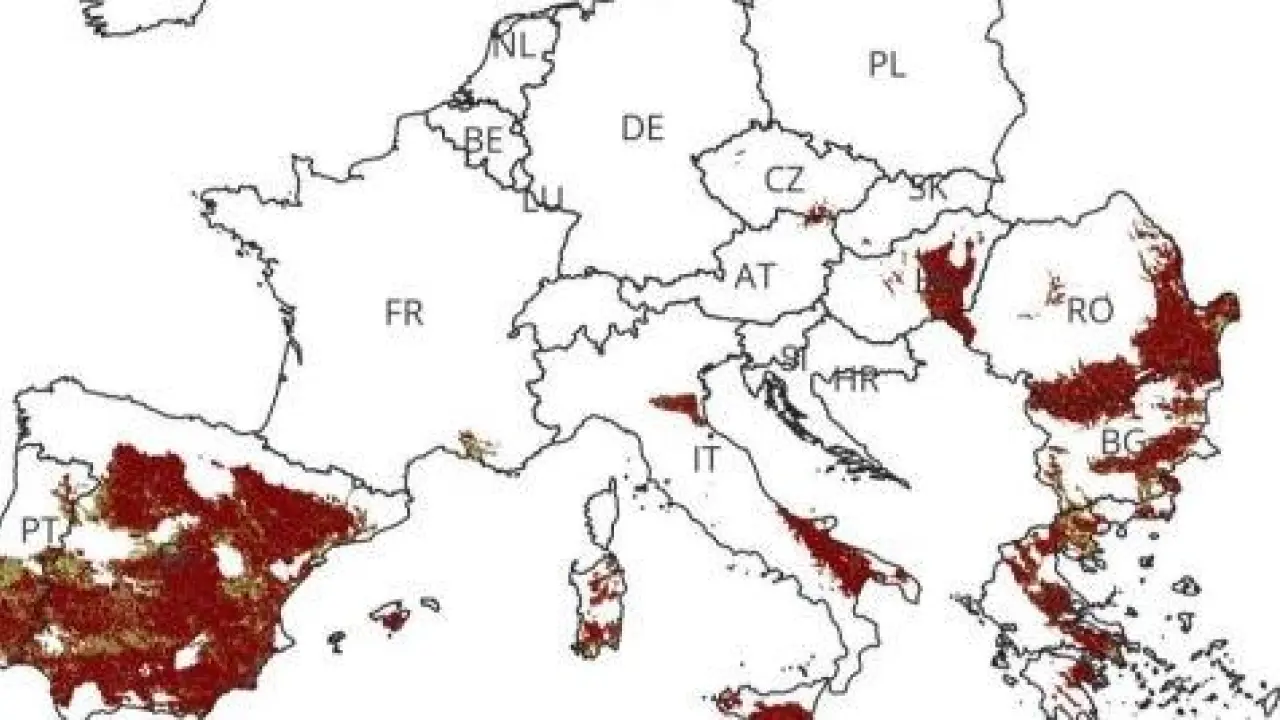
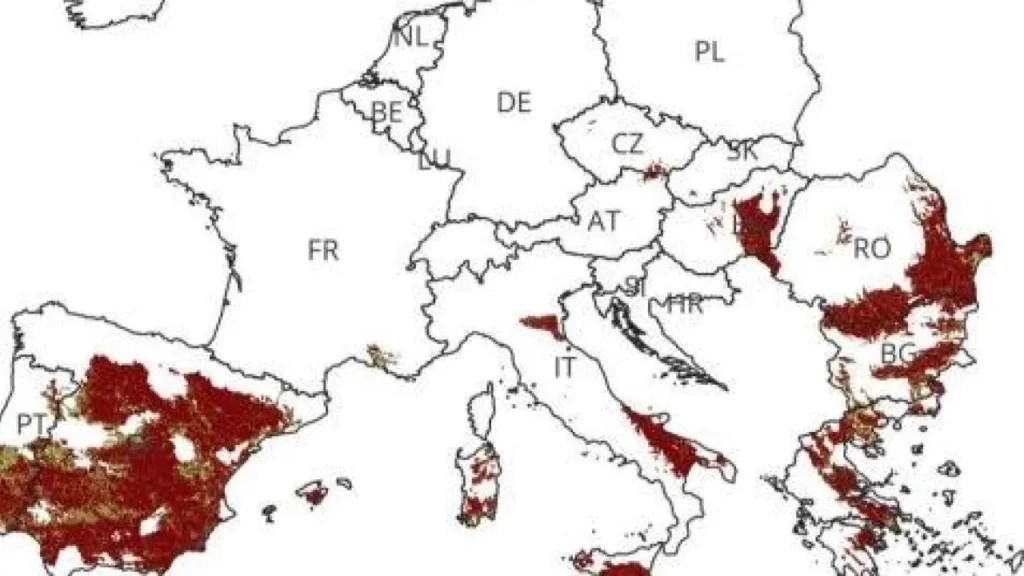
The study, carried out by the Joint Research Centre (JRC), found that 53% of Spain’s territory now meets the conditions for desertification, placing it well ahead of Cyprus (45%) and Greece (36%).
Researchers used a new methodology to assess soil degradation, measuring the decline in land quality and productivity caused by both natural processes and human activity.
Desertification refers to severe land degradation in already dry regions.
Across the EU, around 12% of land measuring 530,000 square kilometres, is now affected by desertification, impacting almost 42 million people.
The problem is particularly acute in southern Europe, where arid regions account for around 15% of the EU’s total land area.
The report also found that more than 70% of Spain’s land shows at least one warning sign of soil degradation, such as erosion, pollution, nutrient imbalance or biodiversity loss.
Only Ireland, Slovenia, Hungary and Greece recorded a higher proportion of land displaying at least one symptom of degradation, but Spain remains the country facing the greatest overall risk of desertification due to the scale and severity of the problem.
Experts also warned that the situation is likely to worsen over the coming decades.
Climate projections for the period between 2021 and 2040 suggest that a further 1,004,608 square kilometres across the EU could face a high risk of desertification as rising temperatures increase aridity, including in areas not currently classified as drylands.
The new assessment framework was developed following a recommendation by the European Court of Auditors in 2018 and introduces a common methodology for measuring desertification across all EU member states.
Researchers said the standardised approach will help governments better target climate adaptation measures, protect soils and safeguard agricultural productivity as Europe faces hotter temperatures, more frequent droughts and growing pressure on water resources.