
Ceuta’s deputy leader has warned that another mass migrant crossing from Morocco could happen ‘whenever they want’.
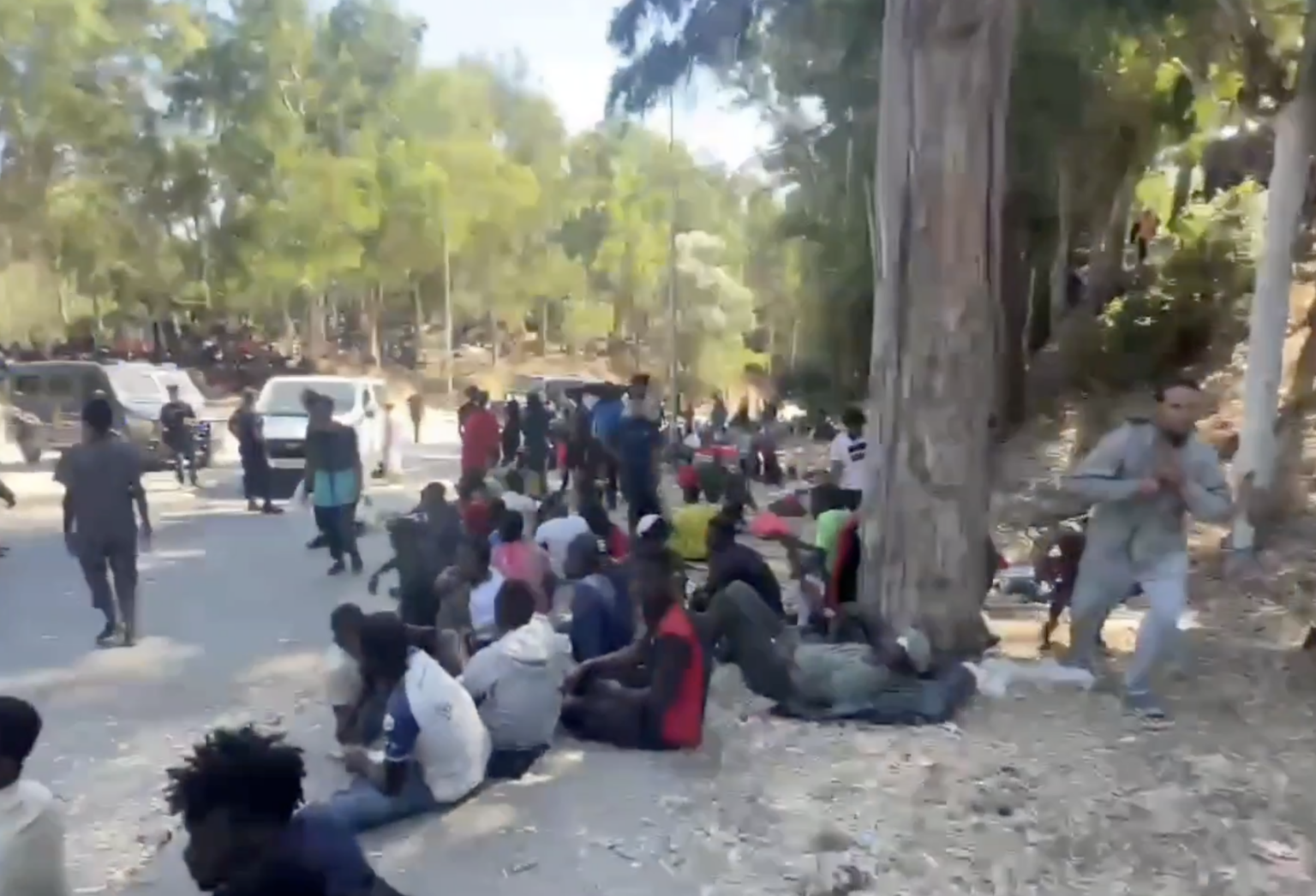
It comes as the city continues to struggle with the aftermath of last week’s unprecedented border crisis, with thousands of migrants continuing to live on the streets.
Kissy Chandiramani, Ceuta’s second vice president and regional minister for finance and economic transition, urged Spain and the EU to find a long-term solution after more than 80 people died during the mass crossing on July 30 and 31, which saw more than 60,000 people flood into the Spanish enclave.
Meanwhile, rumours are circulating on social media that a fresh mass crossing is being planned for August 15.
‘The fear is real because this is the second time it has happened,’ Chandiramani told Canal Sur Radio on Tuesday.
‘It is clear that if Morocco wants to, this will happen again whenever they want.’
Her comments came as EU interior ministers met to discuss the crisis, with Chandiramani calling for fundamental changes to the way Europe’s external borders are managed.
‘We believe this situation cannot simply be left as it is, because otherwise we are condemning ourselves to seeing it repeated every time there is an incident or misunderstanding with our neighbouring country,’ she said.
She described the mass crossing as ‘an attack on Spain’s territorial integrity’ and argued that Europe should assume greater responsibility for protecting the bloc’s external frontiers while ensuring migration is carried out through legal and orderly routes.
Despite more than 70,000 people having already returned to Morocco, Chandiramani said the situation in Ceuta remained ‘serious’, estimating that between 3,000 and 5,000 migrants were still sleeping rough across the city.
‘There are more people outside than inside the CETI reception centre,’ she said, warning that the city lacked the resources to provide even basic humanitarian assistance to everyone still stranded there.
She also revealed that Ceuta’s government had raised concerns before the crisis escalated, saying officials issued a public warning on the morning of July 30 after around 2,000 people had already entered the city over the previous days.
‘We were already warning that something abnormal was happening – these were not simply isolated swimmers crossing the border,’ she said.
Chandiramani also referred to reports circulating in Spanish media and on social media suggesting another attempted mass crossing could take place on August 15, although she did not provide evidence that such an event had been confirmed.