
Thermometers could soar to a stifling 47C next week in what Spanish newspapers have branded ‘the mother of all heatwaves.’
According to state weather agency Aemet, the official heatwave will begin on Tuesday, July 21, and is currently expected to last until at least Thursday, bringing dangerously high temperatures across much of the country.
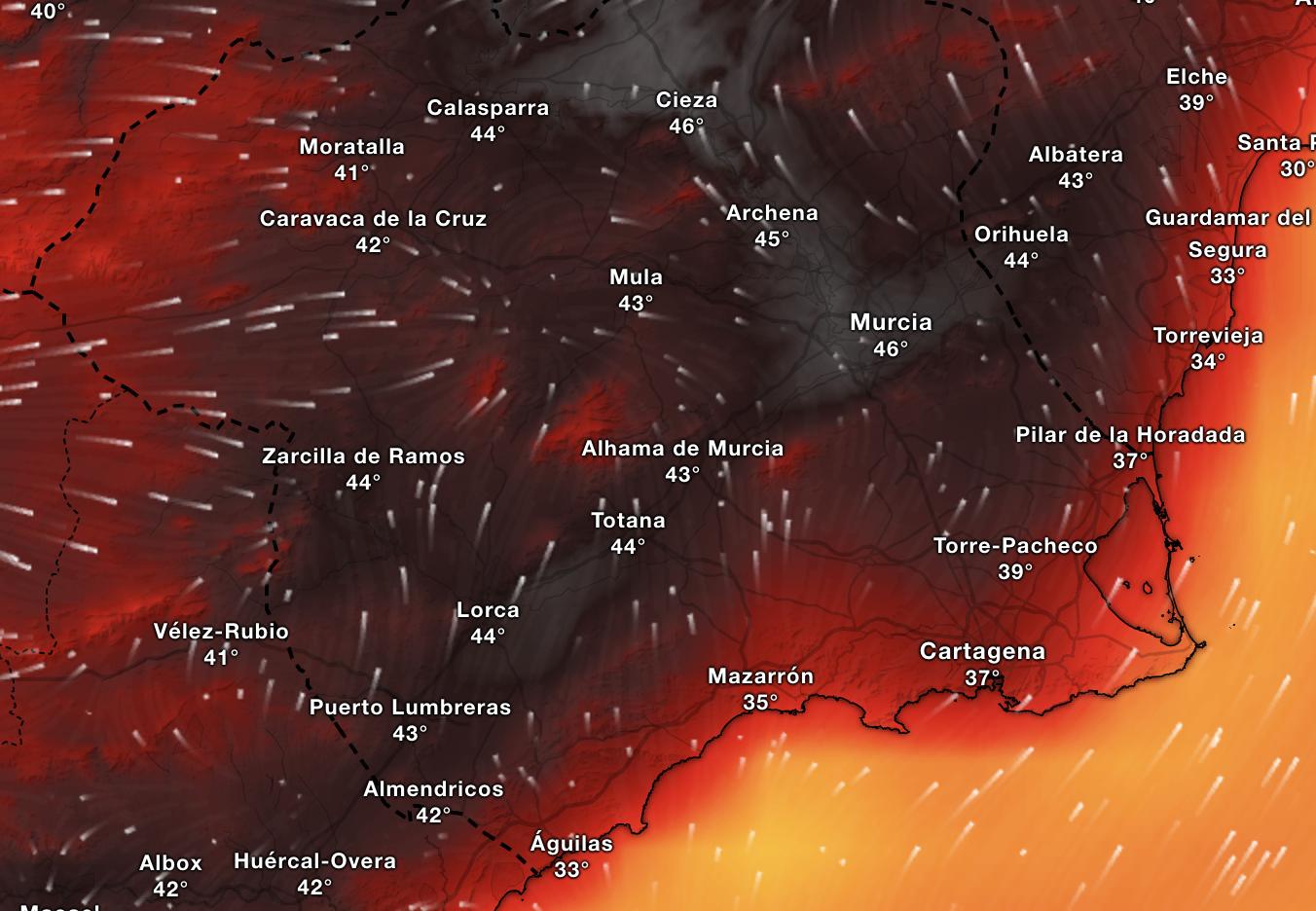
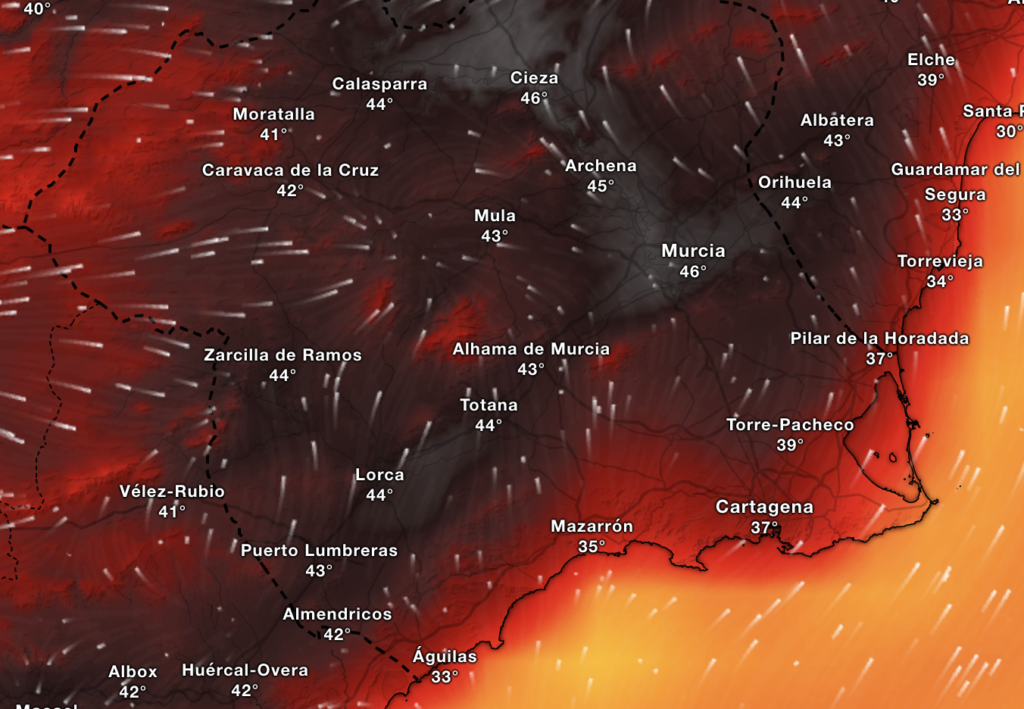
The worst of the heat will be felt in Andalucia and the Region of Murcia, where temperatures are forecast to climb above 45C.
Some weather models are even predicting 46C to 47C in parts of Murcia on Thursday, although Aemet stressed those figures will be confirmed in the coming days.
Orange weather warnings are expected across many inland areas, where temperatures could reach 43C from Tuesday, while coastal areas will also be affected under yellow alerts.
The peak of the heatwave is expected on Thursday, when towns including Cieza, Archena, Molina de Segura, Alcantarilla and Santomera could all see highs of 47C, with Murcia city forecast to reach 46C.
Aemet said the most intense heat on Wednesday and Thursday will affect the southeastern third of the peninsula, the Guadalquivir Valley, the Ebro Valley, northeastern inland areas, the Pyrenean valleys, and parts of inland Mallorca.
If forecasts hold, it will mark Spain’s third official heatwave of the summer, underlining what has already been an exceptionally hot season.
Authorities are warning that conditions will be particularly dangerous during the middle of the day, especially for elderly people, young children, those with underlying health conditions and anyone working or exercising outdoors.
The heatwave is also expected to bring tropical nights, with temperatures remaining unusually high after sunset, offering little opportunity for buildings and people to cool down.
Civil Protection has urged residents and holidaymakers to limit time in direct sunlight, stay in cool and well-ventilated places, drink plenty of water, eat light meals with a high water content and wear loose, light-coloured clothing that covers the skin and protects the head.
People are also being advised to avoid strenuous physical activity during the hottest hours of the day and to check regularly on elderly relatives, neighbours and vulnerable people.
The combination of scorching temperatures, dry vegetation and low humidity is also expected to push the wildfire risk to extreme levels.
Authorities have reminded the public not to discard cigarette ends, rubbish or glass bottles in the countryside, as they can ignite fires, and warned against lighting fires or camping outside designated areas.