A potentially dangerous spider known for its necrotic venom has been recorded in the Iberian Peninsula for the first time.
Researchers have confirmed the discovery of several specimens in the Portuguese city of Porto.
The finding has sparked concern among arachnid experts, although they stress the risk to the public currently remains low.
The species, Loxosceles laeta, commonly known as the Chilean recluse or Chilean corner spider, is native to South America and is widespread in countries including Chile, Peru, Argentina and Brazil.
It belongs to the same genus as the notorious brown recluse spider and is regarded as one of the medically most significant spiders in the world.
Despite measuring just 8mm to 30mm across with its legs extended, the spider carries a powerful necrotic venom capable of causing serious skin damage.
In rare cases, bites can trigger a condition known as loxoscelism, leading to extensive tissue destruction and, exceptionally, life-threatening systemic complications.
Researchers from the University of Porto, whose findings were reported by Euronews, emphasised that the spider is naturally shy and avoids contact with humans.
It typically hides in cracks, behind walls, ceilings and other dark, undisturbed spaces, emerging mainly at night.
Because of this behaviour, experts say bites are uncommon and usually occur only when the spider is accidentally trapped against a person’s skin or feels directly threatened.
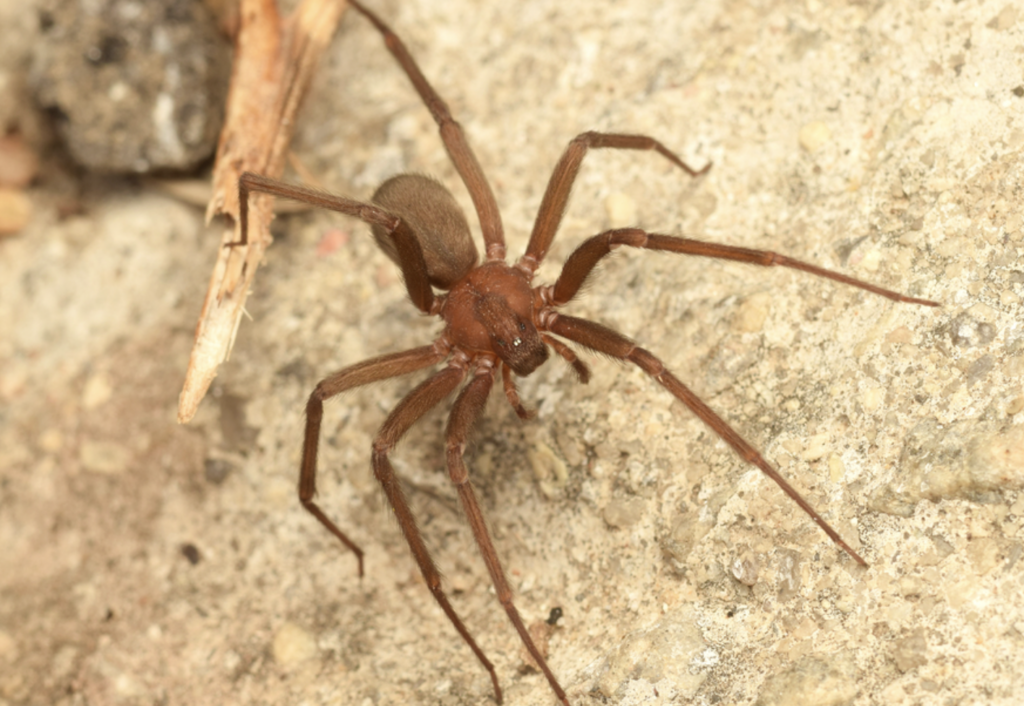
According to the researchers, the first confirmed sighting came on September 10, 2025, when a live male specimen was found on a wall in Porto’s historic centre near Campo dos Martires da Patria.
A second male was discovered on January 10, 2026, after being caught in a sticky insect trap inside another building in the city.
Although the trap had not been intended for spiders, the specimen enabled scientists to confirm the species’ presence.
The researchers believe the most likely explanation is that the spiders arrived through international freight transport.
At this stage, scientists say there is no evidence that the species has established a breeding population in Porto.
However, they cannot rule out the possibility that more spiders remain hidden inside urban buildings where they are difficult to detect.
The discovery is detailed in the 2026 scientific paper First record of Loxosceles laeta (Nicolet, 1849) for the Iberian Peninsula, published in the journal Arquivos Entomolóxicos by researchers Francisco Gil and José Manuel Grosso-Silva.
The finding comes after reports last year of a man in Malaga who was left with severe tissue damage following a suspected bite from another species of recluse spider.