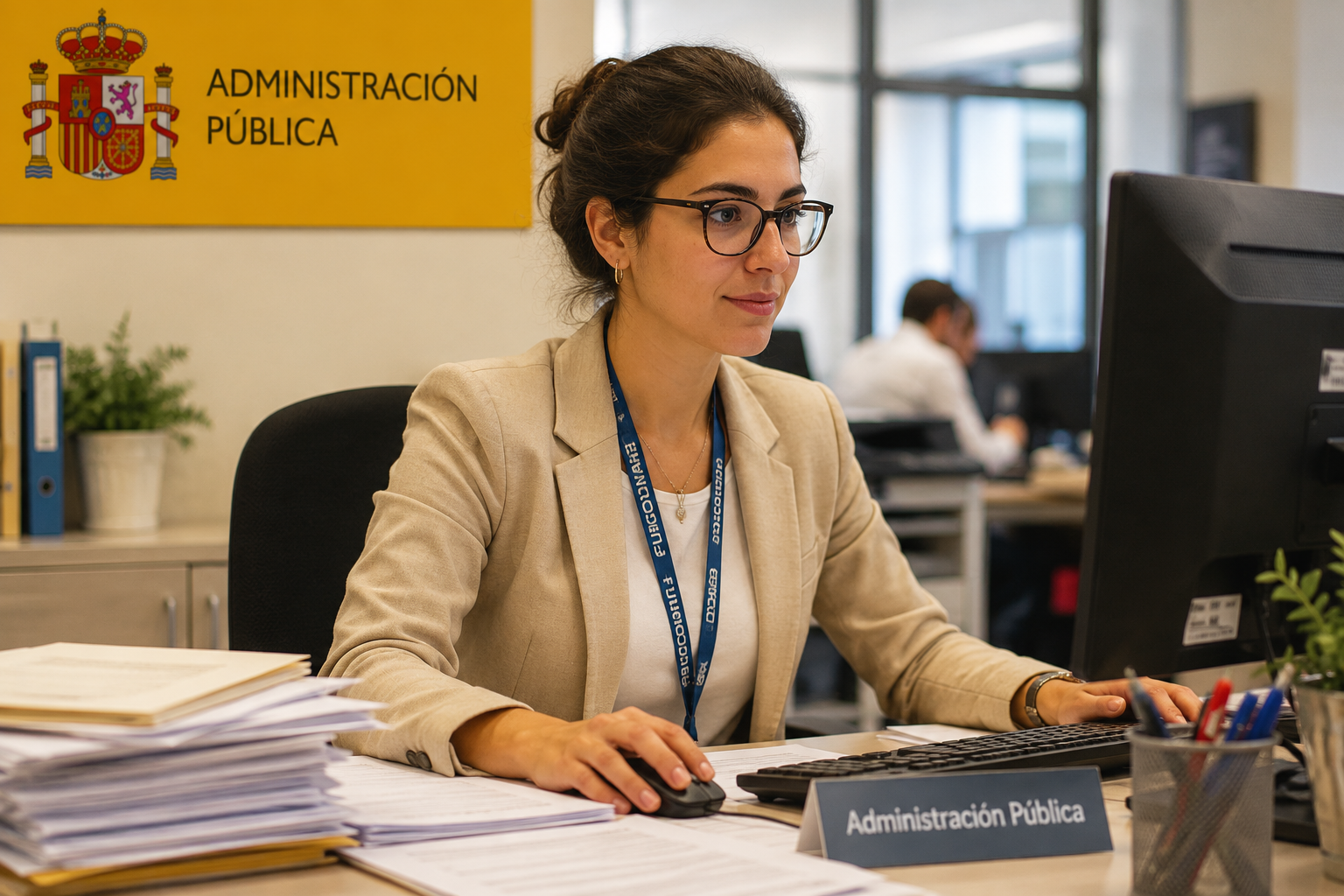

Nearly half of young people in Andalucia dream of becoming civil servants, according to a major new study that sheds light on the career ambitions, salary expectations and life goals of the region’s next generation.
The findings come from the latest E Report 2026, produced by the Sevilla Chamber of Commerce, which surveyed 3,197 students aged between 15 and 18 across 52 schools in Sevilla, Cadiz, Cordoba and Huelva.
The study found that 43% of respondents hope to secure a job in the public sector, making it by far the most popular career aspiration among young Andalucians.
The appeal appears to be driven by a desire for stability, work-life balance and job security, with many students prioritising flexible working conditions over high salaries.
Healthcare and education emerged as the most attractive professional fields, accounting for the career ambitions of 60% of those surveyed.
Business management and administration ranked third at 18%, followed by technology and computing (17%) and defence-related careers (14%).
At the same time, entrepreneurship is becoming increasingly popular.
One in three students said they would like to run their own business, while 45% already have a business idea they hope to develop either during or after their studies.
Researchers described the figures as encouraging and suggested public institutions should focus on improving access to funding and support for aspiring young entrepreneurs.
The report also revealed an overwhelmingly positive outlook among young people regarding their future.
More than nine in ten respondents believe they will become financially independent before turning 30, while almost a quarter think they will leave home before the age of 25.
The optimism contrasts sharply with reality.
According to Spain’s latest Youth Emancipation Observatory, the average age at which young people leave their family home is currently 30.2 years old – one of the highest figures in Europe.
Salary expectations also appear to be significantly higher than current labour market conditions.
Some 87% of students expect to earn more than €1,500 per month when they begin working.
However, official figures from Spain’s National Statistics Institute show the average gross monthly salary for under-25s in Andalucia is currently just €1,148.
When asked what they value most in a future job, nearly half of respondents chose a healthy work-life balance.
Around 45% said opportunities to reconcile family and professional life were more important than a high salary, good workplace culture or career progression.
Flexible working hours and hybrid working arrangements were identified as the most desirable employment benefits.
Despite this, most students were unwilling to sacrifice pay in exchange for greater flexibility, with 73% rejecting the idea.
The study also suggests young people are increasingly confident about building a future in Andalucia itself.
Nearly three-quarters (73%) said they believe the region offers a good environment for their professional development, a significant increase from 63% recorded in 2020.
Technology is also playing a growing role in career planning.
More than 80% of those surveyed believe that knowing how to use artificial intelligence tools will be a key factor in securing employment in the future.
The report forms part of a long-running initiative by the Sevilla Chamber of Commerce aimed at helping teachers, careers advisers and educational professionals better understand the aspirations and concerns of young people as they prepare to enter the workforce.
Why do so many young Spaniards want to become civil servants?
The appeal of becoming a funcionario goes far beyond salary. In Spain, civil service jobs are widely regarded as offering the ultimate combination of stability, security and quality of life.
For decades, many young Spaniards have grown up in a labour market marked by economic crises, high youth unemployment and relatively low private-sector wages. As a result, securing a permanent government position is often seen as one of the safest career paths available.
The biggest attraction is job security. Once candidates pass the notoriously difficult oposiciones exams, they are awarded a permanent position with strong legal protections and little risk of redundancy.
Civil servants also typically enjoy regular working hours, generous holiday allowances, strong pension schemes and predictable career progression, making it easier to balance work and family life.
While private-sector jobs can sometimes offer higher salaries, public sector roles provide long-term financial stability and protection from economic downturns, something many young people increasingly value.
There is also a cultural element. Becoming a funcionario continues to carry significant social prestige in Spain and is often viewed as a marker of professional success.
The popularity of these jobs is reflected in a well-known Spanish saying: ‘The nightmare of a Spaniard is facing a civil servant, but the dream is becoming one.’