
A previously unknown fault system is slowly forming beneath the waters off southern Spain, scientists have revealed.
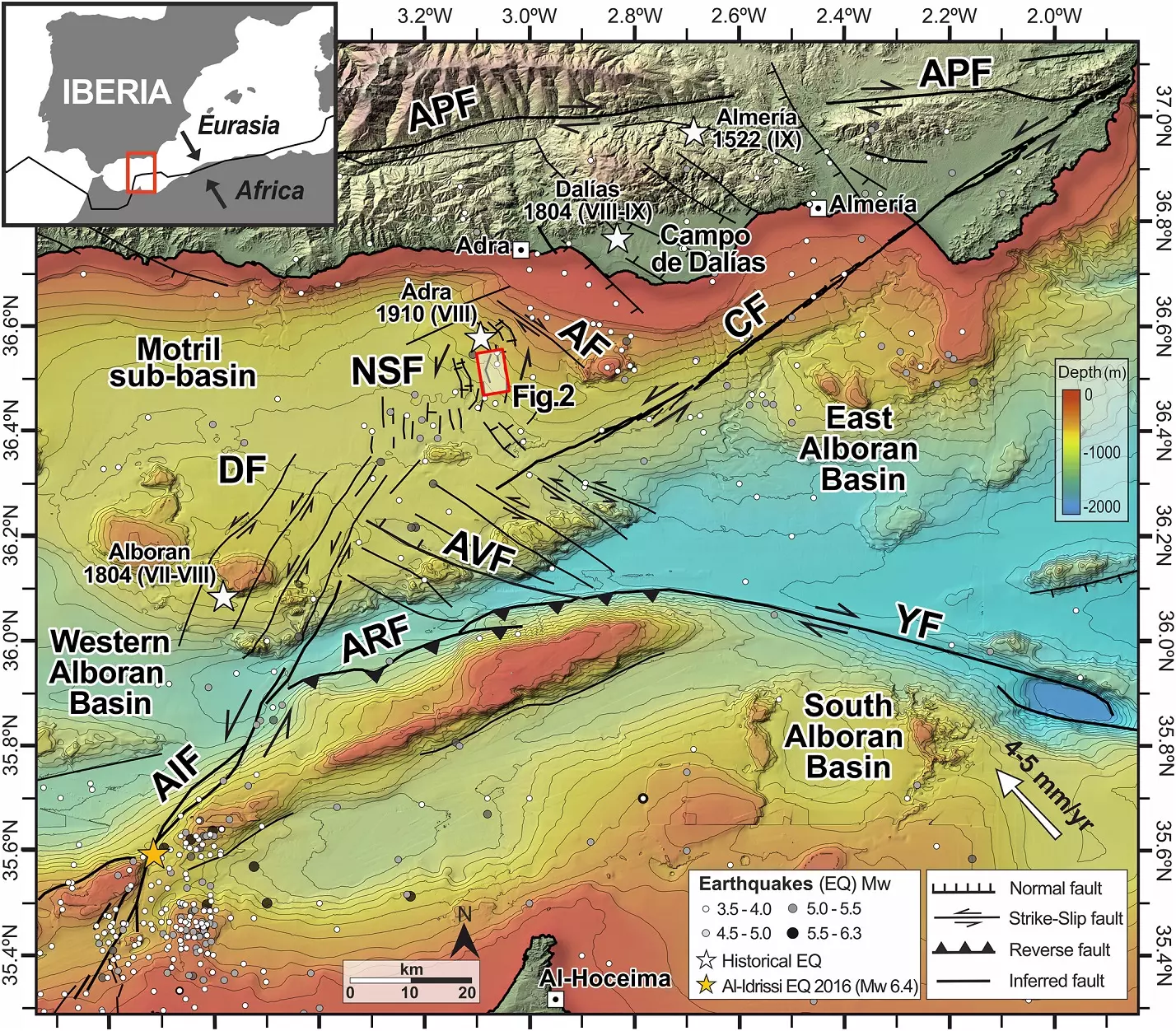
Researchers studying the floor of the Alboran Sea, between Andalucia and North Africa, have identified what they describe as a young and developing network of faults hidden around 60km off Almeria.
While the system remains in its infancy, experts warn it could evolve into a major geological structure capable of generating powerful earthquakes in the future.
The discovery, published in the scientific journal Tectonics, marks the first time researchers have been able to observe such an early stage in the birth of a fault system beneath the sea.
‘It is like witnessing the moment a section of the Earth’s crust begins to tear apart,’ said lead researcher Ariadna Canari of Spain’s Institute of Marine Sciences (ICM-CSIC).
‘Over time, these structures can develop into faults capable of generating large earthquakes that may affect nearby regions.’
The fault lies in the Alboran Sea, one of the most tectonically complex areas of the Mediterranean, where the African and Eurasian plates continue their slow collision beneath the surface.
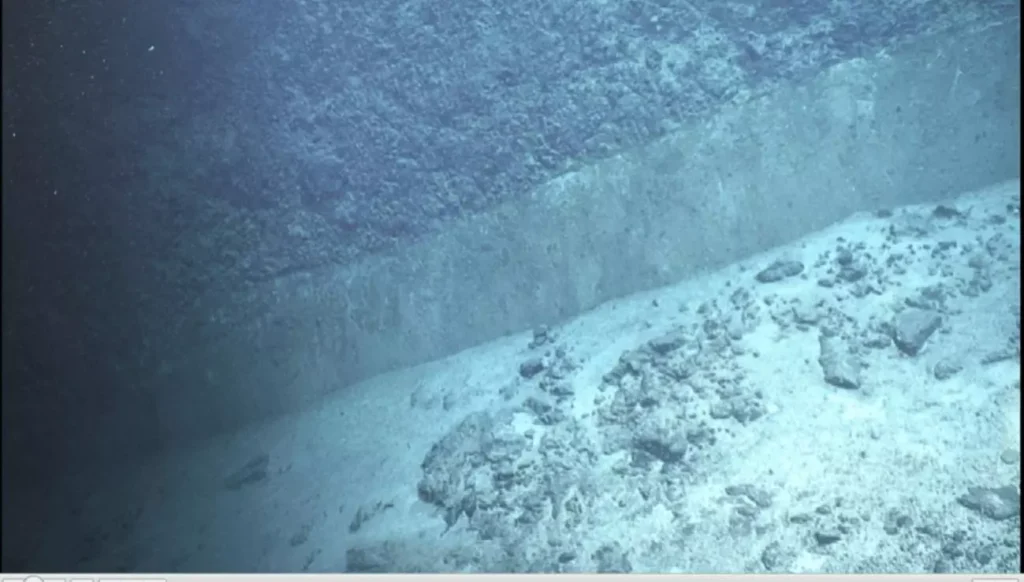
Using cutting-edge underwater drones and ultra-high-resolution seabed mapping, scientists identified a series of underwater scarps, fractures and deformations that reveal the first signs of a fault system taking shape.
The findings offer a rare glimpse into a geological process that normally unfolds over thousands or even millions of years.
Although the newly discovered structure is not yet fully developed, researchers say it is already showing signs of activity.
The study suggests it may even have been linked to the 1910 earthquake that damaged buildings in the Almeria town of Adra and was felt across much of south-eastern Spain.
Scientists also believe the system could eventually become connected to the nearby Al-Idrissi fault, which generated a magnitude 6.4 earthquake in 2016 that caused significant damage in northern Morocco.
The discovery has raised fresh questions about what else may be hidden beneath the western Mediterranean.
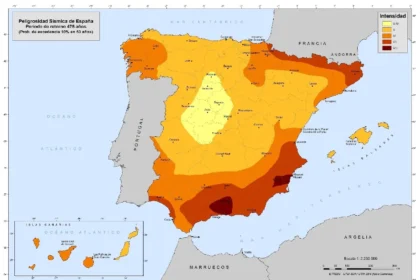
According to the research team, regions such as the Alboran Sea are often viewed as relatively low-risk because major earthquakes occur so infrequently.
However, the absence of recent disasters does not necessarily mean dangerous fault systems are absent.
‘Unknown faults may exist in these areas that are capable of producing earthquakes of magnitude six or greater,’ said co-author Hector Perea.
The researchers say the findings underline the importance of continued monitoring of the seabed around southern Spain, where slow-moving geological forces continue to shape the region beneath the waves.
While there is no indication of any imminent danger, the discovery provides scientists with a crucial new piece of the puzzle in understanding how future earthquakes could develop in the western Mediterranean.
Read more Andalucia news at the Spanish Eye.