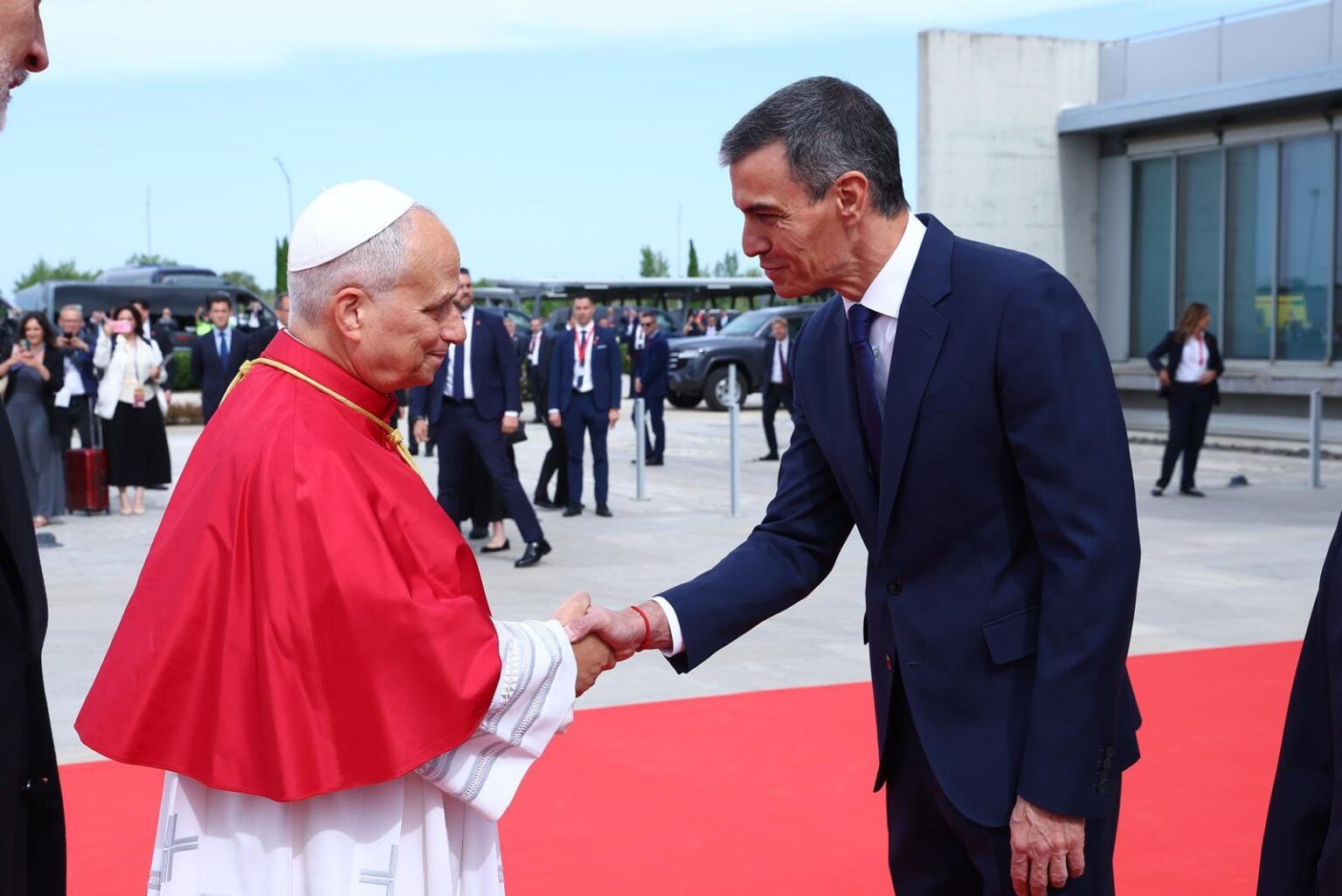

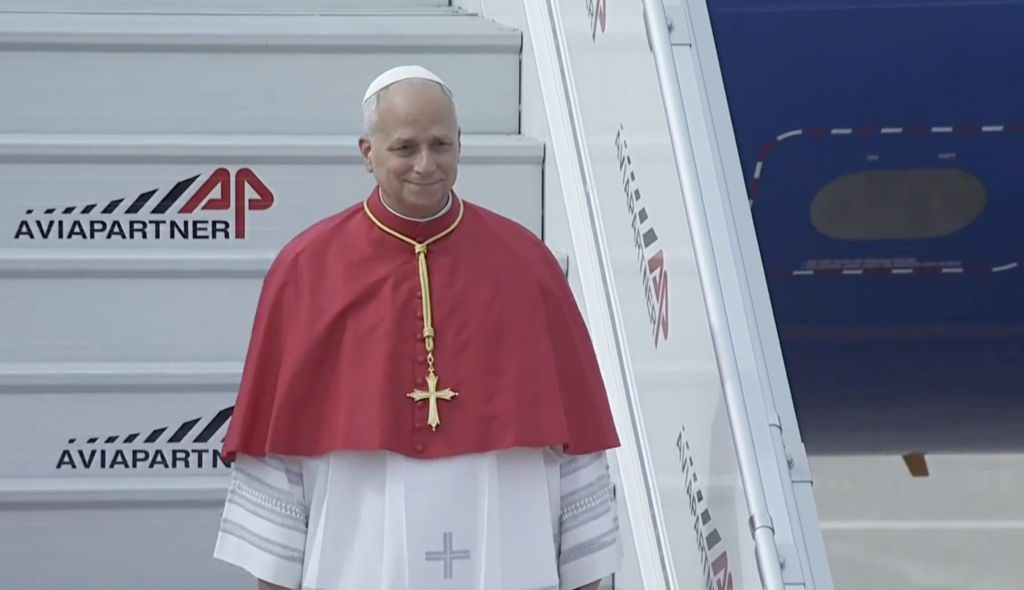
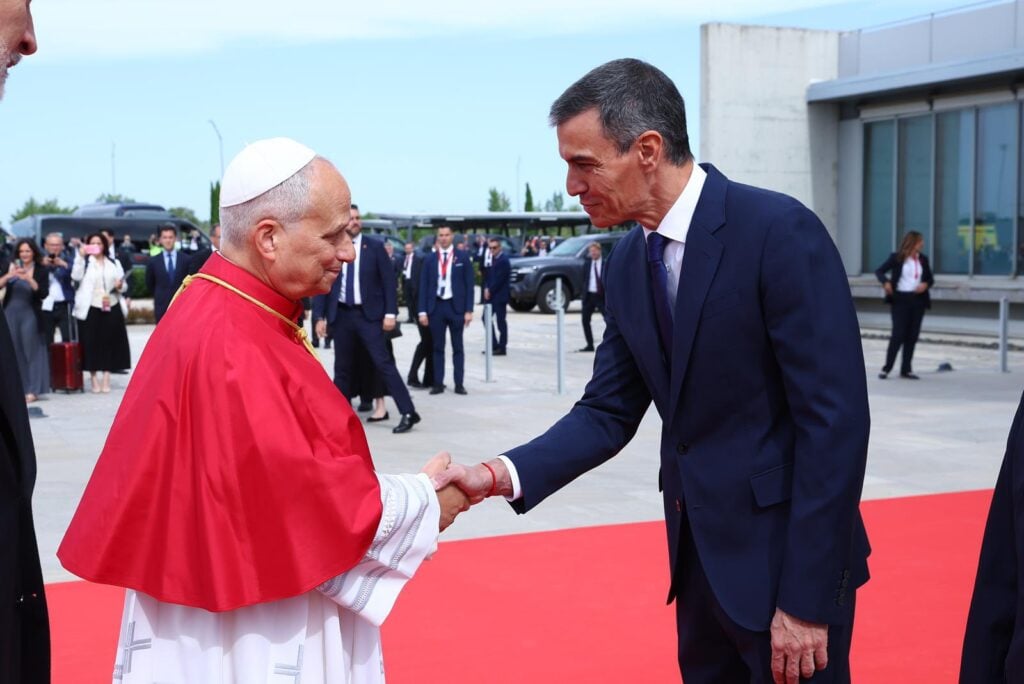
Pope Leo XIV appeared to deliver a thinly veiled criticism of the growing wave of populist politics sweeping parts of the West during his first speech in Spain on Saturday.
Speaking in Madrid at the start of his first official visit to the country, the pontiff praised Spain for its commitment to international law, multilateralism and dialogue, while warning against polarisation, simplistic political narratives and leaders who prioritise ideology over truth.
Although the Pope did not mention any politician by name, his remarks are likely to spark debate on both sides of the Atlantic, particularly given his previous criticism of nationalist and populist movements.
Addressing Spanish political leaders, members of the royal family and senior officials, Leo said he was grateful for Spain’s ‘faithful adherence to international law and multilateralism’, describing it as an example of solidarity and cooperation between nations.
It comes as tensions in the Middle East continue to threaten global stability following the invasion of Iran by the US and Israel, which Spain has repeatedly described as ‘illegal’.
The Pope also launched a broad attack on the politics of division.
‘I invite everyone to set aside divisive and polarising narratives,’ he said.
He warned against ‘identity-based approaches that seem to explain everything yet only fill the world with ghosts and enemies’ and argued that Europe’s future depends on embracing complexity rather than reducing difficult issues to simplistic slogans.
At several points during the speech, Leo returned to the theme of truth.
Quoting Pope Francis, he warned of the danger of becoming trapped in rhetoric detached from reality.
‘Realities are greater than ideas,’ he said, adding that people should avoid dwelling solely in ‘words, images and rhetoric’.
The pontiff argued that society increasingly faces the temptation to seek popularity by inflaming divisions rather than promoting understanding.
‘The temptation to gain popularity by fanning the flames of polarisation seems to have grown rather than diminished,’ he said.
He also condemned what he described as a growing erosion of critical thinking in the digital age, warning that new technologies can amplify prejudice and spread destructive ideas.
‘Prejudices are magnified, critical thinking is weakened and dominating interests spread death wishes,’ he said.
In another passage that could be interpreted as a rebuke to anti-immigration politics, Leo pointed to Spain’s own history as proof that coexistence between different cultures and religions is possible.
He highlighted the centuries-long presence of Muslims on the Iberian Peninsula and praised historic centres such as Cordoba and Toledo, where Christians, Muslims and Jews collaborated in the exchange of ideas and knowledge.
‘There was not only confrontation, but also an attempt to create a space for contact, conversation and dialogue,’ he said.
The Pope repeatedly argued that genuine security cannot be found through walls and weapons alone.
‘Security, which we all too often expect to find in weapons and walls, is in fact best achieved by learning to move forward alongside one another,’ he said.
Leo also called on governments to invest more heavily in education, research, universities and local communities rather than focusing exclusively on hard security measures.
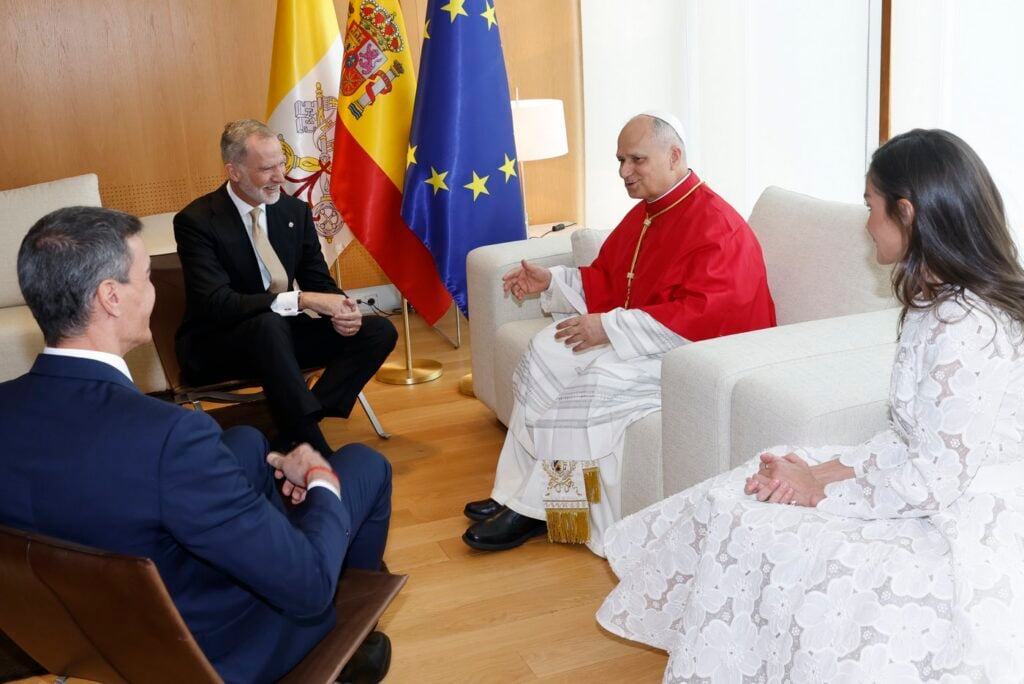
His speech marked the official start of a multi-day visit to Spain, where he is expected to meet political leaders, religious figures and abuse survivors.
The visit is being closely watched across Europe as observers look for clues about how Leo XIV intends to shape the Catholic Church following the death of Pope Francis.
Saturday’s address suggested a continuation of many of Francis’s key themes: support for multilateralism, dialogue between cultures, concern over rising nationalism and a warning against political movements built on fear, division and hostility towards perceived enemies.
At the end of his speech he thanked Spain for promoting peace and international cooperation, before closing with a simple message: ‘God bless Spain.’