
The number of tourist apartment buildings in Sevilla has surged by almost 70% in just three years, raising fresh concerns over investors finding loopholes on holiday flat bans.
According to figures released by Sevilla mayor Jose Luis Sanz, the city now has around 400 tourist apartment blocks, compared to just 240 in 2023.
The increase comes as the growth of traditional holiday rentals has slowed following new regulations introduced by the city council.
Sevilla currently has 9,592 legal tourist rental properties, a figure that fell by 0.54% over the past year, according to Sanz.
But critics argue that while restrictions have curbed the expansion of holiday flats, they may have encouraged investors to switch towards entire buildings dedicated exclusively to tourists.
What’s the difference?
Tourist apartment blocks and tourist rental properties are not the same thing under Spanish law.
Tourist blocks occupy entire buildings and are regulated by the regional government of Andalucia. They are identified by blue plaques displaying the letters ‘AT’ and cannot be mixed with residential use.
Tourist rental properties, known as VUTs, are individual homes or flats rented to visitors and fall partly under municipal control.
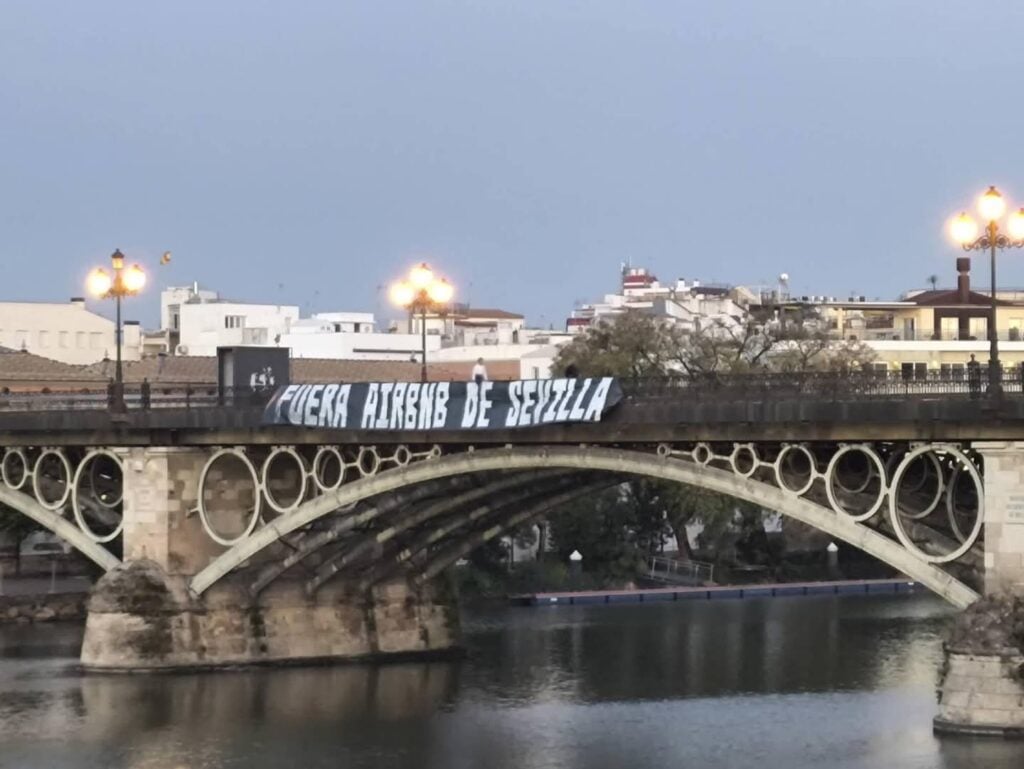
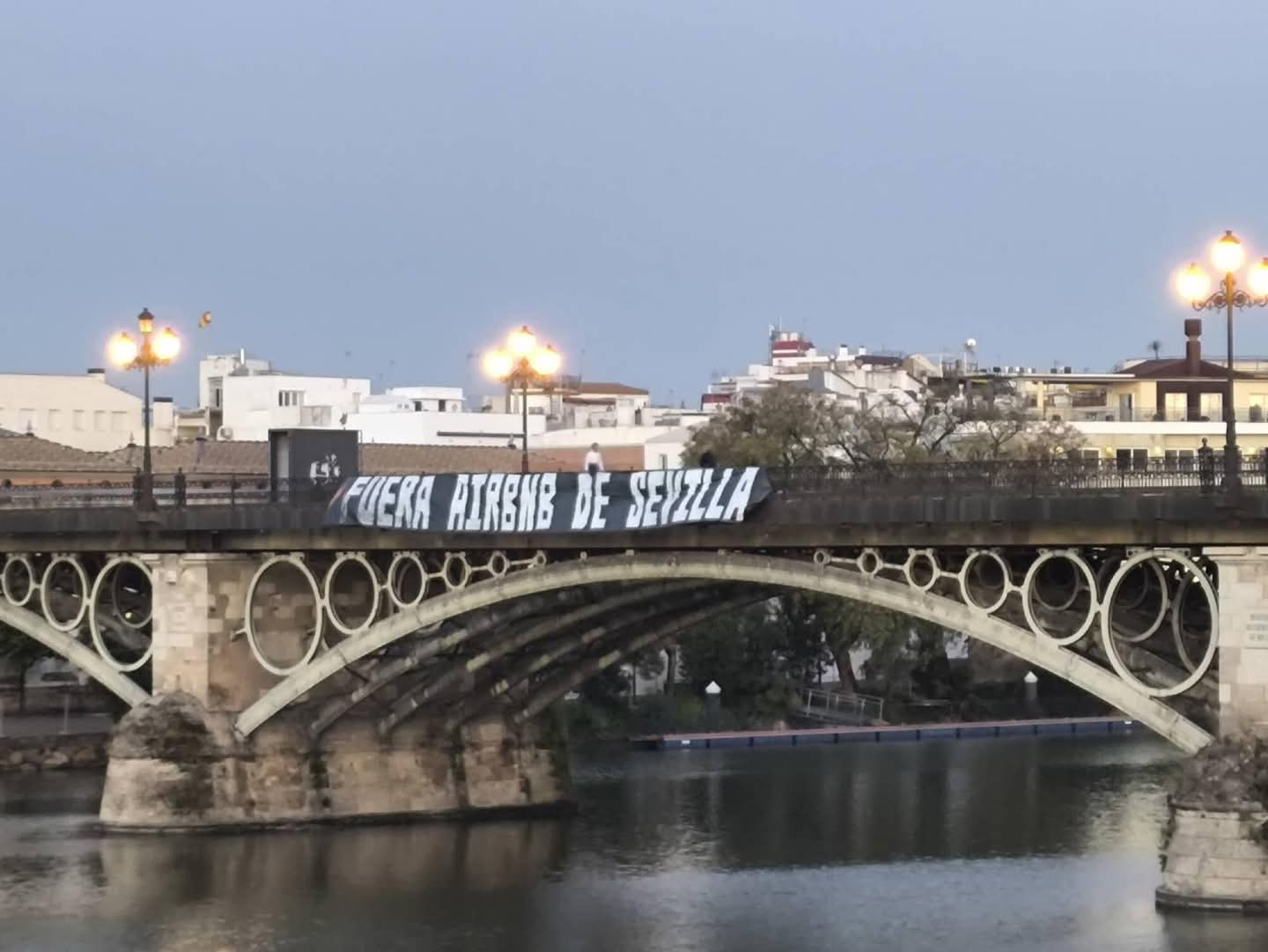
Last October, Sevilla City Council approved new rules, backed by Vox, banning new tourist rental licences in the historic centre and Triana. In other neighbourhoods, new licences are restricted once tourist rentals reach 10% of the local housing stock.
Sanz says the measures have successfully slowed the growth of holiday rentals.
Critics warn of housing impact
However, housing experts argue the regulations may have unintentionally fuelled the rapid growth of tourist apartment blocks.
Iban Diaz, a Human Geography professor at the University of Sevilla, said the increase was a direct consequence of tighter controls on holiday rentals.
‘It is the route that larger professional operators have taken so they can continue growing while avoiding restrictions that mainly affect smaller landlords,’ he said.
Diaz argues many of the new tourist apartment buildings were previously residential properties.
‘Most will have come from former rental buildings that have been converted from residential to commercial use, often after residents were pushed out,’ he said.
He added that investment funds and large property operators are increasingly buying entire blocks and converting them into tourist accommodation.
‘In the end, it is another way of expanding the tourism sector at the expense of residential housing,’ he warned.
Hotel sector defends model
The hotel industry rejects comparisons between tourist apartment blocks and holiday rentals.
The Association of Hotels of Sevilla has previously argued that tourist blocks have existed in the city for more than 50 years without causing housing shortages or neighbourhood disputes.
Its president, Manuel Cornax, said tourist apartments were first introduced in Sevilla in 1972 and should not be confused with holiday rental flats.
Nevertheless, the figures suggest that while Sevilla has succeeded in slowing the growth of holiday homes, tourism accommodation continues to expand through other channels, adding another layer to the city’s increasingly heated housing debate.
Read more Andalucia news at the Spanish Eye.