

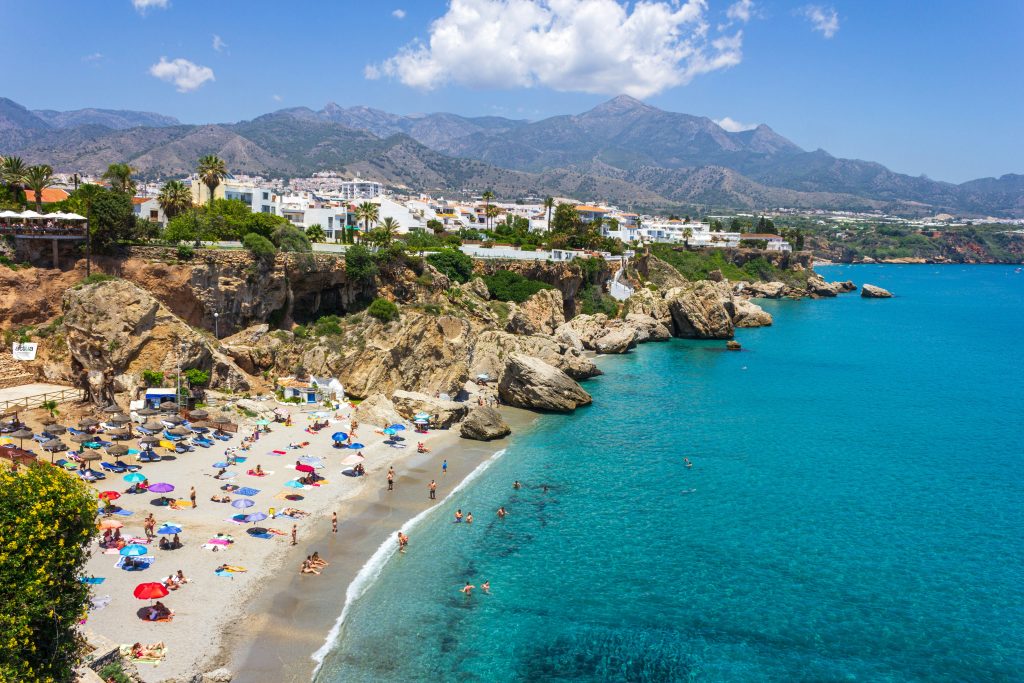
A Costa del Sol town has quietly become one of the biggest tourist apartment hotspots in southern Spain, with roughly one in every four homes now officially registered as holiday rentals.
The striking figures show how dramatically tourism has transformed the once traditional seaside town, long popular with British and northern European visitors.
According to data from the Andalucian Tourism Registry and official housing statistics, Nerja currently has around 4,305 registered tourist apartments and holiday homes.
Meanwhile, the municipality’s total housing stock stands at 16,621 properties.
The numbers mean approximately 25% of all homes in the town are now dedicated to tourist accommodation through platforms such as Airbnb and Booking.com.
The figures also reveal another major shift in the town’s residential makeup.
Nerja now has 8,449 primary residences compared to 8,172 non-primary homes, meaning almost half of all properties are no longer used as permanent residences.
Many are second homes, holiday apartments or short-term tourist rentals.
The impact becomes especially noticeable during the summer months, when the population swells and the town comes under intense tourism pressure.
Nerja has long attracted foreign buyers and international visitors, particularly from the UK, Germany, the Netherlands and Scandinavian countries.
Many overseas owners now use their properties either as holiday homes or lucrative short-term rentals, reinforcing a tourism-driven housing model that has steadily expanded across the eastern Costa del Sol.
The boom in tourist rentals has also transformed the local property market.
With holiday lets generating far higher returns than traditional long-term rentals, many landlords have shifted away from residential tenants in favour of short-stay visitors.
As in many parts of Costa del Sol, the trend has fuelled growing concern over housing access for local residents, particularly younger people and workers struggling to find affordable long-term accommodation.
Rental prices and property values have continued climbing as demand for tourism-focused properties increases.
Despite the concerns, tourism remains one of the town’s biggest economic drivers and continues to underpin much of Nerja’s prosperity.
However, the rapid rise in tourist accommodation has intensified debate over how to balance the local housing market with the demands of the tourism industry.
The regional government is also stepping up scrutiny of tourist apartments across Andalucia.
In recent months, the Junta has launched inspections and licence reviews in several Malaga municipalities amid concerns over potential planning or administrative irregularities tied to some holiday rentals.
Read more Andalucia news at the Spanish Eye.