
Spain’s respected healthcare system was a major reason why it was entrusted with carrying out the evacuation of the hantavirus cruise ship, it has emerged.
The arrival of the quarantined MV Hondius may have sparked widespread debate – but health officials insist the country was ‘trusted’ by the World Health Organization (WHO) precisely because it had the capacity to safely handle the emergency.
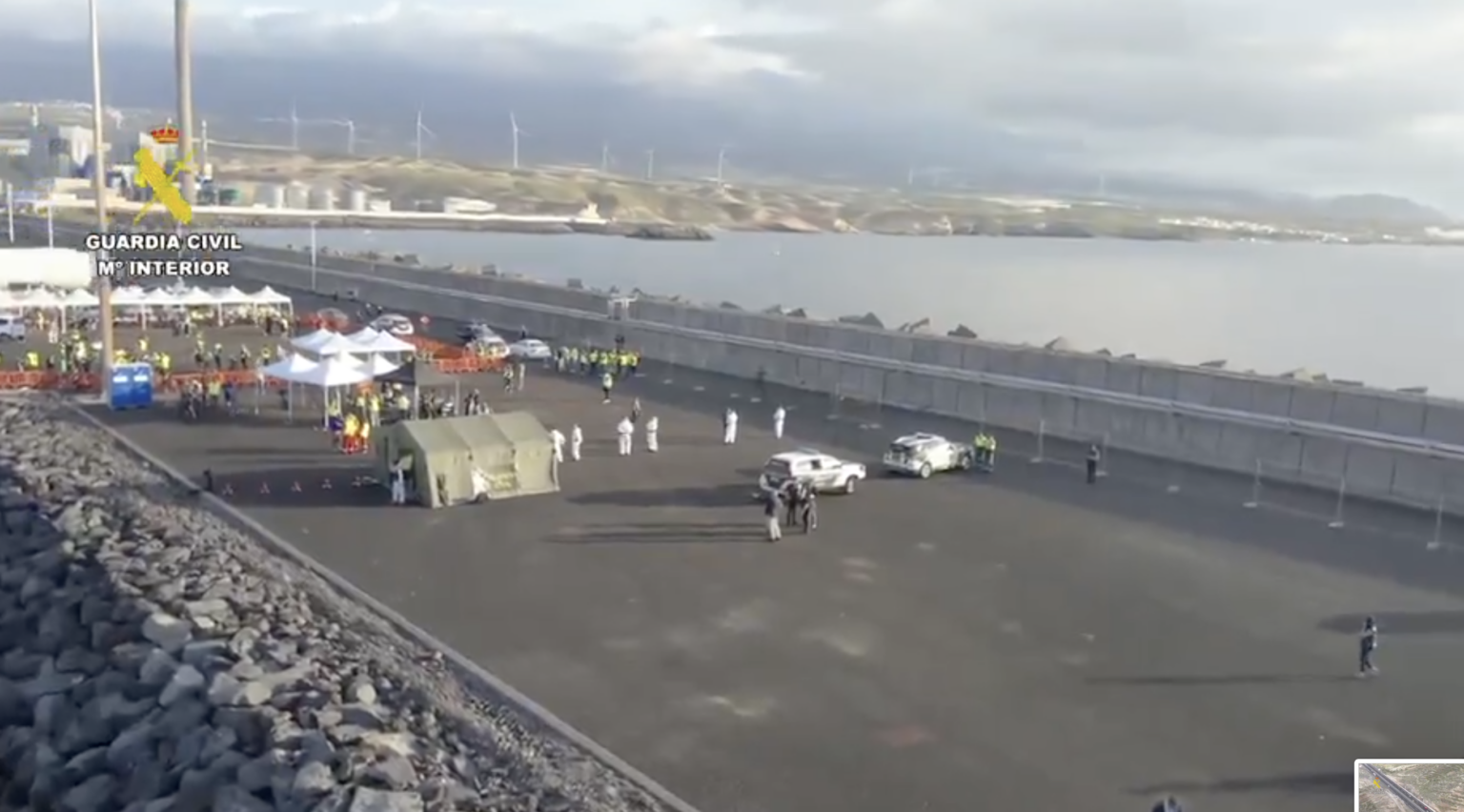
The vessel, which suffered a hantavirus outbreak onboard, arrived off the coast of Tenerife on Sunday amid fears among some members of the public of a repeat of the Covid-19 crisis.
The controversy intensified after Canary Islands president Fernando Clavijo attempted to block the ship from docking just hours before its arrival, arguing there were insufficient health guarantees.
But according to the Ministry of Health and the WHO, Spain was selected because of its strong logistics, healthcare infrastructure and ability to coordinate a complex international repatriation operation.
Officials also stressed that nearby alternatives such as Cape Verde were not considered capable of managing the situation with the same guarantees.
The WHO reportedly viewed the Canary Islands as the closest safe and properly equipped location to carry out the emergency response.
WHO director-general Tedros Adhanom Ghebreyesus has repeatedly insisted that ‘this is not Covid-19’ and that the risk to the wider population remains very low.
He also emphasised that Spain – and Tenerife in particular – was ‘more than prepared’ to deal with the complex operation.
Spain’s Health Ministry had initially explored the possibility of handling passengers in Cape Verde before the ship returned directly to the Netherlands, where the MV Hondius had originated.
However, the WHO later formally requested that Spain oversee the evacuation and repatriation effort.
Spanish authorities ultimately accepted the operation citing humanitarian obligations, international law and the fact that 14 Spanish citizens were among the passengers onboard.
Officials also acknowledged that refusing to assist could have damaged Spain’s international reputation at a time when the country is under close scrutiny from global health authorities.
Before approving the operation, Spain reportedly imposed four major conditions:
- A joint WHO and ECDC protocol for confirmed cases and close contacts,
- Strengthened diagnostic capabilities,
- A coordinated repatriation plan supervised by the EU and WHO,
- Constant communication between all institutions involved.
Spanish Health Minister Monica García described the operation as ‘very important not only for Spain, but also for international health authorities’.
She added that the WHO had specifically ‘placed its trust in Spain’ to manage the crisis.
Passengers have since begun disembarking in Tenerife under strict biosecurity measures, with several groups already being repatriated to countries including the Netherlands and Belgium.