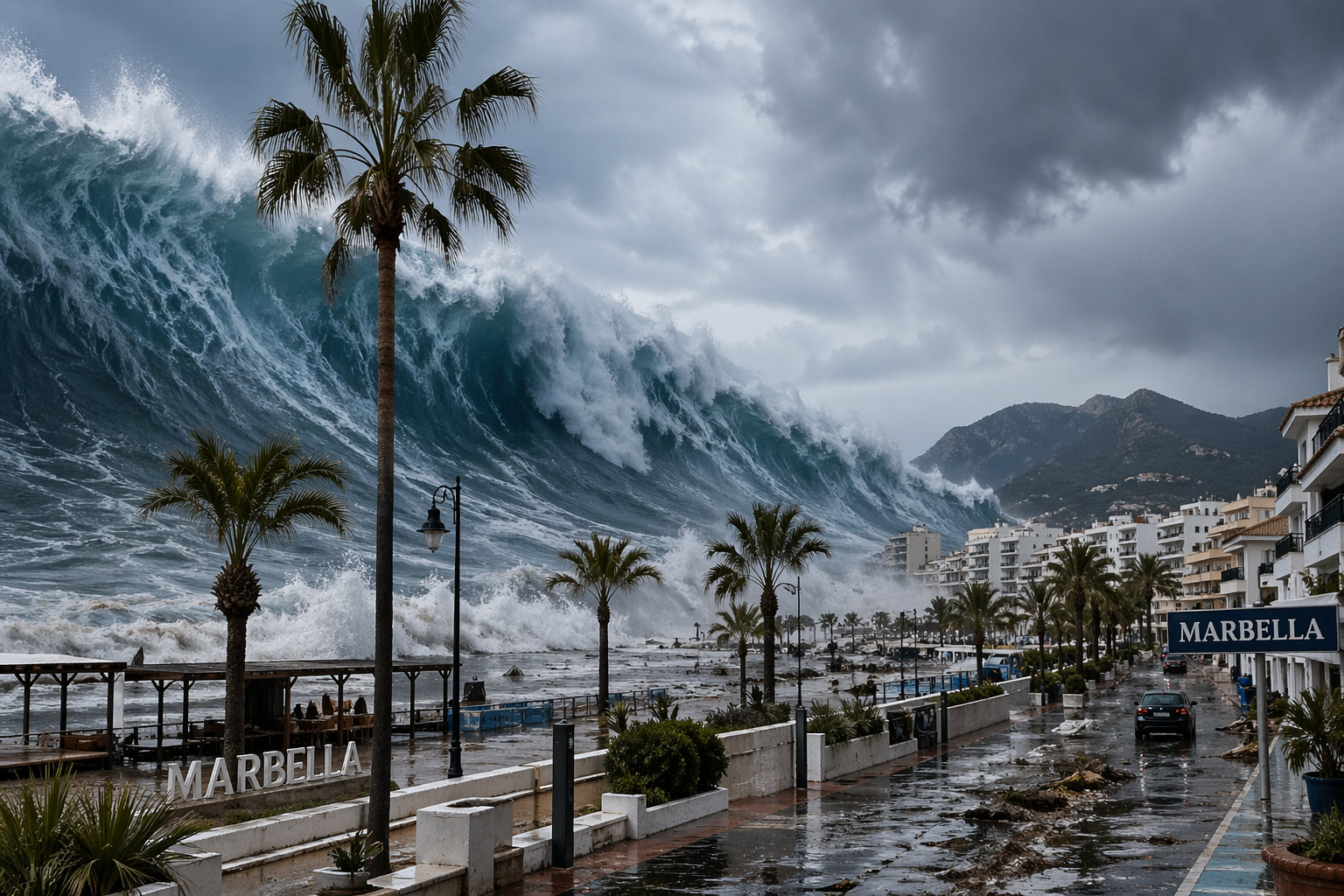

Marbella has approved a new emergency plan to deal with the risk of tsunamis and earthquakes as part of a wider push to strengthen disaster preparedness.
Local officials say there is no immediate danger but the goal is to be ready if the worst happens.
The plans set out exactly how emergency services should respond in a crisis, including clearly defined evacuation routes and designated safe areas across the city.
According to councillor Jose Eduardo Diaz, the idea is to avoid confusion in high-pressure situations and ensure a fast, coordinated response.
Both plans have been approved by Comision Permanente de Proteccion Civil de Andalucia, the top regional body for emergency planning.
Beaches and coastlines flagged as high-risk areas
The tsunami plan focuses on Marbella’s most exposed areas – beaches, promenades, marinas and river mouths – where the impact of a large wave would be most severe.
Developed with input from the Universidad de Malaga, the strategy includes evacuation protocols to higher ground, early warning systems and coordination between police, fire crews and medical teams.
Officials say Marbella is one of the few municipalities in Andalucia with a dedicated tsunami response plan.
Earthquake risk also addressed
Alongside this, the earthquake plan identifies vulnerable areas and key infrastructure that would need priority attention in the event of a quake.
While Marbella is not considered a high-risk seismic zone, it does sit in an area of moderate activity.
More than 100 tremors have been recorded in the wider Malaga-Cadiz region in recent months, though only a small number were felt by residents.
Drill planned to test response
To make sure the plans work in practice, Marbella will run a full tsunami simulation later this year.
The drill will test coordination between emergency services through the local command centre, known as CECOPAL.
This brings together local police, fire services, civil protection teams, national security forces and healthcare providers.
‘This is about preparation, not alarm’
Fire chief Medardo Tudela stressed that the plans are preventive, not a cause for concern.
The aim is to reduce improvisation and improve decision-making during emergencies, while also helping residents understand what to do – whether that means knowing evacuation routes or avoiding hazards like glass, falling buildings or chimneys during an earthquake.
Next steps include installing clear signage across the city to mark safe zones and risk areas.
Read more Andalucia news at the Spanish Eye.