
Greece is breaking ranks with the EU’s new border system by easing entry rules for British travellers.
The move, widely praised by UK holidaymakers, is designed to speed up arrivals ahead of the busy summer season.
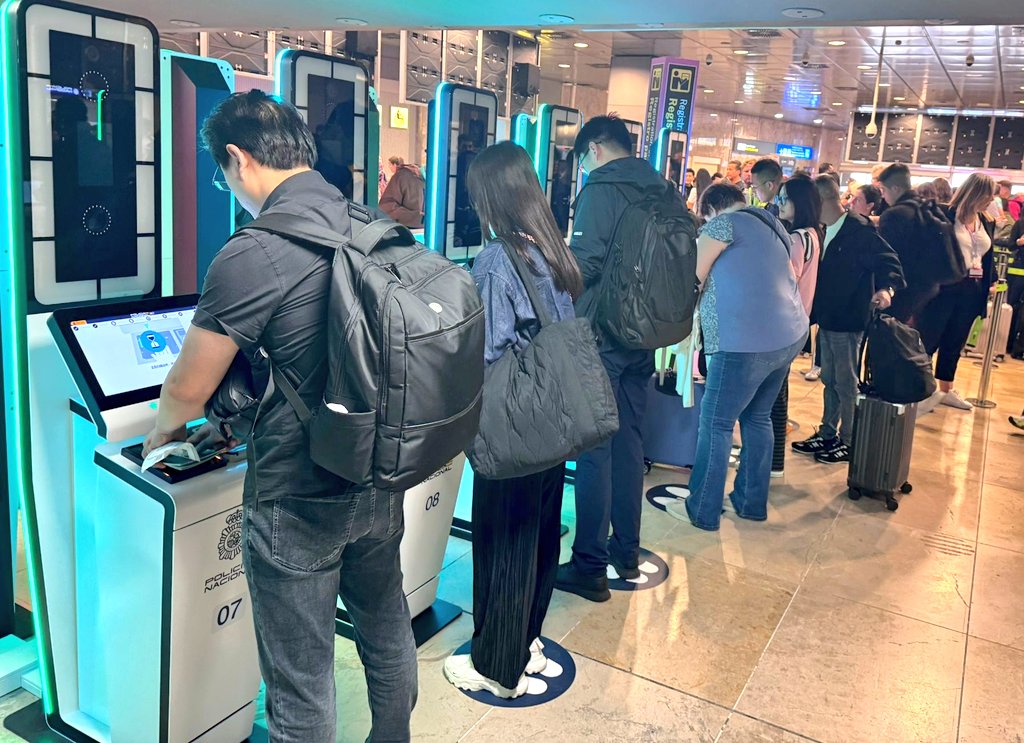
Under the new policy, UK passport holders will be exempt from biometric registration when entering Greece, meaning they won’t need to provide fingerprints or facial scans under the bloc’s new Entry/Exit System (EES).
The decision was confirmed by the Greek Embassy in London, which said the exemption applies from April 10, when the system officially came into force across much of Europe.
Avoiding airport chaos
The EES, introduced across 29 European countries, is designed to strengthen border security and prevent identity fraud, but its rollout has already caused disruption.
At Milan Linate Airport, for example, long queues reportedly left dozens of passengers stranded, with many missing flights due to delays linked to the new checks.
Greek tourism officials say the exemption is aimed at avoiding similar scenes, particularly during peak summer months when airports, especially on the islands, are under heavy pressure.
‘We want to ensure a smooth and efficient arrival experience,’ said Eleni Skarveli of Greece’s national tourism body in the UK, adding that the move should significantly reduce waiting times and congestion.
A key market for Greece
British tourists are a vital part of Greece’s travel industry.
In 2025, nearly 4.9 million UK visitors travelled to the country, contributing around €3.7 billion to the economy.
Overall, Greece welcomed close to 38 million international tourists in a record year for the sector, according to Tourism Minister Olga Kefalogianni.
With numbers expected to climb again this summer, the exemption could give Greece a competitive edge over other European destinations still fully enforcing the new biometric checks.
For British holidaymakers wary of long airport queues, it may also make Greece one of the easiest gateways into Europe this year.
Will Spain follow suit?
There is currently no indication that Spain is planning to suspend EES any time soon.
While the rollout was bumpy at first, major travel hubs like Malaga Airport have been working to make the process smoother for Brits, including erecting new signage explaining how the system works.
That means passengers arriving at major gateways like Malaga, Alicante or Palma should still expect fingerprinting and facial recognition as part of the new system, particularly during the busy summer season.
However, with Greece moving to ease the process and early signs of disruption elsewhere, pressure could grow on other tourist-heavy countries to adopt similar flexibility if long queues begin to impact travel.