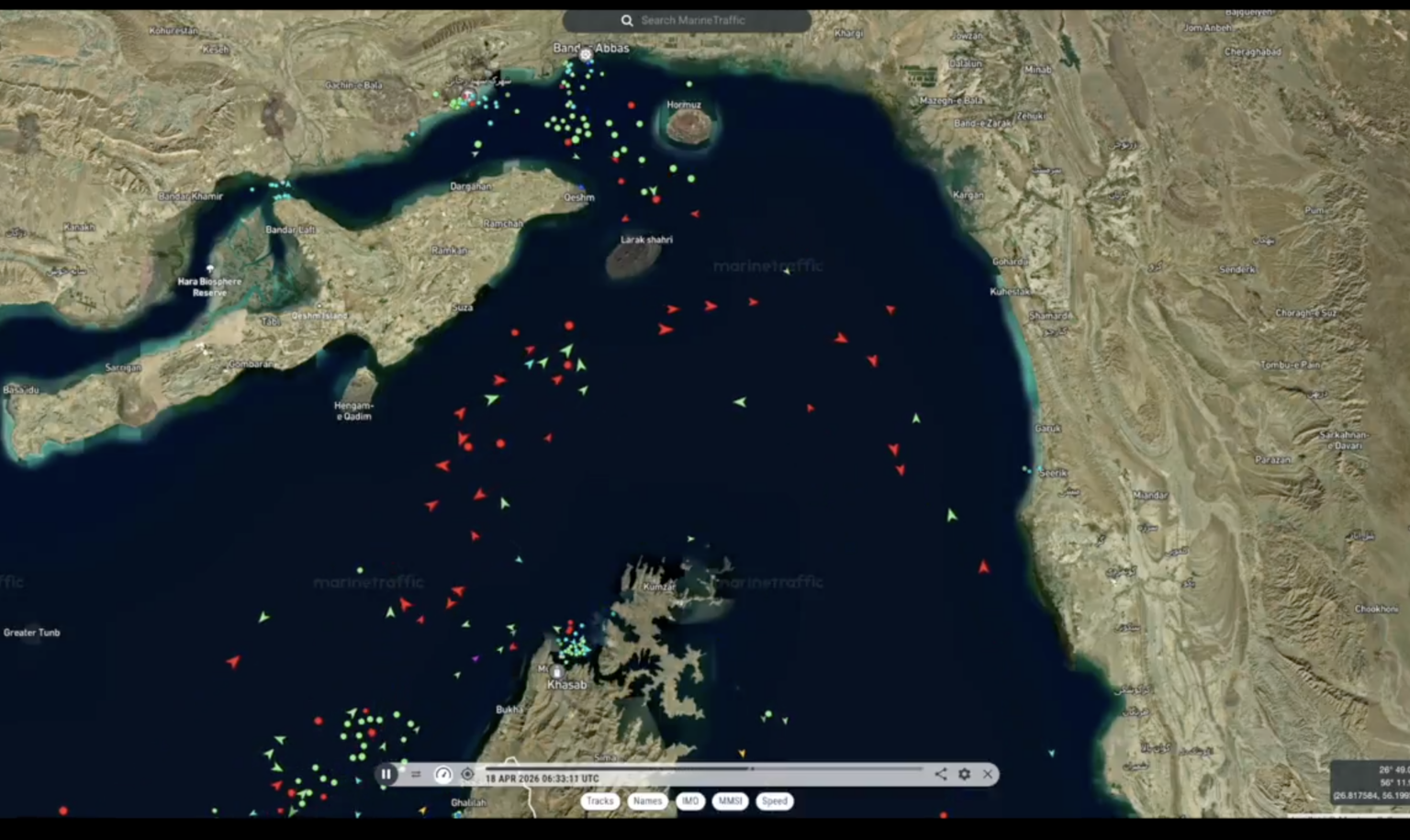

The Strait of Hormuz has been thrown back into turmoil after Iran moved to restrict maritime traffic less than 24 hours after reopening it, blaming the US for breaching a recent ceasefire agreement.
In a statement broadcast by state media IRIB, Iran’s military said it had initially reopened the vital shipping route ‘in good faith’ following negotiations with Washington – allowing the controlled passage of a limited number of oil tankers and commercial vessels.
But that reopening has now been reversed as Tehran claims the US has failed to honour the ceasefire deal reached on April 8.
It accuses Washington of continuing what it described as ‘acts of piracy’ and enforcing a blockade under false pretences.
As a result, Iran says the strait has returned to its previous status, effectively placing it back under strict military control.
‘Until the United States lifts restrictions on the freedom of navigation to and from Iran, the situation in the Strait of Hormuz will remain under strict control,’ the military said.
Global flashpoint
The move risks reigniting a major global energy crisis that will have tough consequences for Spain.
The Strait of Hormuz is one of the world’s most critical trade chokepoints, with a significant share of global oil and gas supplies passing through its narrow waters.
Any disruption – even partial – can send shockwaves through energy markets and global supply chains.
This week, experts said Europe could run out of jet fuel within six weeks unless the crisis is resolved.
This would spark mass flight cancellations and threatens a devastating impact on Spain’s vital tourism industry.
Meanwhile, the cost of petrol at the pumps could surge once again, while the vital agricultural industry in Andalucia may be forced to increase prices as fuel for tractors and fertiliser become more pricey.
Warning of further escalation
Iran’s Revolutionary Guard also issued a stark warning, saying any violation by the US would be met with a ‘proportionate response’.
‘While navigation to and from Iran remains under threat, the situation will revert to its previous status,’ it said, signalling that restrictions could remain in place indefinitely.