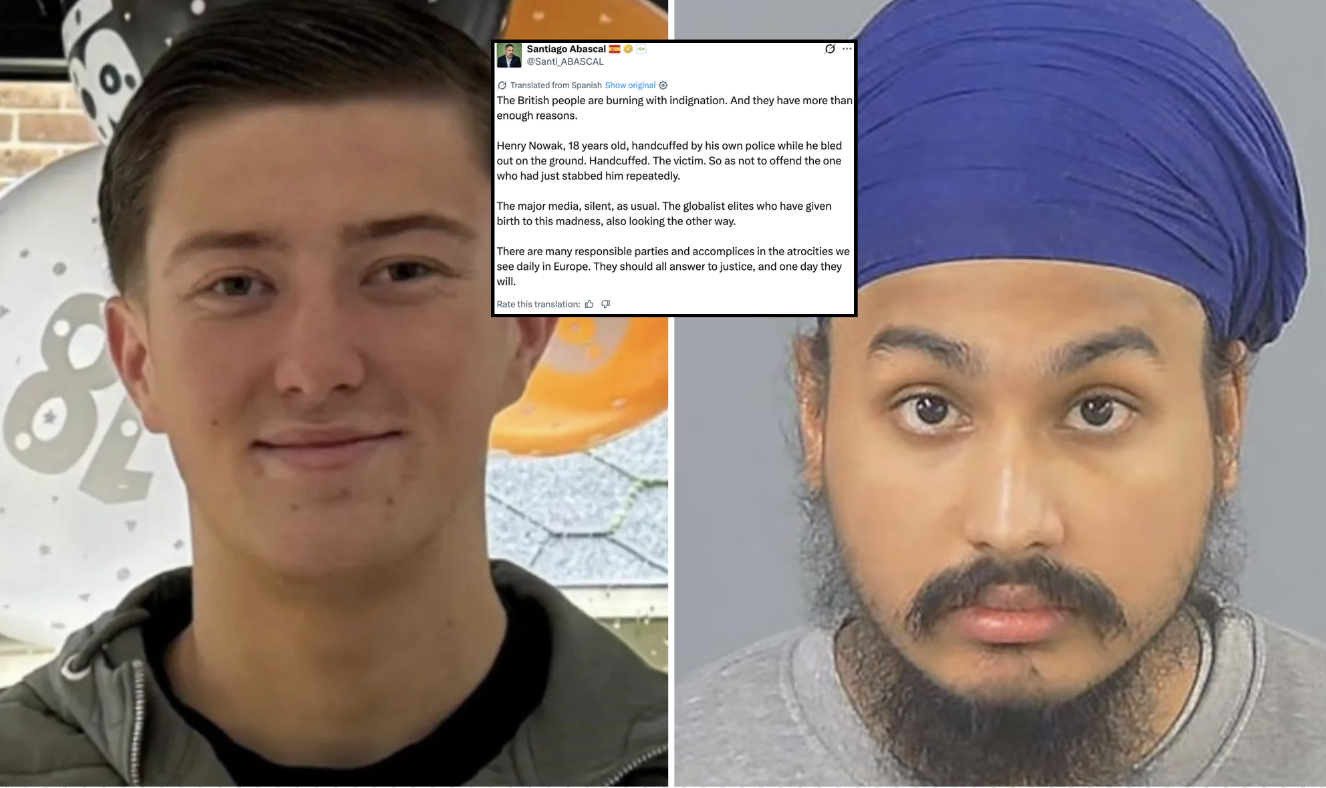

Vox has sparked controversy after its leader used the death of British teenager Henry Nowak to attack immigration policies and what he described as Europe’s ‘globalist elites’.
The comments came after repeated pleas from the victim’s family for the tragedy not to be politicised.
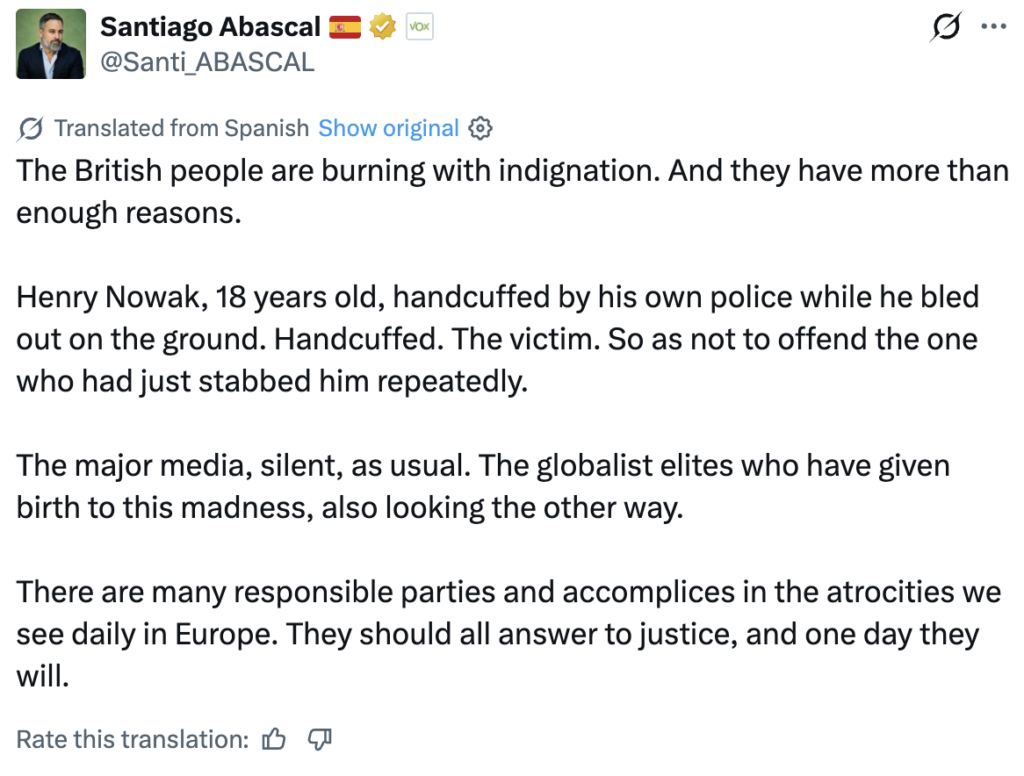
The leader of the hard-right party, Santiago Abascal, shared a post on social media on Tuesday evening referring to the 18-year-old’s death in the UK.
In the message, he claimed that ‘the British people are burning with outrage’ and accused mainstream media of remaining silent.
He also suggested that political leaders and institutions across Europe were responsible for such ‘atrocities’ being witnessed on a daily basis.
The post centred on allegations surrounding the final moments of Nowak’s life, in which the teenager was handcuffed by police while bleeding on the ground after being stabbed.
Abascal wrote: ‘Henry Nowak, 18, handcuffed by his own police force while he bled out on the ground. Handcuffed. The victim. So as not to offend the person who had just stabbed him.’
The Vox leader went on to claim that ‘globalist elites’ had created the conditions that led to the incident and said those responsible would one day be held accountable.
The comments come despite requests from members of Nowak’s family and supporters that the teenager’s death should not be used as a political tool while investigations continue.
The case has generated widespread attention in Britain, with footage circulating online and questions being raised over the actions of police officers who attended the scene.
However, relatives have urged campaigners and politicians across the political spectrum to not turn the tragedy into a political battleground.

Vox has increasingly used incidents involving violent crime in other European countries to support its calls for tougher immigration controls and stricter law-and-order policies.
Abascal’s post was shared through his official social media account and the official Vox España account, reaching hundreds of thousands of followers within minutes.
You could add the following section at the bottom of the article:
What happened to Henry Nowak?
The case of Henry Nowak has triggered a national debate in Britain after bodycam footage revealed the moments after he was fatally stabbed in Southampton.
Prime Minister Sir Keir Starmer said the clips were ‘really harrowing’ and admitted he ‘felt sick watching it’, adding that there are now ‘serious questions for police’ over their response.
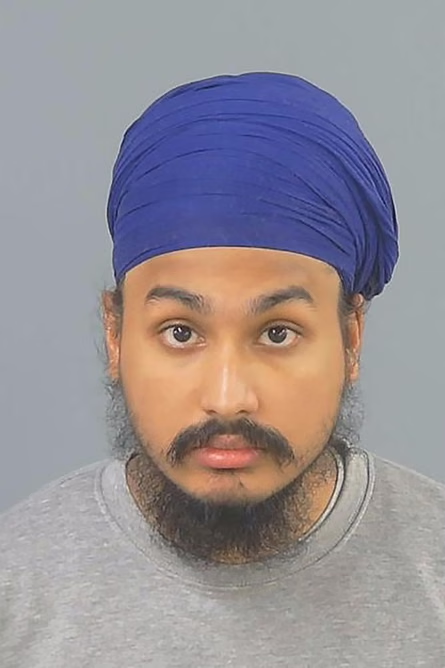
The 18-year-old university student was stabbed by a Sikh man named Vickrum Digwa, 23, who was jailed for life on Monday and ordered to serve a minimum of 21 years behind bars.
Footage released following the trial shows police officers handcuffing Henry while he was critically injured after Digwa claimed he himself had been the victim of a racist attack.
According to Henry’s father, Mark Nowak, his son told officers nine times that he could not breathe and repeatedly informed them that he had been stabbed.
‘Henry was pulled across the gravel, his hands forced behind his back and he was placed in handcuffs,’ he said outside court.
The footage has fuelled allegations that officers focused more on investigating Digwa’s claims than treating Henry as the victim – leading to claims of ‘two tier policing’.
At one point, an officer can be heard asking Henry where he had been stabbed before saying: ‘I don’t think you have, mate.’
Later, while Henry appears unresponsive, officers inform him he is being arrested for assault.
Despite the public outrage, the judge who sentenced Digwa said medical evidence showed Henry’s injuries were so severe that he would not have survived regardless of how quickly treatment was provided.
The Independent Office for Police Conduct (IOPC) is investigating Hampshire Police’s handling of the incident, with findings expected within the next three months.
The case has also sparked political controversy, with figures including Reform UK leader Nigel Farage, Conservative leader Kemi Badenoch and others questioning whether Digwa’s allegations of racism influenced officers’ decision-making.
However, Home Secretary Shabana Mahmood has urged politicians and campaigners not to exploit the tragedy, warning that Henry’s family had made a ‘powerful call’ for his death not to be used to create further division.
‘This is not a case about Sikhism, this is not a case about racism, this is a case about murder,’ prosecutors told the court.
The plea has been echoed by Henry’s relatives, who have condemned his treatment by police as ‘inhumane and degrading’ while also urging the public not to direct anger towards entire communities for the actions of one individual.