
Exactly 17 years have passed since Amy Fitzpatrick, a 15-year-old Irish schoolgirl, vanished without trace from the Costa del Sol.
Despite years of investigations, appeals and international media attention, her disappearance remains one of the most troubling unresolved cases in Spain.
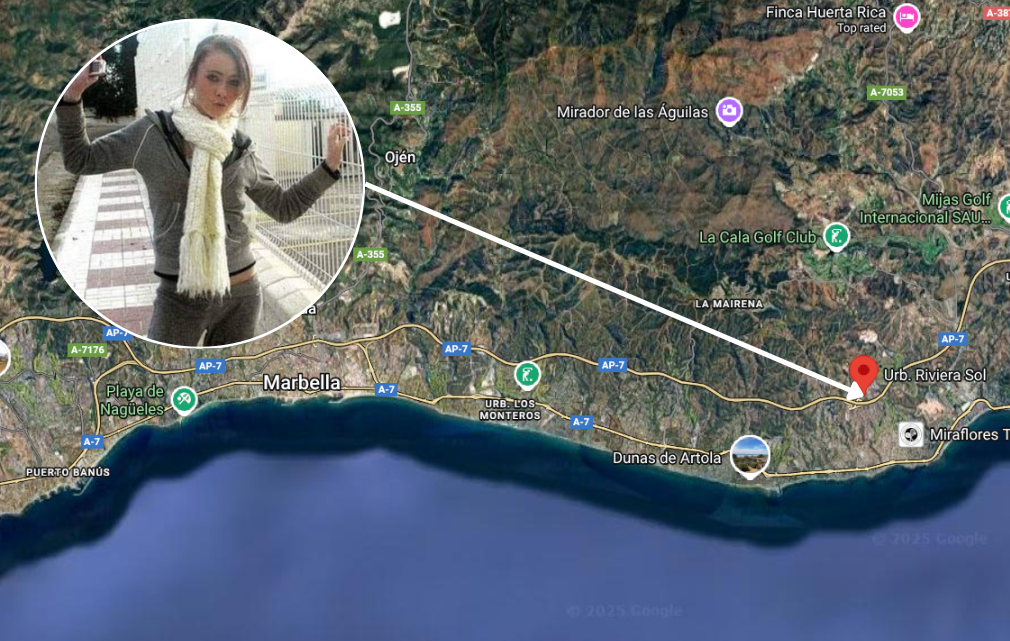
Amy went missing on January 1, 2008, after failing to return home to the family apartment in Riviera del Sol, Mijas, where she was living with her mother Audrey and stepfather Dave Mahon.
What initially appeared to be a routine case of a teenager overstaying New Year’s celebrations quickly escalated into a complex mystery.
The last confirmed sighting
That night, Amy said goodbye to her friend Ashley Rose, with whom she had been babysitting at a house in Mijas Costa. Amy should have arrived at her home a few minutes later, but she never arrived.
This was a short, familiar walk she had made many times before. There has been no verified sighting of her since.
Her mobile phone was reportedly left at home (although that is fiercely contested), limiting investigators’ ability to track her movements. No CCTV footage, financial activity or confirmed digital trace has ever placed her beyond the short route between the two apartments.

Early investigation and search efforts
Spanish authorities launched an immediate search operation, supported by the Guardia Civil, local police and volunteers.
The area surrounding Mijas Costa – including wooded land, construction zones and nearby roads – was thoroughly searched in the days and weeks that followed.
Irish police also became involved, and the case was soon treated as an international missing persons investigation. Despite extensive enquiries, no physical evidence linked to Amy has ever been recovered.
Family divisions and legal developments
The case took a dramatic turn in 2013, when Amy’s stepfather was convicted in Ireland for the manslaughter of Amy’s brother, Dean Fitzpatrick.
Mahon stabbed Fitzpatrick during an argument outside an apartment in Dublin. During his trial, Mahon claimed his stepson ‘walked into his knife’. He served five years in prison for the killing.
After serving his sentence, Mahon moved back in with Amy’s mother Audrey in Co Leitrim.

The killing occurred years after Amy disappeared and was unrelated to her case, but it intensified scrutiny of the family situation and reignited public interest.
Importantly, no one has ever been charged in connection with Amy’s disappearance, and Spanish authorities have repeatedly stated that there is insufficient evidence to confirm whether she came to harm, left voluntarily, or was abducted.
Competing theories and unanswered questions
Over the years, several theories have circulated, ranging from accidental death to third-party involvement or the possibility that Amy left the area with someone she knew. None have been substantiated by hard evidence.
Investigators have consistently stressed that there is no proof Amy left Spain, nor any indication she started a new life elsewhere. Equally, no remains have ever been found, and no credible witness has come forward with definitive information.
Gangland killer theory never proven
In 2012, a Facebook tip-off prompted Amy’s family to ask police to probe any links to a well-known Irish criminal who lived near to where she disappeared.
Audrey and Mahon formally requested an investigation after being approached by an underworld source who alleged that he had boasted about killing Amy, telling Garda that they believed the information to be credible.
At the time of the tip, he was serving a 23-year prison sentence in Spain for the murder of a British expat, who he shot multiple times in a bar over a ‘senseless’ row.
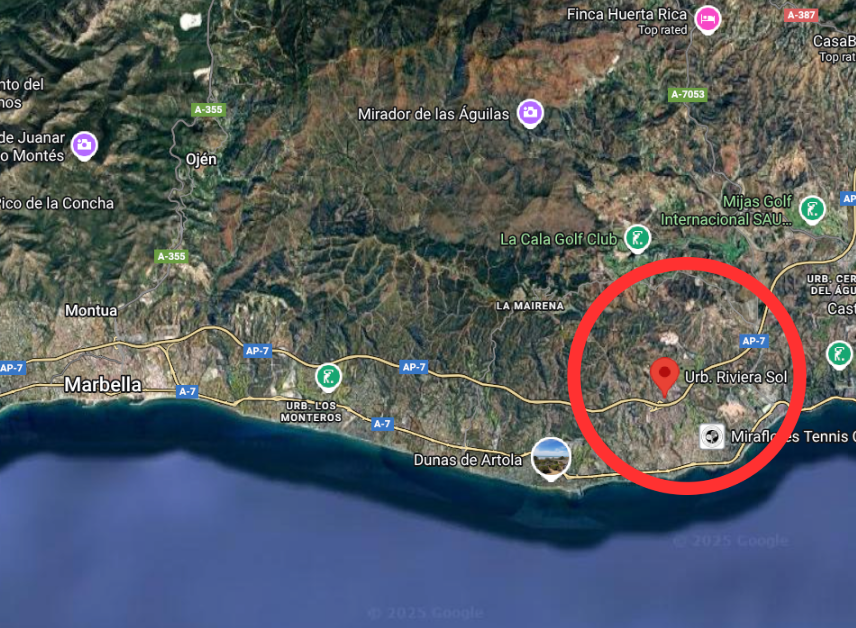
When Amy disappeared, he was reportedly living in Calahonda, near to where she went missing, and was renting a property less than 30km away.
The family believed an older man seen with Amy at the time may have been the criminal. He has never been named as a suspect.
Amy drug-running claims
In 2022, Amy’s mother was told that she was allegedly being paid to go on ‘drug runs’ with two British men.
‘I was told that they went on drug runs. Amy got €100 to sit in the car with them like an innocent,’ Audrey told the Irish Mirror.
‘I never knew that before. This is all news that I’m only after getting in the last week.’
It was alleged that the British men, aged in their 40s or 50s, would have Amy sit in the front seat so that they would look like an innocent family and not be stopped by police checkpoints while ferrying drugs in the car.
Audrey said one of the men named to her had already been quizzed over Amy’s disappearance from inside a UK prison.
The mobile phone
Meanwhile, the last two people to see Amy alive – best friend Ashley Rose and her mother Debbie Rose – previously said they were ‘100% sure’ she had a Nokia phone with her when she left to take a shortcut home the night she vanished.
Mysteriously, after she disappeared, it was found in her room during a search of the apartment she shared with her mum Audrey and her stepdad Mahon.
Ashley previously told Dublin Live: ‘She had an Irish phone which she kept all her contacts on (because her other Spanish phone was smashed).
‘She had that phone with her (on the night she disappeared) because she used our house phone to call her mum and she got the number off that phone. I saw her do it.’
If true, it would suggest she was not abducted on her way home, and must have made it back.
Ongoing appeals and age-progression images
Both Spanish and Irish authorities have periodically renewed appeals for information, including the release of age-progressed images showing what Amy might look like today in her early thirties.
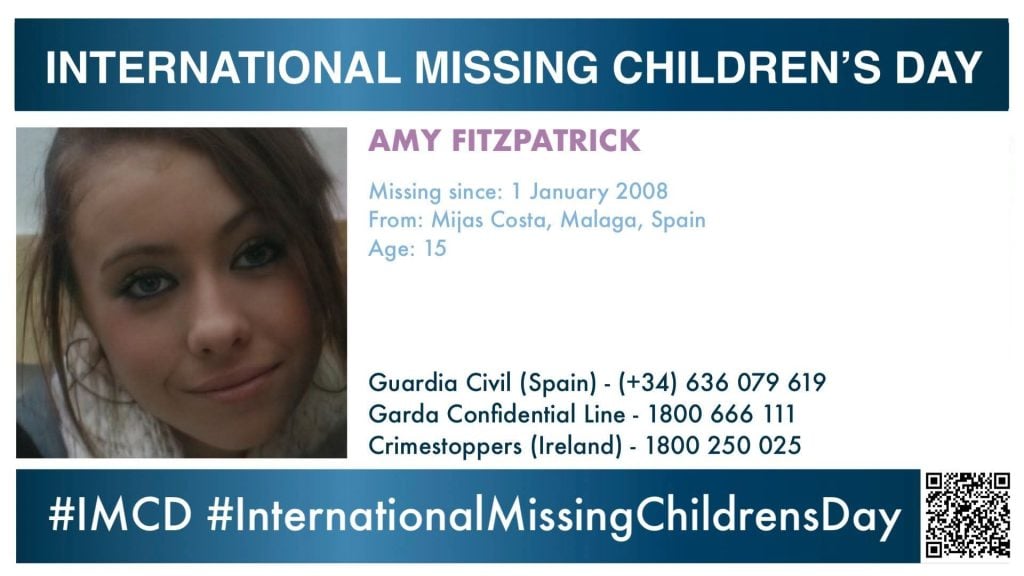
These appeals underline the point that Amy has never been officially declared dead, and the case remains open.
Police continue to urge anyone who may have been in the Mijas Costa area at the time, or who later heard relevant information, to come forward.
Amy’s disappearance occurred during a period when the Costa del Sol was experiencing rapid development, transient populations and limited CCTV coverage compared to today.
Investigators have acknowledged that these factors complicated early enquiries and may have contributed to the lack of forensic leads.
Since 2008, policing methods, digital tracing and cross-border cooperation have improved significantly, but these advances cannot retroactively recover evidence that was never captured.
A case that still resonates
Some 17 years on, Amy’s disappearance continues to resonate deeply, particularly among expat communities in southern Spain and in Ireland. It remains one of the most high-profile missing persons cases linked to the Costa del Sol.
Despite the passage of time, authorities maintain that even the smallest detail could still prove crucial. Cases long considered cold have been solved decades later, often through delayed witness testimony.
Anyone with information relating to Amy’s disappearance is urged to contact the Guardia Civil, Policía Nacional, or Irish police through official channels. Information can also be submitted anonymously.
Read more Costa del Crime news at the Spanish Eye.