
Warning triangles used to signal accidents or breakdowns on the road will soon be a thing of the past in Spain.
From January 1, 2026, the only legal emergency warning device will be the V-16 beacon – a compact, high-visibility, connected light.
This change, announced by the Directorate-General for Traffic (DGT), makes Spain the first country to mandate the use of this smart device nationwide.
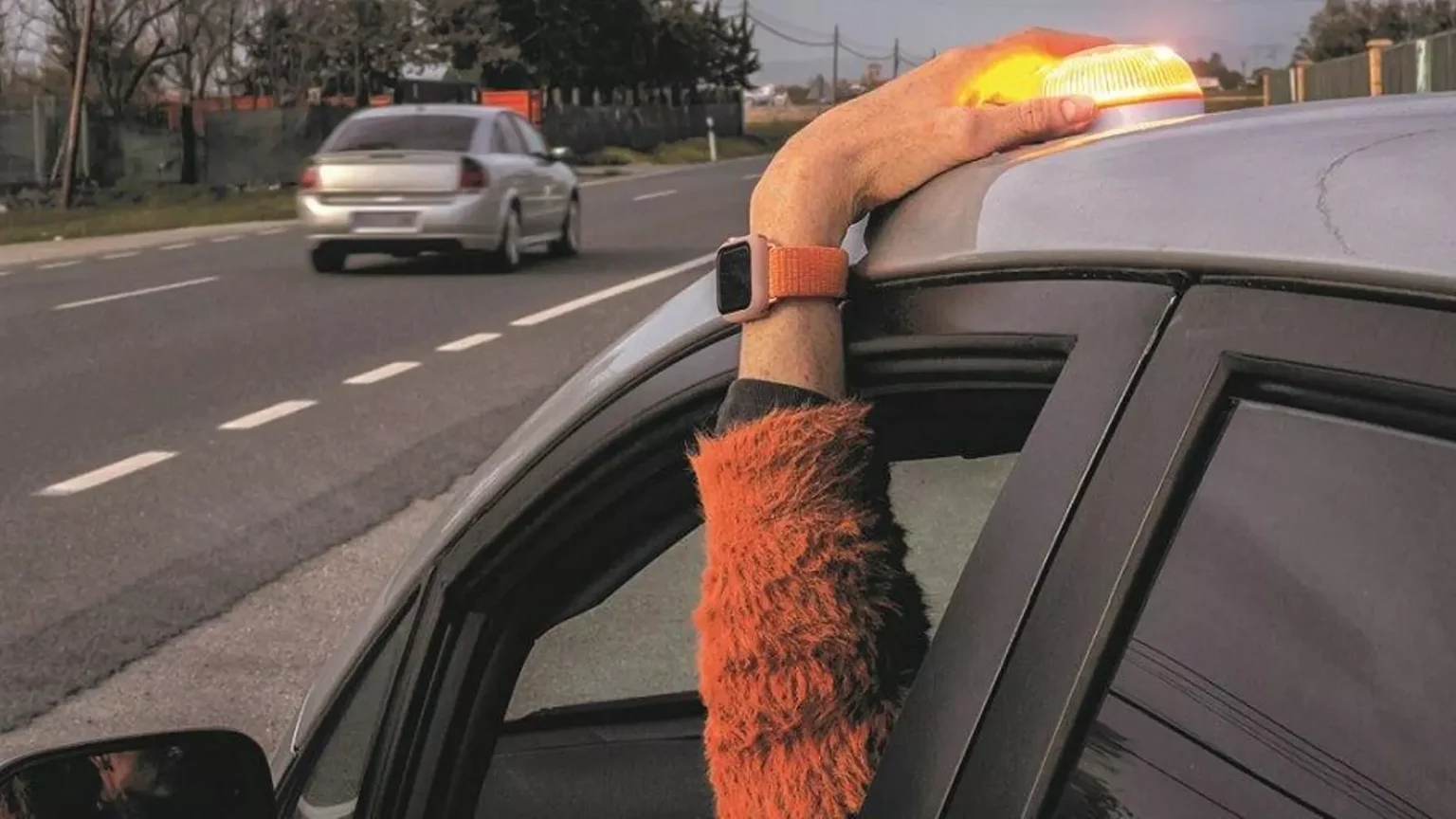
The V-16 beacon is a small, yellow, battery-powered light designed to emit a bright 360-degree flashing signal for at least 30 minutes.
It must be kept in the car’s glovebox and, in the event of a breakdown or accident, can be activated within seconds and placed – ideally – on the roof of the vehicle.
The updated version of the V-16 will also connect to DGT 3.0, a digital traffic management platform, to transmit the vehicle’s location in real time and alert other drivers of a hazard on the road.
What about foreign vehicles?
Under the Vienna Convention on Road Traffic, countries may require vehicles entering their territory to carry either a triangular warning sign or an equivalent device approved by the vehicle’s country of registration.
According to the DGT, foreign vehicles driving in Spain will still be compliant if they use traditional warning triangles.
Conversely, Spanish-registered vehicles travelling abroad in countries that are signatories to the relevant international conventions will be considered compliant if they use the new V-16 beacon, even if they don’t carry triangles.
Where you can buy them
The radars are currently being sold by multiple big tech firms, including Movistar and Vodafone, and in stores like Mediamarkt.
You must ensure that the V16 can be connected to the DGT 3.0 platform, allowing it to transmit your location to the authorities in the event of an accident.
The devices cost around €50, although some companies, like Movistar, are offering financing options for less than €4 per month.