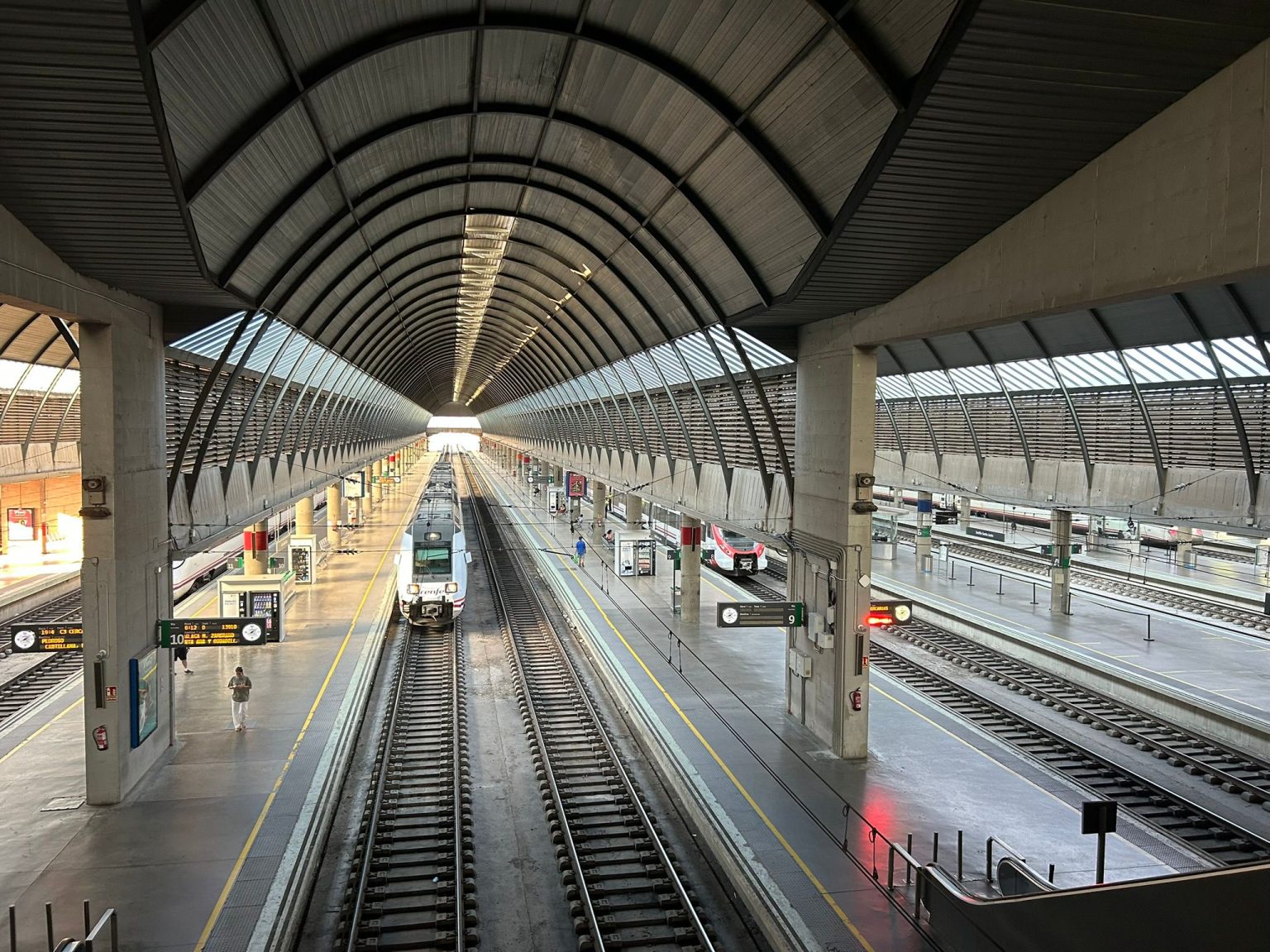

The high-speed train connecting Andalucia’s two biggest cities will be faster from next year, it has been announced.
After years of delays and budget overruns, Spain’s Transport Minister Oscar Puente confirmed that the long-promised Almodovar del Rio AVE bypass will finally open in 2026.
The new infrastructure is expected to cut travel time between Malaga and Sevilla by 20 minutes, slashing the high-speed rail journey to just 90 minutes.
The project, now in its final phase, comes at a total cost of €39 million – more than three times the original tender of €11.9 million – and five years later than the originally scheduled opening in 2021.
A shortcut to bypass Cordoba
Currently, AVE trains between Sevilla and Malaga are forced to detour via Cordoba, where they also need to reverse direction at the station.
The 1.9-kilometre bypass will eliminate that detour, enabling direct, faster links between Sevilla, Malaga and Granada.
In a statement, Minister Puente described it as a ‘strategic project that brings cohesion to the Andalusian region’ and called it a step forward for sustainable, accessible high-speed rail.
The works – managed by Adif Alta Velocidad – include the railbed platform, track assembly, electrification, and signalling systems. It will also help relieve congestion at Cordoba’s Julio Anguita station, improving traffic flow at one of the busiest hubs in the region.
The ‘cheap’ option after the Rajoy-era axe
The Almodovar bypass was chosen as a low-cost alternative in 2013 after the Rajoy government scrapped a direct AVE line between Malaga and Sevilla that would have cut journey times to just 55 minutes.
That plan, originally launched in 2004 under Socialist leader Manuel Chaves, had already seen €277 million invested by the Junta de Andalucia, but was ultimately abandoned.
Of the two alternatives on the table in Almodovar, this bypass was the simpler and cheaper of the options. The other – a wider curve – would have allowed even faster travel but was more complex and costly.
In 2023, Andalusian President Juanma Moreno revived talk of a direct Sevilla–Malaga AVE, saying the regional government would begin feasibility studies and seek funding, but little progress has been made since.
Why it took so long
According to the Ministry, the delay has been due to the technical complexity of the project’s location – sitting at the junction of two high-traffic AVE lines – and the need to coordinate with ongoing upgrades to the Madrid–Andalucía high-speed corridor.
While the main infrastructure is now nearly complete, the final stages – including the installation of track switches and signalling systems – are still underway.
The Ministry says it is now in the final coordination phase ahead of testing and certification, with the aim of putting the bypass into service sometime in 2026.
Read more Spain travel news at the Spanish Eye.