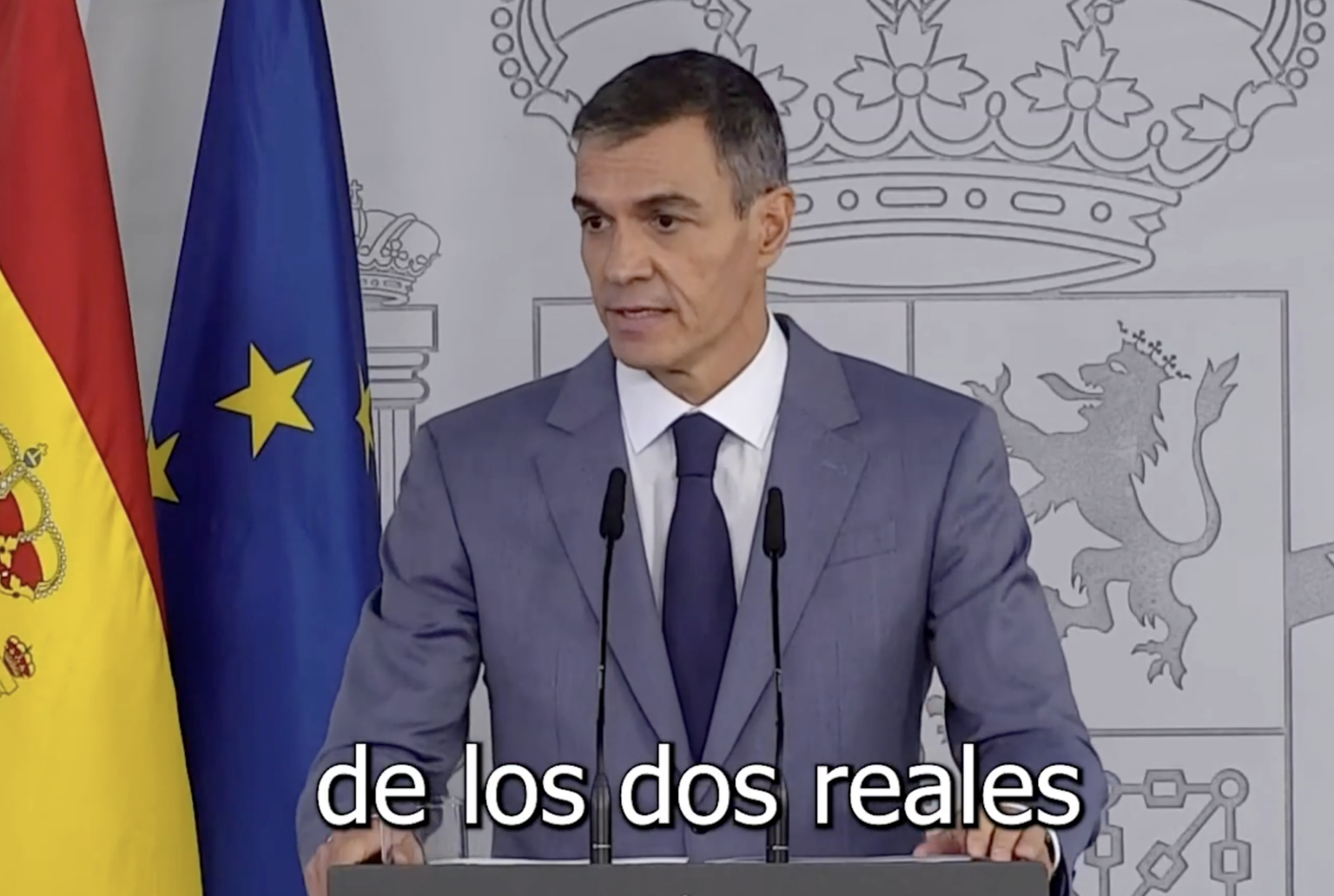

Spain’s economy will grow more strongly than previously expected this year, according to an upgraded forecast from the Bank of Spain.
The central bank now expects GDP to increase by 2.6% during 2026, matching the growth recorded last year.
That would be almost three times the 0.9% expansion forecast by the European Central Bank for the wider eurozone.
Strong household spending, employment and exports are supporting activity despite higher energy costs, international instability and more restrictive financing conditions.
The Spanish economy is estimated to have grown by approximately 0.6% during the third quarter.
The Bank of Spain has also raised its growth forecast for 2027 to 2.2%, an increase of 0.5 percentage points from its June projection.
The upgrade reflects momentum during the second half of 2026 and a stronger-than-expected performance from Spain’s external sector.
Inflation expected to reach 3.9%
The less positive development concerns inflation.
Average inflation is forecast to rise from 2.7% in 2025 to 3.9% this year before easing only slightly to 3.7% during 2027.
The change to next year’s forecast is particularly significant. In June, the Bank of Spain expected inflation of 2.6% in 2027, some 1.1 percentage points below its latest estimate.
Inflation reached 5% in September after energy prices increased by 22%.
Rising natural-gas, electricity and fuel costs intensified during the summer and have increasingly been passed on to consumers.
Service-sector prices are also adding to inflationary pressure.
Prices in tourism and hospitality are rising more quickly than in many other European countries, making it harder for Spain to return to the ECB’s 2% inflation target.
Spain’s inflation differential with the eurozone widened to 1.2 percentage points in September, while the gap in underlying inflation reached levels not seen since 2006.
The central bank warned that persistently higher inflation could damage Spain’s competitiveness and prolong the period of elevated interest rates, affecting borrowing costs for households and businesses.
Unemployment set to fall
Spain’s unemployment rate is forecast to decline to 10% this year and 9.7% in 2027.
Although job creation is expected to slow compared with 2025, the labour market should continue to benefit from growth in the working-age population and the strength of the service sector.
Government measures intended to reduce the effect of the energy crisis are expected to provide temporary relief from inflation.
However, tax reductions and financial support will increase the public deficit.
The Bank of Spain expects the deficit to reach 2.6% of GDP in 2026, two-tenths higher than forecast in June.
The combined cost of the government’s energy measures is estimated at 0.52% of GDP.
Public debt should nevertheless continue falling as a proportion of the economy, declining to 98.5% of GDP this year and 96.2% in 2027.
Geopolitical risks
The outlook remains highly dependent on geopolitical developments and energy prices.
According to the Bank of Spain, a diplomatic resolution to the current international conflict could reduce inflation by half a percentage point in 2027 and add 0.4 percentage points to economic growth.
A further escalation could have the opposite effect, removing 0.6 percentage points from GDP growth while adding almost one percentage point to inflation.