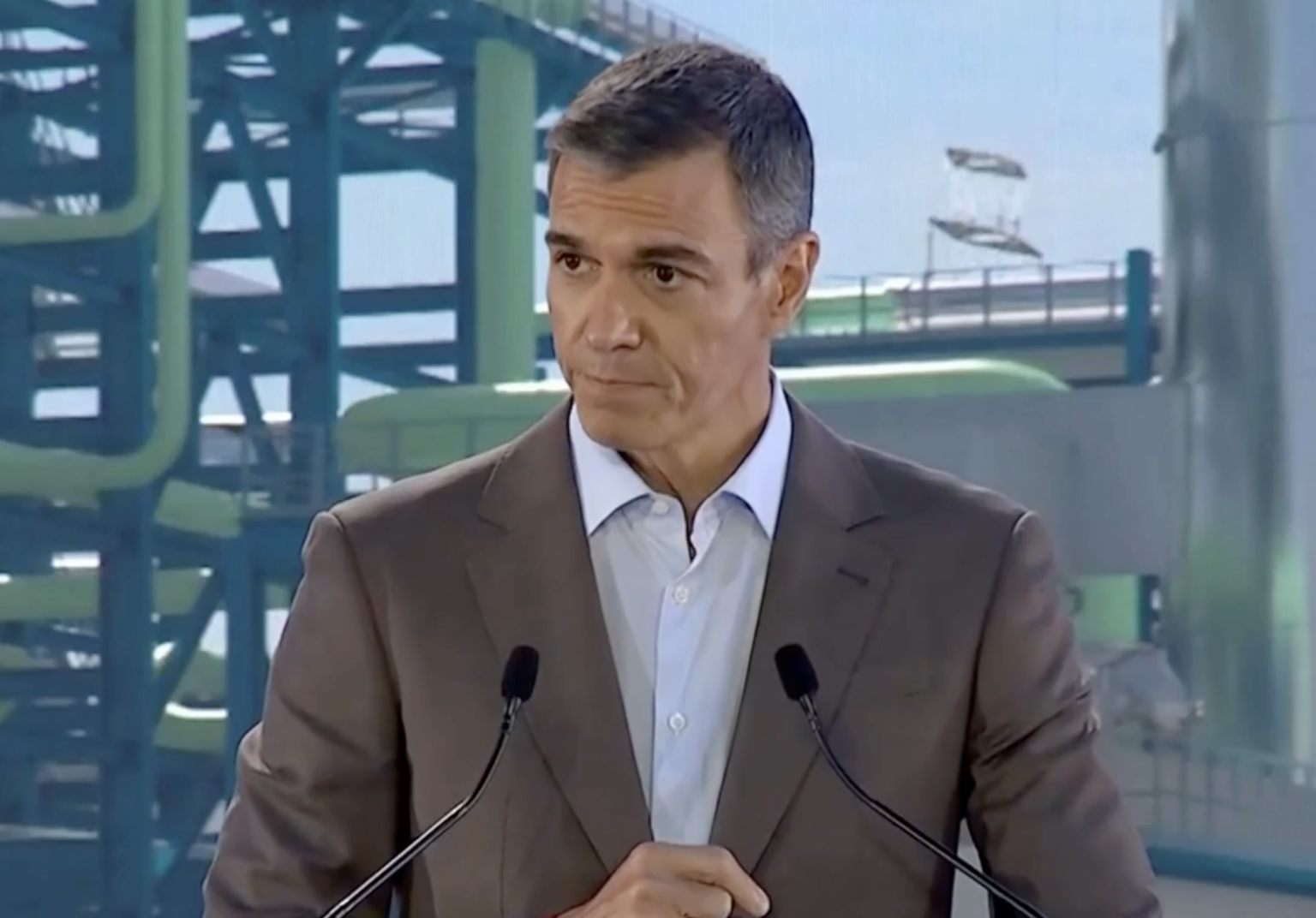

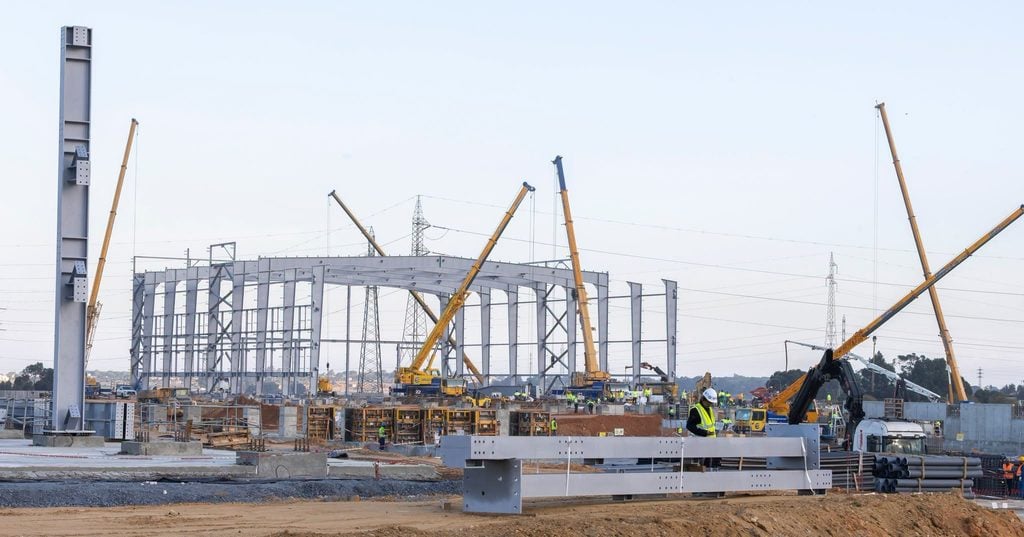
Pedro Sanchez today visited the site of a vast new green hydrogen plant in Andalucia after construction officially began this week.
The Onuba facility is being built at Moeve’s La Rabida Energy Park in Palos de la Frontera, Huelva, and represents the first phase of the Andalucian Green Hydrogen Valley.
More than €1billion is being invested in the plant and its associated infrastructure, including a solar facility that will help power its operations.
Sanchez was joined at the launch by Andalucian president Juanma Moreno, Ecological Transition Minister Sara Aagesen and senior European, business and local government representatives.
Once operational, Onuba will have 300 megawatts of electrolysis capacity and is expected to produce around 45,000 tonnes of renewable hydrogen each year.
Production is scheduled to begin in 2029.
Moeve chief executive Maarten Wetselaar said the project marked the transition from small-scale green hydrogen trials to full industrial production.
‘Today we leave behind the era of green hydrogen pilot projects to move towards the construction of large-scale projects,’ he said.
Wetselaar added that the plant would place Spain ‘at the forefront of Europe’ in the production of new sustainable energy and help make the continent more competitive and energy independent.
Sanchez described the development as ‘part of the solution’ to the climate emergency and said it would play an important role in the industrial future of Huelva, Andalucia, Spain and Europe.
The prime minister said his government had turned renewable hydrogen into a ‘national project’, with more than €3billion in state funding allocated to 120 schemes.
Onuba has received €304million in public financing through Spain’s Recovery, Transformation and Resilience Plan, which is supported by the EU’s NextGenerationEU programme.
The funding covers the development of up to 405MW of capacity, including a potential future 105MW expansion.
However, that additional phase will depend on the availability of an electricity connection and further corporate approval.
Sanchez also announced that the administrative process for the first sections of Spain’s national hydrogen network would begin within days.
‘Producing more energy in Spain and Europe is not only a climate issue, it is also a question of autonomy,’ he said.
‘We cannot leave our supply at the mercy of unjustified wars or pay the price for those who turn energy into another piece in their games of power.’
More than 8,000 jobs
Moeve estimates that the development, construction and launch of Onuba will support more than 8,000 direct, indirect and induced jobs across its supply chain.
The project is also expected to generate work for more than 400 local small businesses and self-employed workers, including companies specialising in engineering, construction, logistics, maintenance and industrial services.
Moeve will retain a controlling 51% stake in Onuba.
Renewable hydrogen investment fund Hy24 and Spanish state-owned financing company Cofides will jointly hold 29%, while the remaining 20% will belong to Enagas Renovable and Alter Enersun.
The hydrogen initially produced at the site will be used within La Rabida Energy Park, replacing all of the fossil-derived hydrogen currently consumed by the facility.
Production could later be used by other industries and to manufacture lower-carbon fuels for road transport, aviation and shipping.
Moeve claims the plant will prevent around 250,000 tonnes of carbon dioxide emissions per year – an amount it says is comparable to the combined emissions of combustion-engine cars in Huelva, Cadiz and Jaen.
‘Europe’s green hydrogen factory’
Juanma Moreno said the start of construction sent a message that Andalucia and Spain were prepared to lead the ‘clean-energy revolution’.
He said the region had an opportunity to become ‘Europe’s great factory for the production and export of renewable hydrogen’, citing its abundant renewable resources, geographical position, ports and existing industrial base.
However, the Junta president warned that Andalucia would need sufficient electricity infrastructure if it was to accommodate the major industrial projects seeking to establish themselves in the region.
He called on the Spanish government to ensure that the necessary grid capacity was made available.
The issue will also determine whether Onuba can proceed with its proposed 105MW expansion.
European Commission executive vice-president Teresa Ribera, who addressed the event by video, said the project’s recognition as an EU Project of Common Interest demonstrated its strategic importance.
She described the launch of construction as ‘very good news for Andalucia, Spain and the whole of Europe’.