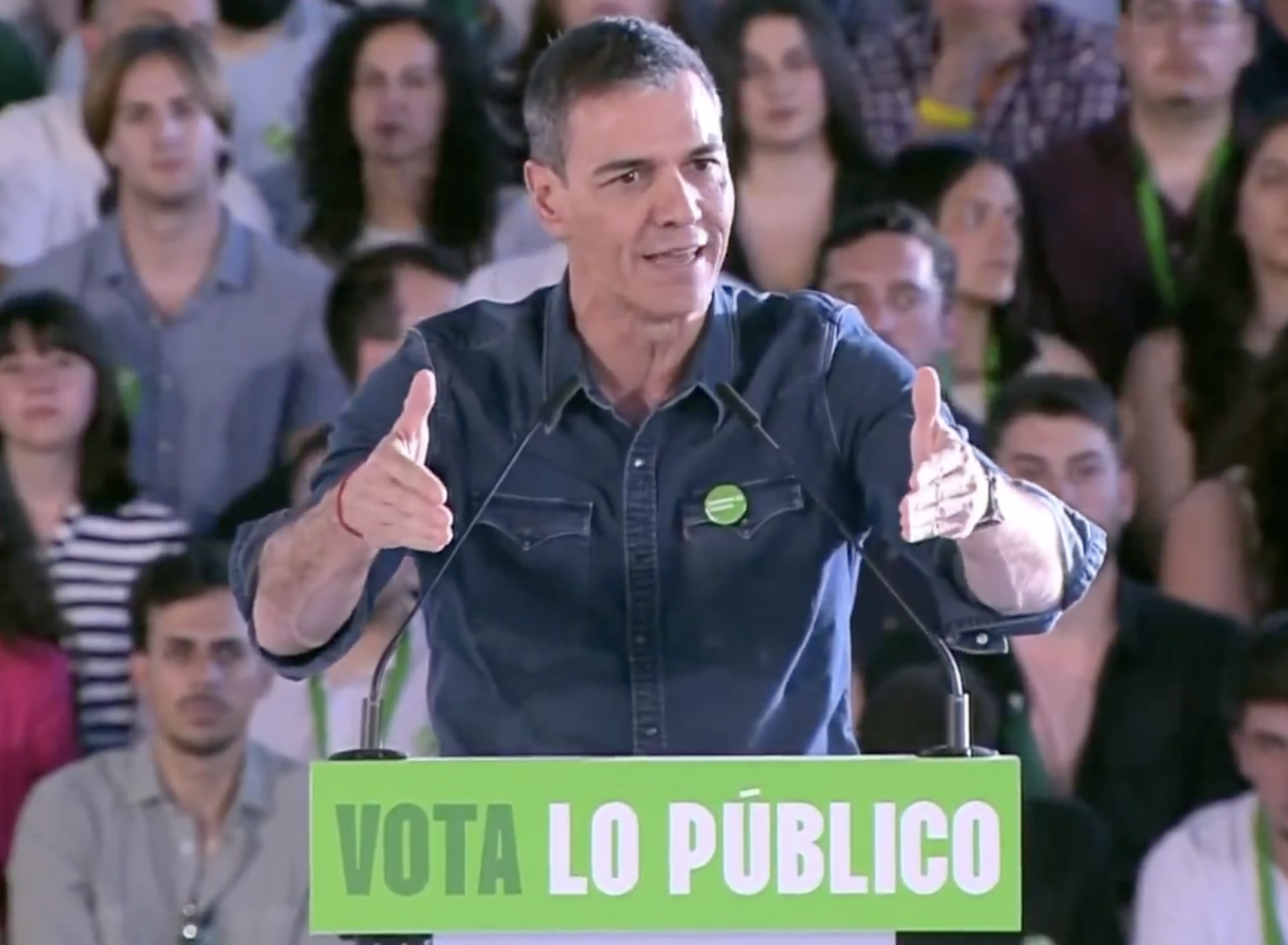

Pedro Sanchez could call a snap general election for late February or early March if his government’s next Budget is rejected, according to reports from inside the Spanish executive.
The increasingly discussed scenario would bring Spaniards to the polls several months before the current parliamentary term expires, and weeks before the country’s municipal and regional elections on May 23.
According to national newspaper El Español, uncertainty over Sanchez’s plans is growing among ministers, with even those closest to the prime minister insisting that only he knows when the election will be held.
Meanwhile, the ongoing Ceuta migrant crisis has upended the political agenda the government had planned for the autumn and could play a significant role in what happens next.
The government is reportedly preparing for months of political fallout, as well as potentially damaging revelations from an investigation at Spain’s Audiencia Nacional into what happened before and during the crisis.
Ceuta refuses to go away
The government had hoped to begin the new political term by focusing heavily on domestic issues, particularly housing and new social measures.
But Ceuta continues to dominate political debate.
Sanchez attended two housing events this week which government sources reportedly acknowledged had attracted little attention because of the continuing fallout from the crisis.
That has reportedly prompted the executive to slow down some planned announcements of social measures, amid concerns they would simply be drowned out.
There is also an emerging judicial front.
National Court judge Maria Tardon is investigating events surrounding the Ceuta crisis amid questions over warnings received before the huge influx and contradictory accounts of what officials knew.
The government reportedly expects the investigation to produce considerably more information over the coming months.
According to the report, figures within the executive have already begun attacking Tardon’s credibility by highlighting her previous political career, including her time as a PP councillor in Madrid.
February or March election?
Against that backdrop, attention is increasingly turning towards Sanchez’s next Budget.
The government is expected to present its proposed national accounts before the end of 2026.
Insiders predict that if the Budget is rejected at its first major parliamentary hurdle, Sanchez could dissolve parliament and call a general election for late February or early March.
Government sources stressed that this has not been decided, but reportedly described it as a possibility that ‘makes sense’.
Sanchez himself has recently left the door open to an early election.
Such a move would allow him to say he had fulfilled his commitment to take the legislature into 2027 while presenting the decision as a ‘technical’ early election, rather than abandoning the parliamentary term substantially ahead of schedule.
It could also turn the proposed Budget into something resembling a PSOE election platform, allowing the party to campaign on measures rejected by its parliamentary rivals.
Actually passing those accounts, however, looks increasingly difficult.
Parties supporting the government are reportedly not currently negotiating a Budget deal, with talks between the PNV and the executive having stalled before the summer.
The Finance Ministry is not expected to restart discussions until at least the end of September.
No election ‘Super Sunday’
One thing Sanchez has publicly ruled out is holding the general election on May 23, 2027, alongside Spain’s scheduled municipal and regional elections.
The prime minister has repeatedly said there will be no electoral ‘Super Sunday’ combining all three.
That will come as a relief to some PSOE mayors and regional candidates, who are reportedly deeply concerned about being punished at the ballot box for the fallout from Ceuta.