
People planning to watch Wednesday’s solar eclipse are being warned not to use six models of glasses after authorities ordered them to be removed from sale over fears they could put people’s eyesight at risk.
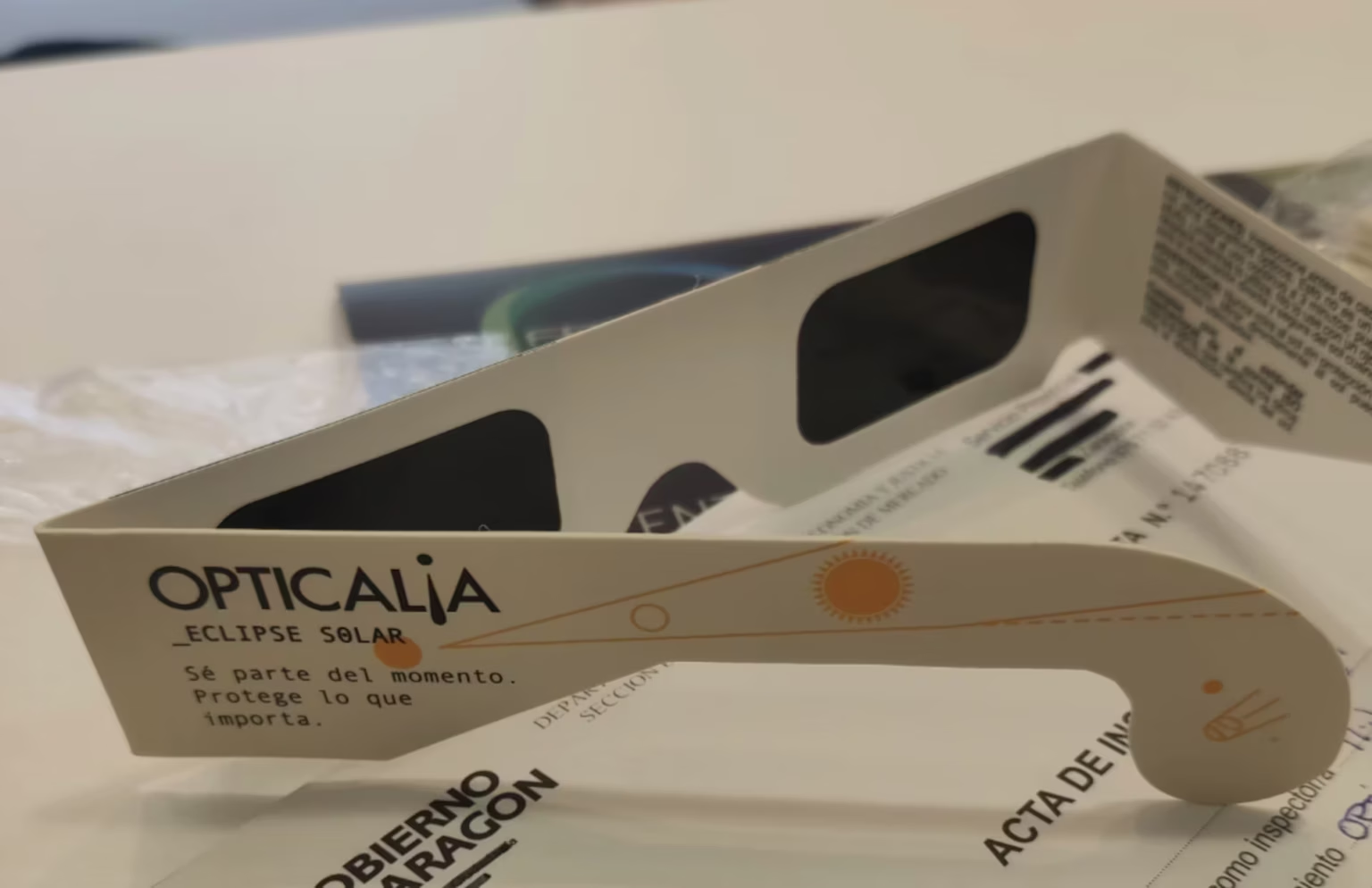
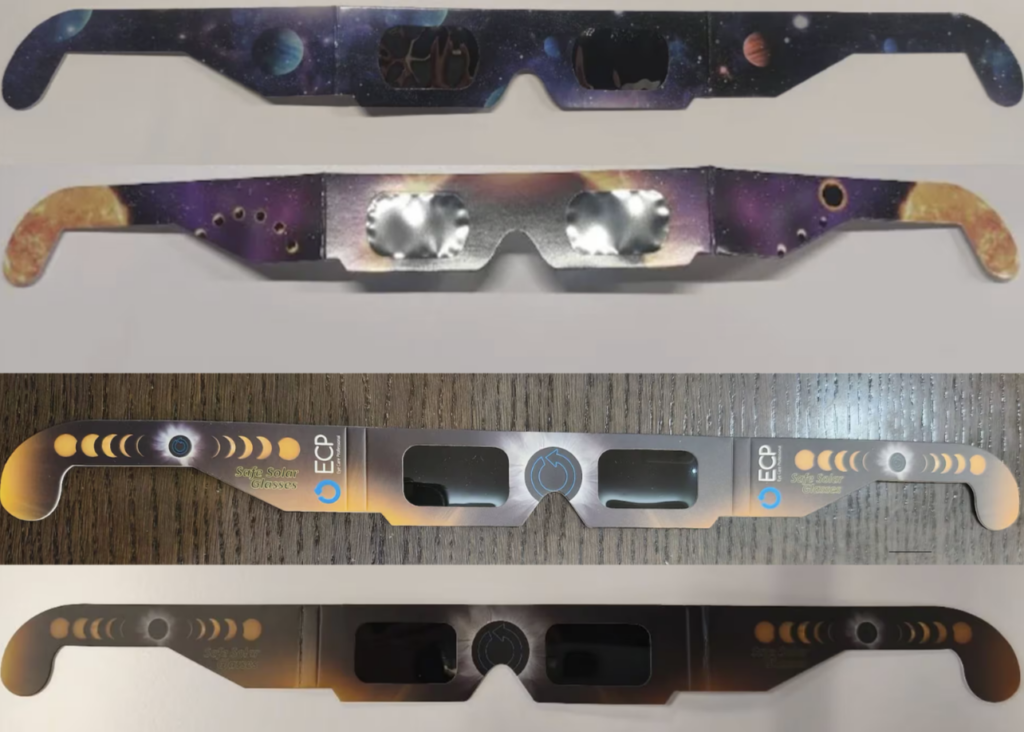
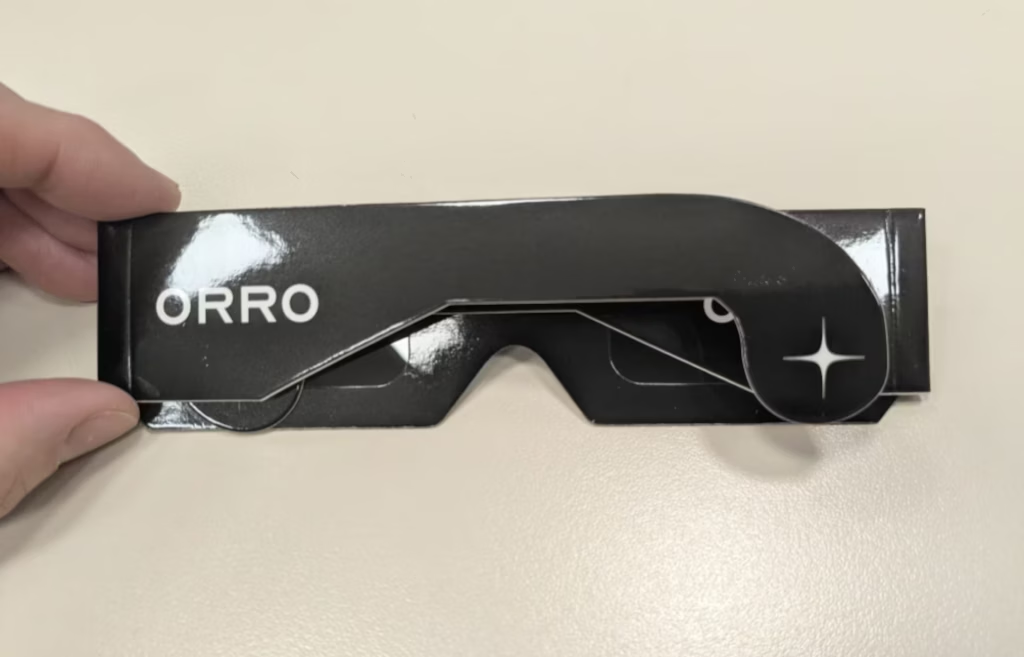
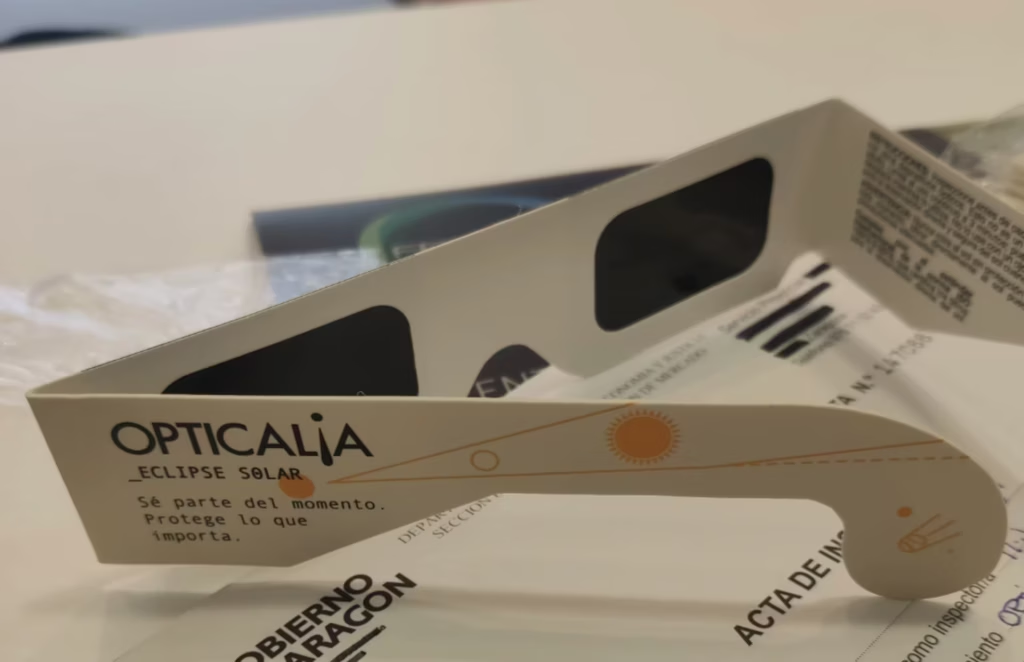
The affected products are sold under the brands Lionstar, ECP Eye Care Proffesional, Pelispan, Homanaje, Orro and Opticalia.
Consumer protection authorities in several Spanish regions have detected problems with the glasses just days before millions of people are expected to look skywards for the August 12 event.
The affected products have either been withdrawn, immobilised or prohibited from sale after irregularities were discovered with their filters.
The six eclipse glasses affected
The products identified by consumer authorities are:
- Lionstar model LSP1: Added to Madrid’s dangerous non-food products alert system on August 5. Authorities ordered its withdrawal and prohibited further sales.
- ECP Eye Care Proffesional: Added to the alert system by Castilla y Leon’s consumer authorities on August 3 and ordered off the market.
- Pelispan: Identified by Galicia’s consumer protection authority and added to the alert system on July 29.
- Homanaje model QW-50Z1: Also identified in Galicia and ordered off the market.
- Orro model O37-R, batch 2603-01: Manufactured in March 2026 and added to the alert system by La Rioja on July 30. Authorities ordered its withdrawal and prohibited its sale.
- Opticalia: Identified by consumer authorities in Aragon and added to the national alert network on July 31. Authorities ordered the affected glasses to be immobilised and withdrawn.
Anyone who has bought eclipse glasses bearing one of these affected brands or model numbers should therefore not use them to view Wednesday’s eclipse.
Why are they considered dangerous?
The problem concerns the filters used in the glasses.
According to the withdrawal notices, the products have a transmittance level below the established minimum, making their filters excessively dark.
While an overly dark filter might sound safer when looking towards the Sun, authorities warn it creates a different danger.
Users may struggle to locate the solar disc while wearing the glasses and consequently be tempted to adjust, tilt or temporarily remove them.
Doing so while looking towards the Sun can leave the eyes directly exposed to intense visible, infrared and ultraviolet radiation.
Direct observation of the Sun without appropriate protection can cause serious retinal damage, including thermal or chemical injury to cells in the fovea, the part of the retina responsible for sharp central vision.
For that reason, authorities decided the irregularities posed sufficient risk to remove the products from the market.
How to watch the eclipse safely
The warning is particularly important ahead of August 12, when Spain will experience one of its most eagerly anticipated astronomical events in years.
A total solar eclipse will be visible from a band crossing parts of the country, while elsewhere observers will see a very deep partial eclipse.
Anyone watching the event should use eclipse glasses specifically designed and certified for direct solar observation.
Ordinary sunglasses – even very dark ones – are not adequate protection for looking directly at the Sun.
Glasses should also be inspected before use and discarded if the filter is scratched, punctured, torn or otherwise damaged.
And crucially, people should never look directly at the Sun simply because it appears dimmer during the eclipse.
Until the Sun is completely covered during the brief total phase in locations experiencing totality, proper solar protection remains essential.