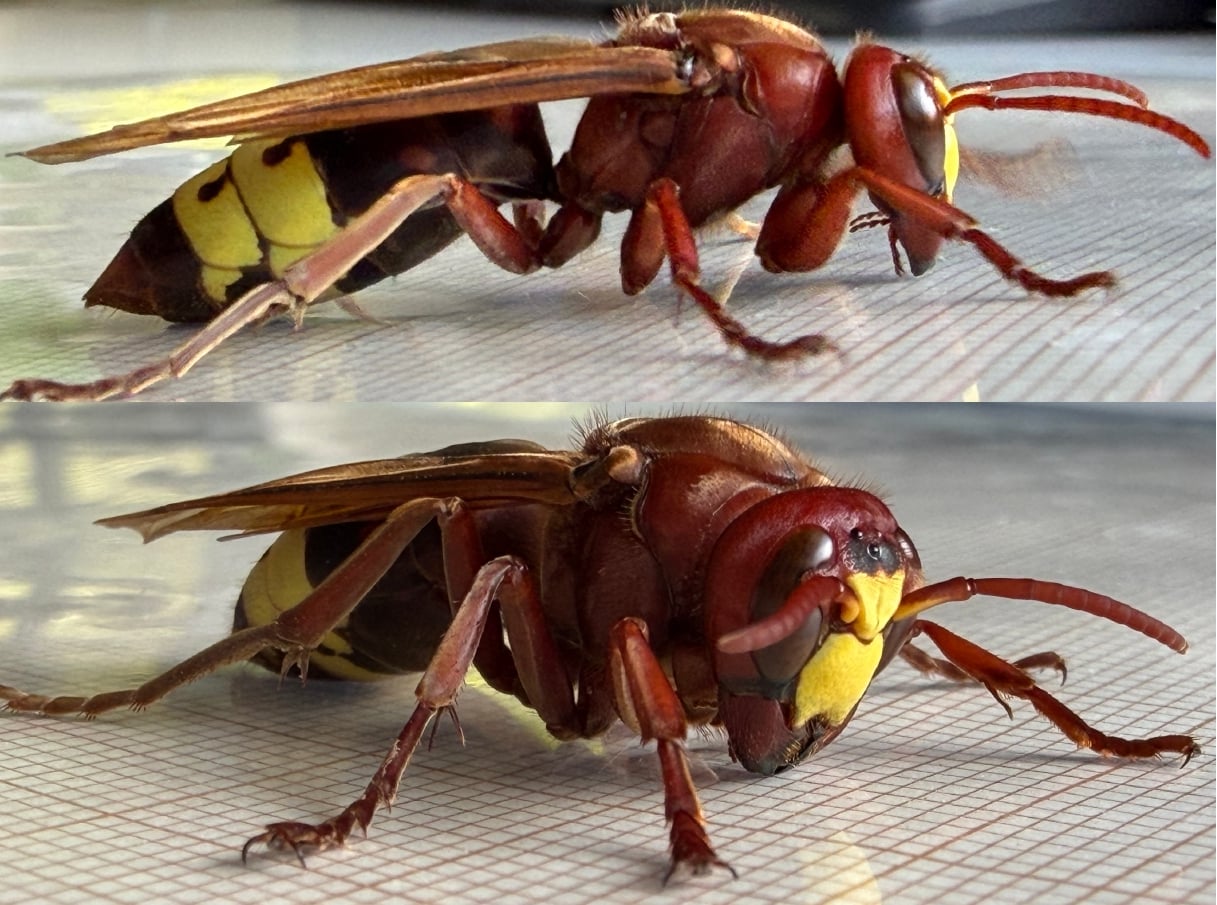

An invasive species of hornet has ‘conquered’ large parts of the Costa del Sol and could become virtually impossible to stop unless urgent action is taken, experts have warned.
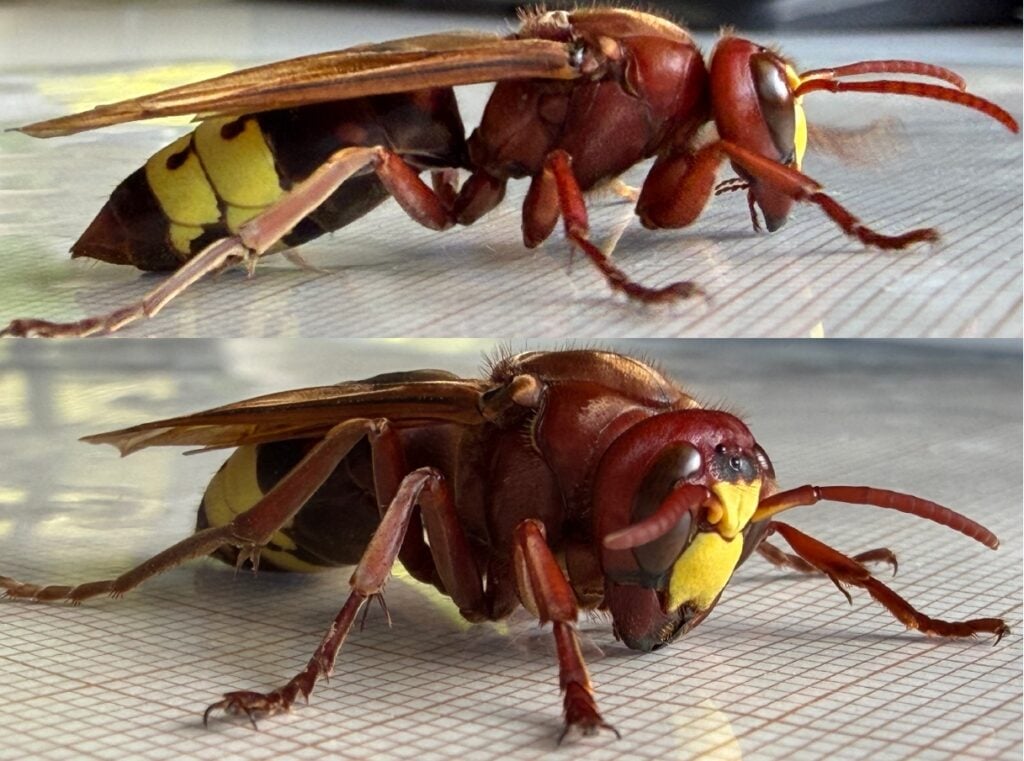
The oriental hornet (Vespa orientalis) has dramatically expanded its presence across Malaga province and the rest of Andalucia, with sightings said to have doubled or tripled over the past five years.
Entomologists are particularly concerned about the impact on native insects and bees, with one expert describing the invasive hornet as a ‘super predator’ capable of upsetting entire ecosystems.
Jose Manuel Moreno-Benitez, president of the Andalucian Entomological Society, warned that authorities had already lost valuable time.
‘More than a decade has passed since the alarm was first raised that this species was here and practically nothing has been done,’ he told local newspaper Malaga Hoy.
‘The impact could be tremendous because it is a super predator.’
Moreno-Benitez said native insects had evolved alongside each other to create a natural balance, but the arrival of the oriental hornet was disrupting it.
‘It is preying on all kinds of insects, some small vertebrates, such as small birds, chicks in nests and lizards,’ he warned.
‘It is killing everything it can to feed its larvae and, in the medium or long term, it could pose a significant danger to many species.’
‘All along the Malaga coast’
According to Moreno-Benítez, the hornet has already spread across virtually the entire Malaga coastline.
Populations have been recorded from Malaga city and Rincon de la Victoria westwards through Mijas, Marbella, Estepona, Manilva and Casares.
It has also pushed inland and is now present across much of Malaga province.
The species particularly thrives in coastal and urban environments, where the warm climate provides favourable conditions and it faces few natural predators.
‘It likes coastal and urban areas because the climate offers it many opportunities and, above all, because it has no competition and no predators,’ Moreno-Benitez said.
The species originates from parts of central and southwest Asia, North Africa and eastern Europe and is believed to have expanded into new areas largely through human transport, including international shipping and air freight.
Jairo Robla, an entomologist at the Doñana Biological Station (EBD-CSIC), said reports in Spain began appearing around 2019, initially in Valencia before spreading elsewhere.
In Andalucia, its strongest populations are currently concentrated in Malaga and Cadiz, particularly around coastal and peri-urban areas.
‘In 2019 they were only being recorded in Cadiz, Malaga and Jaen, and five years later they are also in Sevilla, Huelva, Almeria, Jaen, Toledo and Catalonia, according to observations,’ Robla said.
Threat to bees
One of the greatest concerns is the oriental hornet’s appetite for bees.
The predators hunt them around hives to provide protein for their larvae, creating another threat to pollinators which are already under pressure.
‘Many beekeepers are already complaining,’ Robla said.
He warned that scientists also need to establish the effect on wild bees and other pollinating insects as the hornet continues moving into natural habitats.
‘The impact is becoming progressively greater,’ he added.
Pest-control specialist Alvaro Garcia, from Lucanus, described the hornet as having ‘high harmful potential’.
He offered a particularly graphic description of what makes wasps such effective predators.
‘The difference between a bee and a wasp is in the mouth. The bee has a little tongue and the wasp has scissors,’ he said.
‘It has a weapon of mass destruction. It can cut it in two.’
Garcia said his work in the field suggested the situation had changed dramatically in just a few years.
‘The coast is completely overrun,’ he said.
He claimed populations had increased exponentially, with locations where his company once removed one, two or three nests per year now producing 15 or 20.
At one residential complex alone, he estimated that he had removed between 15 and 30 nests.
He has even been called to a 13th-floor apartment in central Malaga after hornets entered through the kitchen extractor hood.
Are they dangerous to people?
Despite their intimidating appearance and predatory behaviour, experts stress that oriental hornets do not normally seek out or attack humans.
They are primarily aggressive when their nests are disturbed.
Moreno-Benitez described them as considerably calmer than the Asian hornet (Vespa velutina), although their sting can still be painful.
People who discover a nest should therefore keep their distance rather than attempting to remove it themselves.
Around 90% of nests can be difficult to see, according to García, because the insects frequently establish colonies inside cavities such as trees, caves, garages and other concealed spaces.
Adult hornets primarily consume sugars from ripe fruit including figs and grapes, while protein from insects and other prey is taken back to feed their developing larvae.
‘They are species which are doing very well in these areas right now and, if measures aren’t taken, the problems multiply,’ Robla warned.
He said invasive species can be extraordinarily difficult to eradicate once established and warned the hornets are effective competitors capable of displacing native species.
Of particular concern is the combined pressure on wild bee populations which are already threatened by other environmental factors.
Experts are calling for the Junta de Andalucia and other authorities to invest in control programmes and launch public awareness campaigns teaching residents how to identify and report the invasive insects.
Read more Andalucia news at the Spanish Eye.