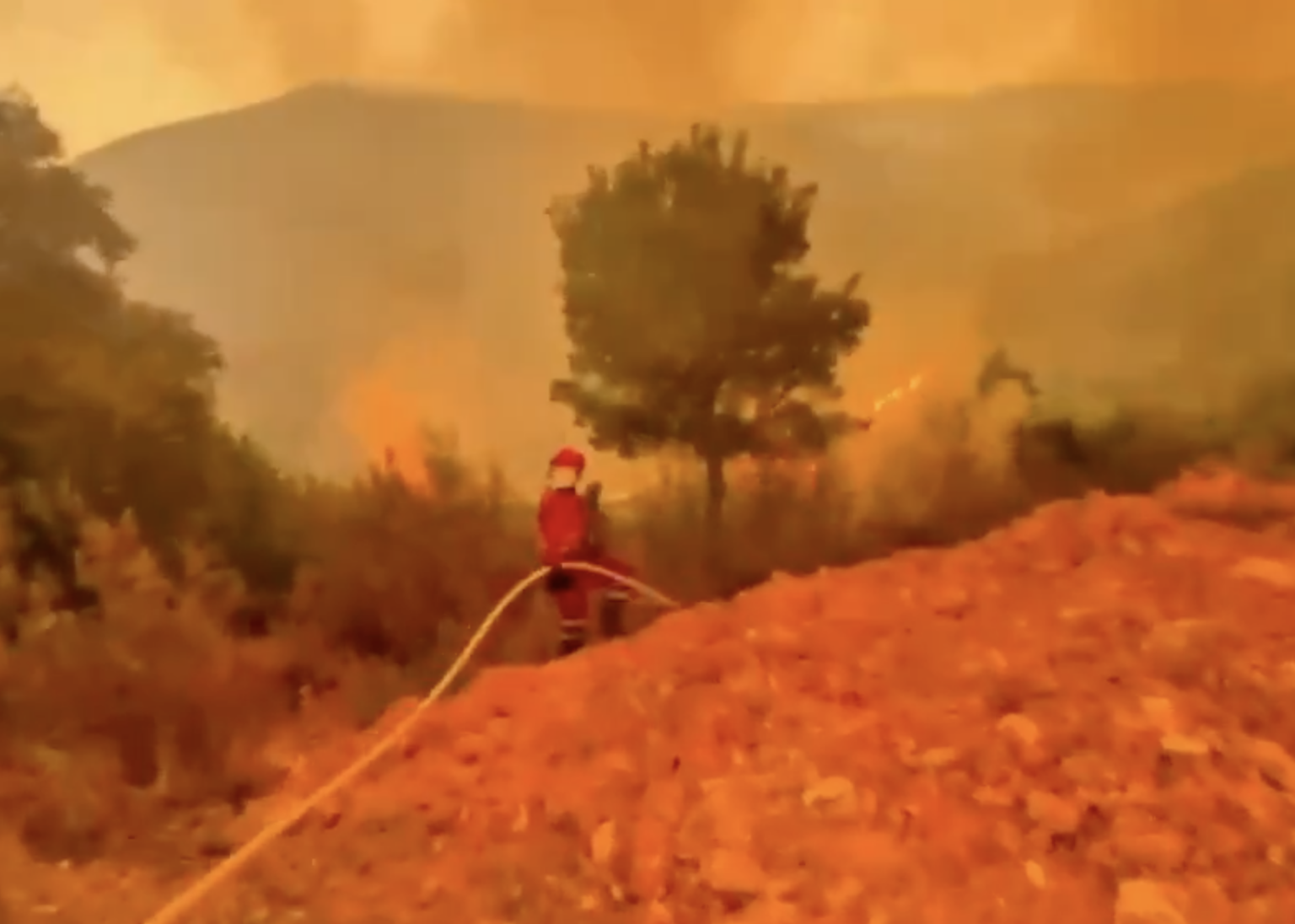

The raging Huelva wildfire has now affected 20,000 hectares, forcing around 800 people from their homes as the flames spread towards Sevilla province.
The Niebla fire continued to expand at an alarming rate on Monday, filling communities dozens of kilometres away with smoke and ash.
Residents described the sky taking on an eerie sepia colour, while the smell of smoke became increasingly intense as the blaze advanced.
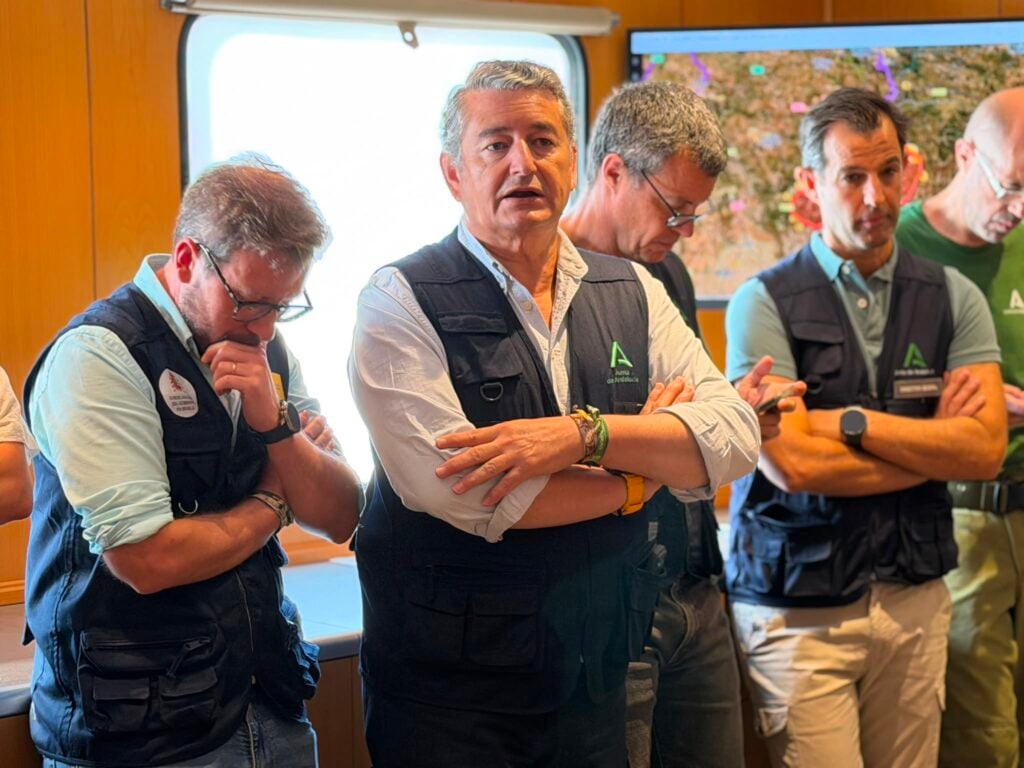
Andalucia’s emergency chief warned that the blaze was now ‘beyond extinction capacity’ due to its extreme and unpredictable behaviour.
Antonio Sanz stressed that this was not due to a lack of firefighting resources, but the extraordinary complexity and danger of the blaze.
He warned that bringing the fire under control would be a ‘long-distance race with obstacles’ lasting several days.
Conditions deteriorated rapidly on Monday as south-westerly winds, difficult terrain and powerful convective activity created huge pyrocumulus clouds and secondary fires several kilometres away.
The conditions are also severely restricting aircraft. According to Sanz, the intense heat and turbulence can cause some of the water dropped from the air to evaporate before reaching the ground.
With secondary fires capable of rapidly joining the main front and potentially trapping firefighting crews, Sanz said the ‘absolute priority’ was protecting both residents and emergency personnel.
Authorities are continuing to assess further preventative evacuations in the north and north-east of the fire, including around Berrocal, Marigenta and El Pozuelo.
Among the latest communities to be evacuated are El Madroño and its surrounding hamlets in Sevilla, including El Alamo, where the entire population was ordered to leave.
The evacuation comes exactly 22 years after the same area was devastated by the enormous Minas de Riotinto wildfire of 2004, which burned almost 35,000 hectares.
For residents who lived through that disaster, the latest scenes have brought back painful memories.
‘People are terrified that what happened in 2004 will happen again,’ El Madroño mayor Antonio Lopez said.
Residents of El Alamo said smoke from the Niebla fire had been reaching their community since Friday, but conditions deteriorated significantly on Sunday.
They said ash began to fill the sky and that it ‘became difficult to breathe’.
By around midday on Monday, Guardia Civil officers were going door-to-door ordering residents to evacuate.
Some evacuees were able to move into second homes or stay elsewhere, but others were left uncertain about where they would spend the night.
Nearby El Castillo de las Guardas opened a municipal centre to receive 55 evacuees, where volunteers prepared rice and meat for lunch and dinner.
Beds were also installed at the CEIP Peñaluenga school with help from the Red Cross.
Ultimately, 23 evacuees spent the night at the school and another 11 were accommodated in a hotel.
The provincial government of Sevilla has pledged to cover accommodation costs where necessary.
The greatest fear among residents is a repeat of the catastrophic wildfire that tore through the same area in 2004.
That blaze began near Minas de Riotinto in Huelva and eventually devastated almost 35,000 hectares, becoming one of the largest forest fires to hit Andalucia this century.
El Madroño was particularly badly affected.
More than 1,000 people were evacuated during that disaster, with Berrocal, Aznalcollar and El Madroño among the worst-hit areas.
Residents say parts of the landscape have still not fully recovered more than two decades later.
Read more Andalucia news at the Spanish Eye.