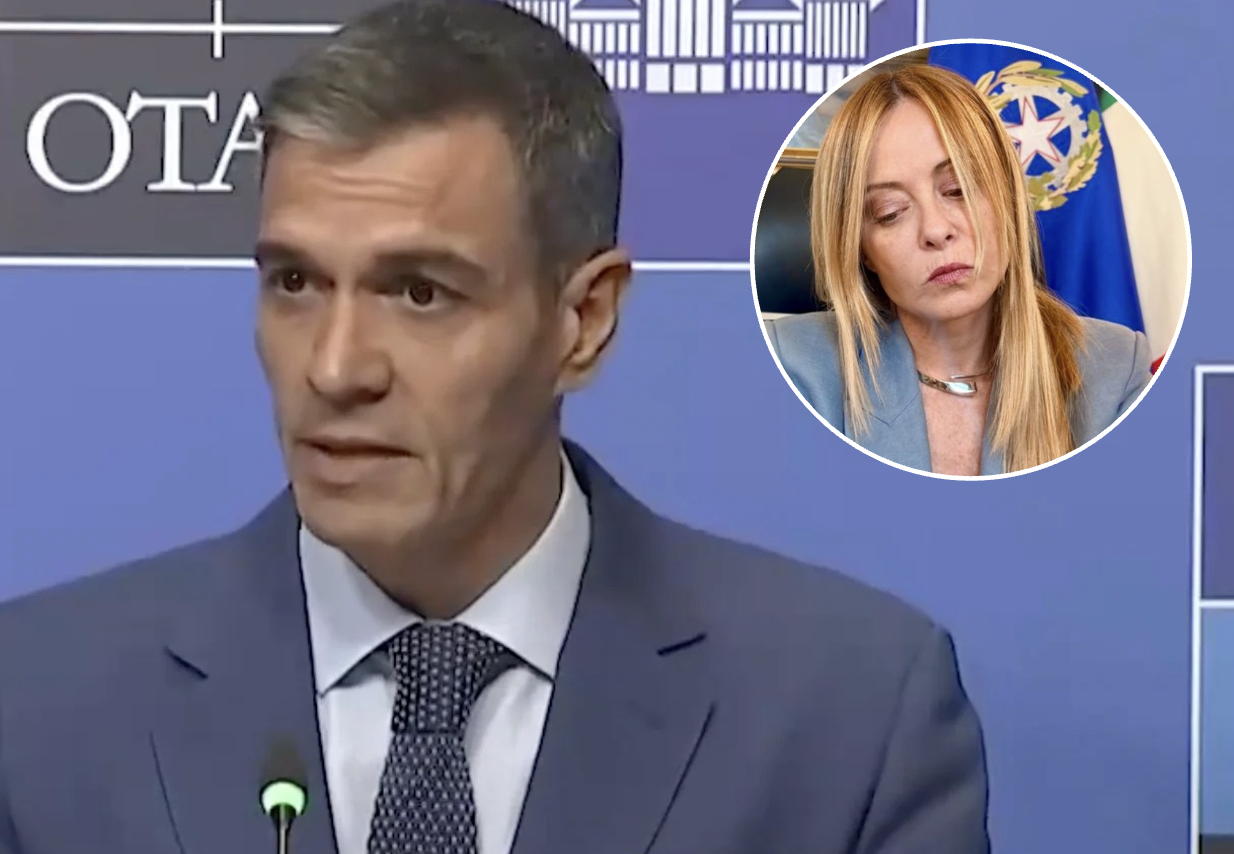

Spain-Italy relations have reached a new low after Pedro Sanchez announced border checks on all travellers arriving from his country’s Mediterranean neighbour.
It follows Rome’s decision to suspend the Schengen Area (free movement) with Spain as a response the Ceuta migrant crisis.
The Spanish government said the temporary controls will come into force at midnight on Saturday, August 8, and remain in place until September 7, unless the situation changes.
Italy’s right-wing premier Giorgia Meloni led the charge against Spain after tens of thousands of migrants stormed the border of Ceuta last week.
Despite most migrants having been returned, and the fact that Ceuta shares no land border with Europe, Meloni said the surge represented a ‘serious threat’ to her country’s national security.
Critics accused Meloni, who will face a general election next year, of political posturing.
What will change?
The new checks in Spain will apply to travellers arriving from Italy through Spanish airports and ports.
According to the government, officials will carry out random identity checks, verifying passengers’ nationality and travel documents.
EU citizens may be asked to present a valid passport or national identity document, while travellers from non-EU countries may also be required to show visas or residence permits.
The government described the move as a response to the ‘persistent irregular migration pressure’ currently affecting Italy.
It comes after Pedro Sanchez pointed out that far more irregular migrants have arrived on Italy’s shores over the past five years compared to Spain.
Escalating dispute
The announcement comes after Spain gave Italy a three-day deadline to lift the border controls it imposed on Spanish travellers following the migrant crisis in Ceuta more than a week ago.
Madrid warned that if Rome failed to reverse its decision by August 9, Spain would be forced to adopt ‘proportionate measures to protect the interests and dignity of its citizens’.
However, the Italian government rejected the ultimatum, insisting it ‘does not accept ultimatums or impositions’.
Rome has said it will not reconsider its suspension of Spain from the Schengen free-travel area until August 15, citing concerns over calls circulating on social media for another mass attempt by migrants to cross from Morocco into Ceuta on that date.
Spain’s new controls are being presented as a temporary reciprocal measure while the dispute between the two countries continues.