
Pedro Sanchez has defied calls to resign or call an early election, insisting there is no ‘generalised corruption’ in Spain.
His comments come amid a growing number of investigations and convictions involving figures linked to his ruling party, the PSOE.
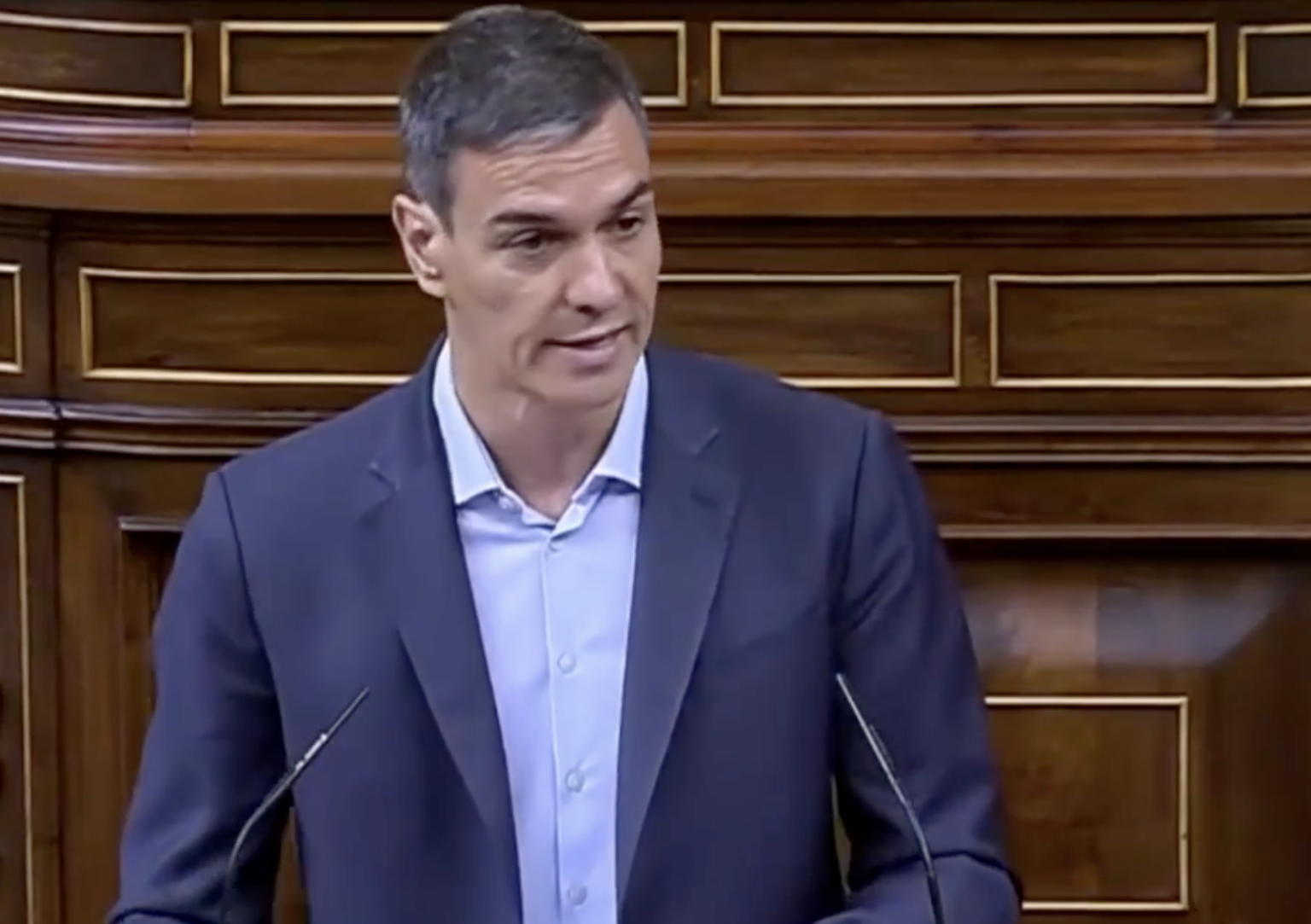
Speaking before Congress on Tuesday, the prime minister acknowledged public frustration over the succession of scandals surrounding his party.
However he argued that political opponents and sections of the media were deliberately trying to create a false impression that corruption is widespread throughout Spanish politics.
‘Not all parties and not all politicians are the same,’ Sanchez told MPs, insisting his government remains best placed to tackle corruption.
‘Under this scenario, the question is not whether we should continue, but how could we not continue?’ he added.
The speech came after a turbulent month for the Socialist government, which has been rocked by court rulings, investigations and allegations involving senior current and former PSOE figures.
Sanchez briefly addressed the recent Supreme Court ruling against former Transport Minister and former PSOE organisation secretary Jose Luis Abalos, who was sentenced to 24 years in prison in the so-called mask procurement scandal.
The PM said he respected the ruling and insisted there must be ‘no space for impunity’ for corrupt individuals.
However, he strongly denied allegations that the PSOE had been financed illegally and claimed he had never known about, nor would have tolerated, any of the alleged practices currently under investigation.
Sanchez also defended his handling of corruption allegations within his party, arguing that the PSOE had acted quickly when problems emerged.
‘When these facts came to light, we didn’t step aside, we stepped forward,’ he said. ‘I apologised. We expelled those under investigation.’
The prime minister used part of his speech to announce that his proposed Public Integrity Law would be debated in Congress before the summer recess.
The legislation was first unveiled following the investigation into former PSOE figure Santos Cerdan and is intended to strengthen anti-corruption measures.
Sanchez also hit out at investigations involving his wife, Begoña Gomez, and his brother, describing them as part of a campaign of ‘harassment and destruction’.
He accused what he called far-right organisations and hostile media outlets of promoting false stories that later become the basis for legal complaints.
‘I am not going to use this podium to defend my family’s innocence,’ he said. ‘They will do that themselves in court.’
The prime minister reserved some of his strongest criticism for the opposition.
He accused the PP and Vox of hypocrisy and argued that the answer to corruption scandals was not a government led by the right.
‘The solution is not on the right,’ Sanchez said, claiming a progressive government was better equipped to tackle corruption than his political rivals.
His comments triggered a furious response from opposition leader Alberto Nuñez Feijoo, who accused Sanchez of being the ‘link connecting all the corruption networks’ currently under investigation.
Despite mounting pressure from opposition parties and some coalition allies, Sanchez made clear he has no intention of stepping down.
‘We will continue governing,’ he said. ‘We will clean up whatever needs to be cleaned up, and we will keep governing for those who need their government most.’