
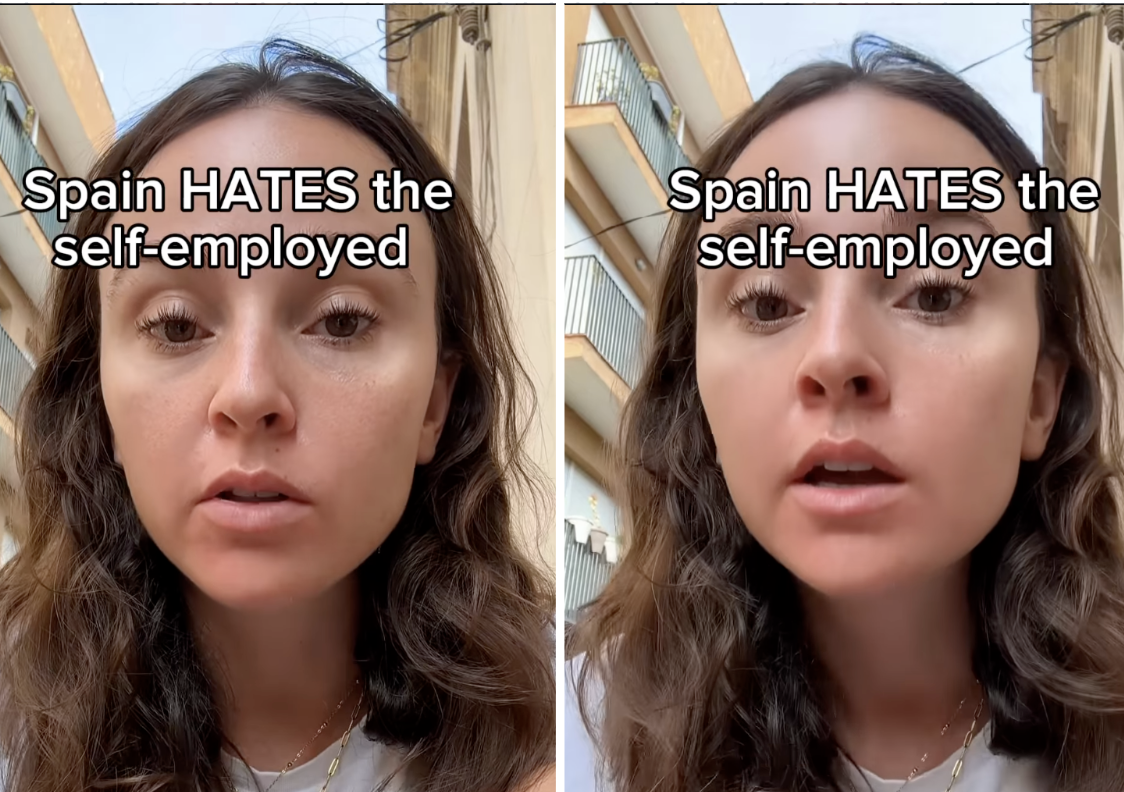

A Danish-Spanish resident has announced she is leaving Spain after becoming fed-up with trying to survive as a freelancer in the country.
The young woman, named Michelle, took to her Instagram page to vent her frustration at the difficulties of being a so-called autonomo.
She explained that she is a freelancer in southern Spain and currently pays around €90 per month in Social Security contributions to operate as self-employed.
However, that is a heavily reduced introductory rate available to people starting out as autonomos.
New autonomos can benefit from a reduced state contribution during their first 12 months, which can continue for another year in certain circumstances if their net earnings remain below the relevant minimum wage threshold.
In Andalucia, qualifying new autonomos can also benefit from the regional government’s Cuota Cero scheme, which effectively reimburses their reduced Social Security contributions.
But once the introductory period comes to an end, workers enter Spain’s normal contribution system – and Michelle fears her monthly bill will rise dramatically.
‘It’s almost €300 per month, plus the taxes that you have to pay, and the taxes for autonomos are really freaking high,’ she fumed.
0So, I just can’t do this anymore. How am I supposed to put away money monthly if I’m losing nearly a grand of what I make just because I’m a freelancer?
‘I’m not going to be able to buy a house, or even a car, or anything… I’m not really able to properly invest in a real adult future.
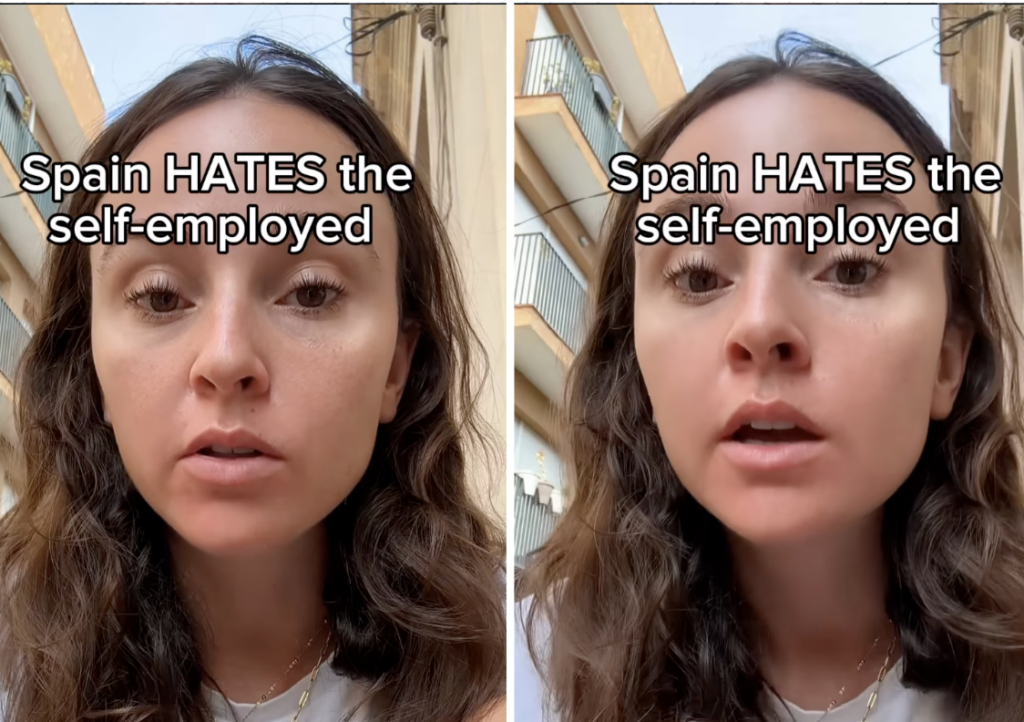
‘I don’t wanna do this anymore, and I’ve decided to leave Spain.’
Spain no longer charges every autonomo the same standard monthly contribution.
Since 2023, the country has been transitioning to an income-based system under which Social Security contributions are linked to an autonomo’s net earnings.
There are 15 income brackets in 2026, ranging from those earning €670 or less in net income per month to those earning more than €6,000.
Autonomo contributions fund the Social Security system and provide protection including pension entitlement, temporary incapacity, professional contingencies and unemployment benefits.
Nevertheless, unlike an employee whose monthly Social Security contributions are partly borne by their employer, an autonomo is responsible for paying their own while also meeting their tax obligations.
‘I can’t do this anymore’
Michelle, who is half Danish and half Spanish, said she is planning to leave the country in January and head to the Far East, most likely Thailand.
In a follow-up video, she explained that part of the anger behind her original post came after her latest €90 Social Security payment failed.
She claimed she was then left facing a significantly larger bill rather than simply having the €90 payment attempted again the following day.
Michelle said she faced being charged an amount closer to what her contribution would have been without the reduced introductory rate – around €250 – as well as additional charges.
She branded the system ‘ridiculous’, arguing that autonomos should be given a short grace period to rectify a failed payment before facing potentially significant extra costs.
Growing frustration among Spain’s autonomos
Michelle’s complaints come amid wider criticism of the administrative and financial burden faced by Spain’s more than 3.4 million self-employed workers.
The National Federation of Self-Employed Workers’ Associations (ATA) recently estimated that an autonomo spends an average of 226 hours every year dealing solely with administrative procedures and complying with tax, employment and Social Security obligations.
That is more than four hours every week for a group whose average working week is already around 47 hours.
ATA estimates the lost time carries an economic cost of around €3,390 per autónomo each year, or some €11 billion across Spain’s entire self-employed workforce.






Thanks yes this is a common feeling among us the autonomos