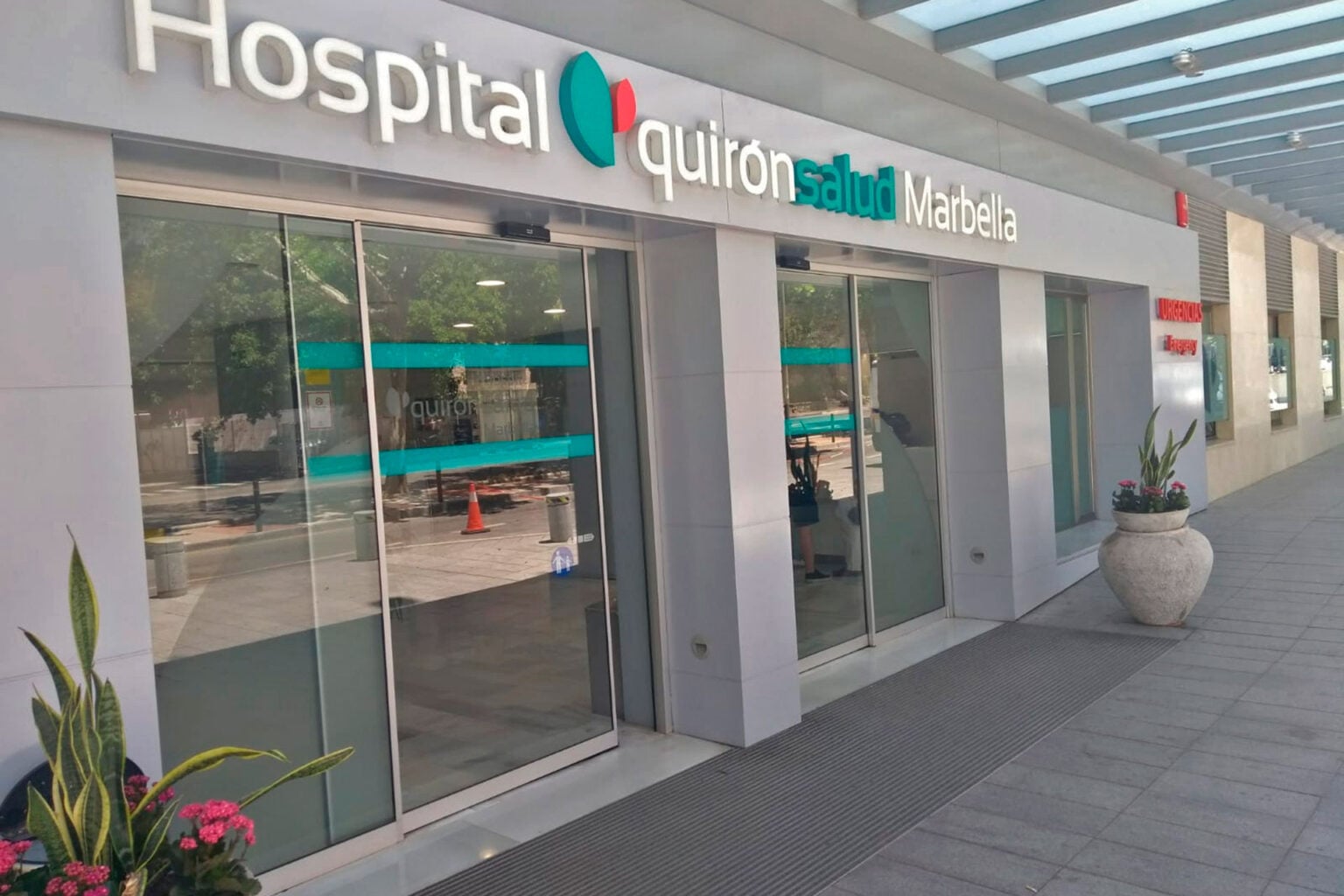

Patients at a Marbella hospital are set to benefit from faster and more accurate cancer diagnoses after the installation of a new high-tech MRI scanner.
The upgrade at Hospital Quironsalud Marbella will help doctors detect prostate cancer at earlier stages while also reducing waiting times for crucial diagnostic tests.
The hospital has added a second high-field MRI scanner featuring a wider tunnel design, allowing specialists to carry out more advanced imaging studies and speed up access to examinations, particularly for cancer patients where early diagnosis can be critical.
One of the key uses of the new equipment will be multiparametric MRI, a sophisticated imaging technique that has become one of the most effective tools available for detecting and assessing prostate cancer.
The scan combines several types of imaging sequences to provide both anatomical and functional information about the prostate gland.
This allows doctors to identify suspicious lesions with greater precision and determine whether they are likely to be clinically significant.
Dr Ivan Artero, head of Diagnostic Imaging at the hospital, said the technology marks a major advance in prostate cancer diagnosis.
‘This technique allows us to study the prostate gland with a very high level of precision and identify potential lesions more reliably than conventional diagnostic methods,’ he explained.
The technology is also expected to improve the accuracy of targeted biopsies by helping doctors pinpoint suspicious areas more precisely, increasing the chances of obtaining useful tissue samples and selecting the most appropriate treatment.
The scan is typically recommended for men with elevated PSA levels, suspected prostate cancer, abnormal findings during physical examinations or patients requiring further assessment before undergoing a biopsy.
Beyond prostate cancer detection, the new MRI scanner will significantly expand the hospital’s diagnostic capabilities.
The machine can be used across a wide range of specialties, including neurological disorders, musculoskeletal injuries, abdominal and pelvic conditions, breast imaging, vascular studies and certain cardiac examinations.
Unlike many other diagnostic techniques, MRI scanning does not use ionising radiation.
The new device also incorporates advanced image acquisition technology that produces high-resolution images in shorter times, improving both efficiency and patient comfort.
Its wider tunnel design is expected to benefit patients who experience anxiety or discomfort in confined spaces, while also helping clinicians obtain clearer images and more accurate diagnoses.
Hospital officials say the investment reflects their continued commitment to cutting-edge medical technology and precision diagnostics on the Costa del Sol.
Read more Andalucia news at the Spanish Eye.