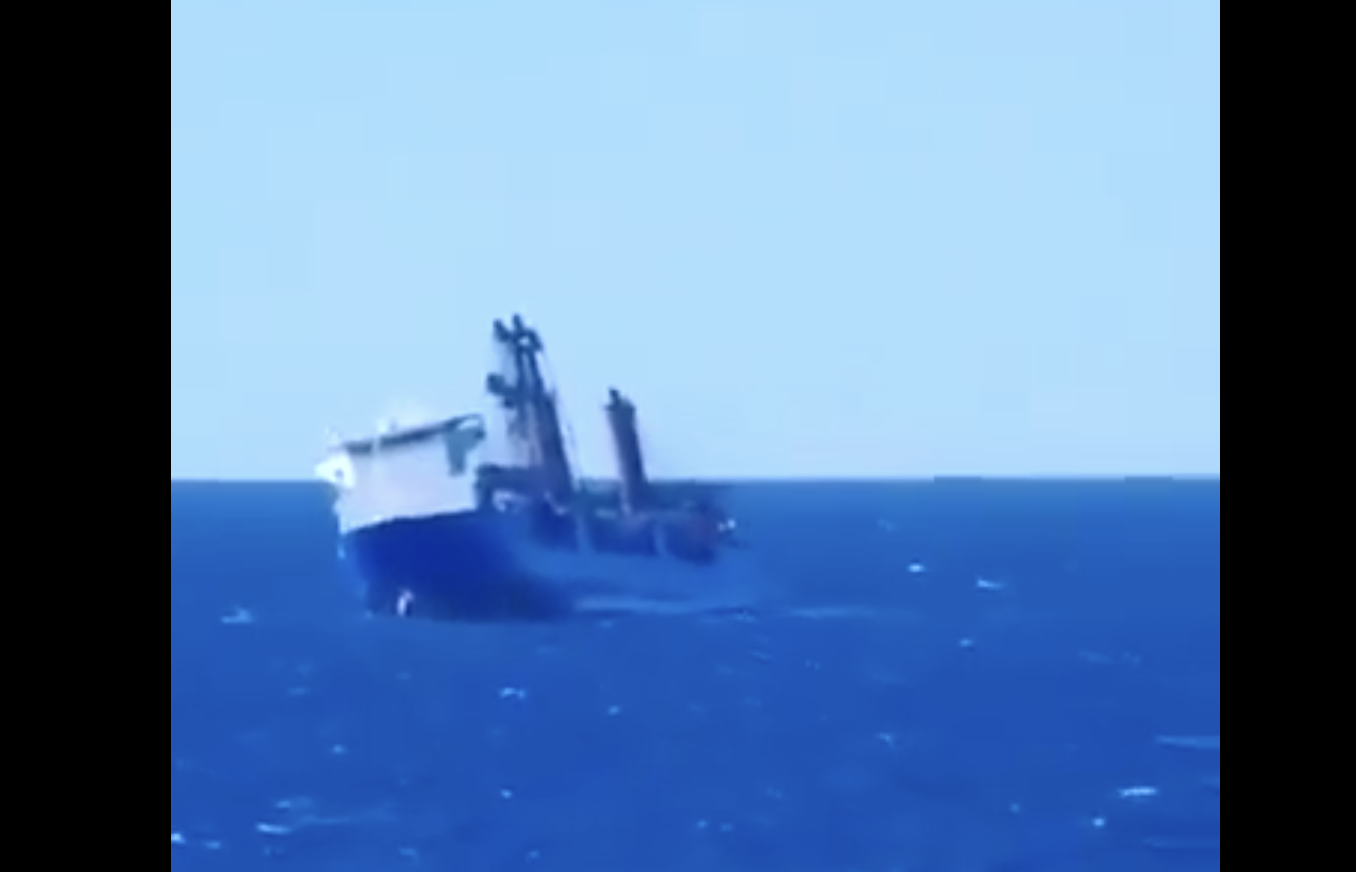

Spain’s Navy has dismissed speculation that a Russian cargo ship carrying components linked to submarine nuclear reactors was sunk by a torpedo attack near the Spanish coast.
Military sources told Spanish media that claims surrounding the sinking of the Ursa Major in waters near Murcia in December 2024 are ‘99% uncertain speculation’, while also ruling out theories involving underwater drones or limpet mines.
The Russian vessel sank in the Mediterranean on the night of December 23, around 62 miles from Cartagena and 39 miles from the Algerian coast.
According to a CNN investigation, the Ursa Major had departed from Saint Petersburg bound for Novosibirsk carrying cargo that included parts linked to submarine nuclear reactors.
A senior Spanish naval officer reportedly said the ship ‘did not suddenly appear in waters of interest to Spain’ and had instead been monitored ‘mile by mile’ by NATO navies since leaving Russia.
Spanish military officials also rejected reports suggesting Portuguese forces first detected the ship, insisting it was under constant surveillance by Spain’s Maritime Surveillance Operations Centre (COVAM), headquartered in Cartagena.
Theories that the vessel was struck by a torpedo have also been strongly challenged by Spanish submarine warfare experts.
‘Torpedoes no longer directly hit ships,’ one veteran naval officer explained to La Opinion de Murcia.
‘They detonate beneath the keel, usually using magnetic influence, and split the target in two.’
Another admiral added that the damage described in Russian reports – including a hole with inward-bent edges – did not match the effects typically caused by modern torpedoes.
Witnesses arriving at the scene reportedly observed the vessel heavily listing with water entering through the stern, rather than signs of a major external blast.
Spanish naval sources instead continue to back a theory that an explosion occurred inside the engine room, potentially linked to something being transported onboard.
Officials also dismissed suggestions of an underwater drone strike, arguing such devices could not realistically be launched 60 miles offshore without a nearby support vessel.
Likewise, they rejected the possibility of a limpet mine being attached to the hull, saying it would have been ‘impossible’ to place one on a ship travelling at 16 or 17 knots.
According to reports, seven official investigations and witness statements have helped shape Spain’s understanding of the disaster.
These include testimony from rescue helicopter crews, Salvamento Marítimo officials, Swedish merchant sailors who rescued survivors, Guardia Civil officers and the ship’s captain himself.
Spanish authorities say survivors repeatedly referred to an explosion in the engine room after being rescued.
The Ursa Major was reportedly carrying 129 shipping containers, two Liebherr port cranes and what were initially described as ‘well covers’ – later allegedly identified by the captain as components linked to nuclear submarine reactors.
Following the sinking, the Russian vessel Yantar – officially classified as a scientific research ship but widely suspected by NATO of monitoring underwater infrastructure – reportedly spent several days near the wreck site.
The Yantar is capable of deploying deep-sea submersibles to depths of up to 6,000 metres, while the Ursa Major is believed to lie roughly 2,500 metres below the surface.
Spanish military sources described both the Ursa Major and the Yantar as part of Russia’s wider ‘shadow fleet’ operations, with the latter long suspected of mapping Western undersea communication cables and infrastructure.