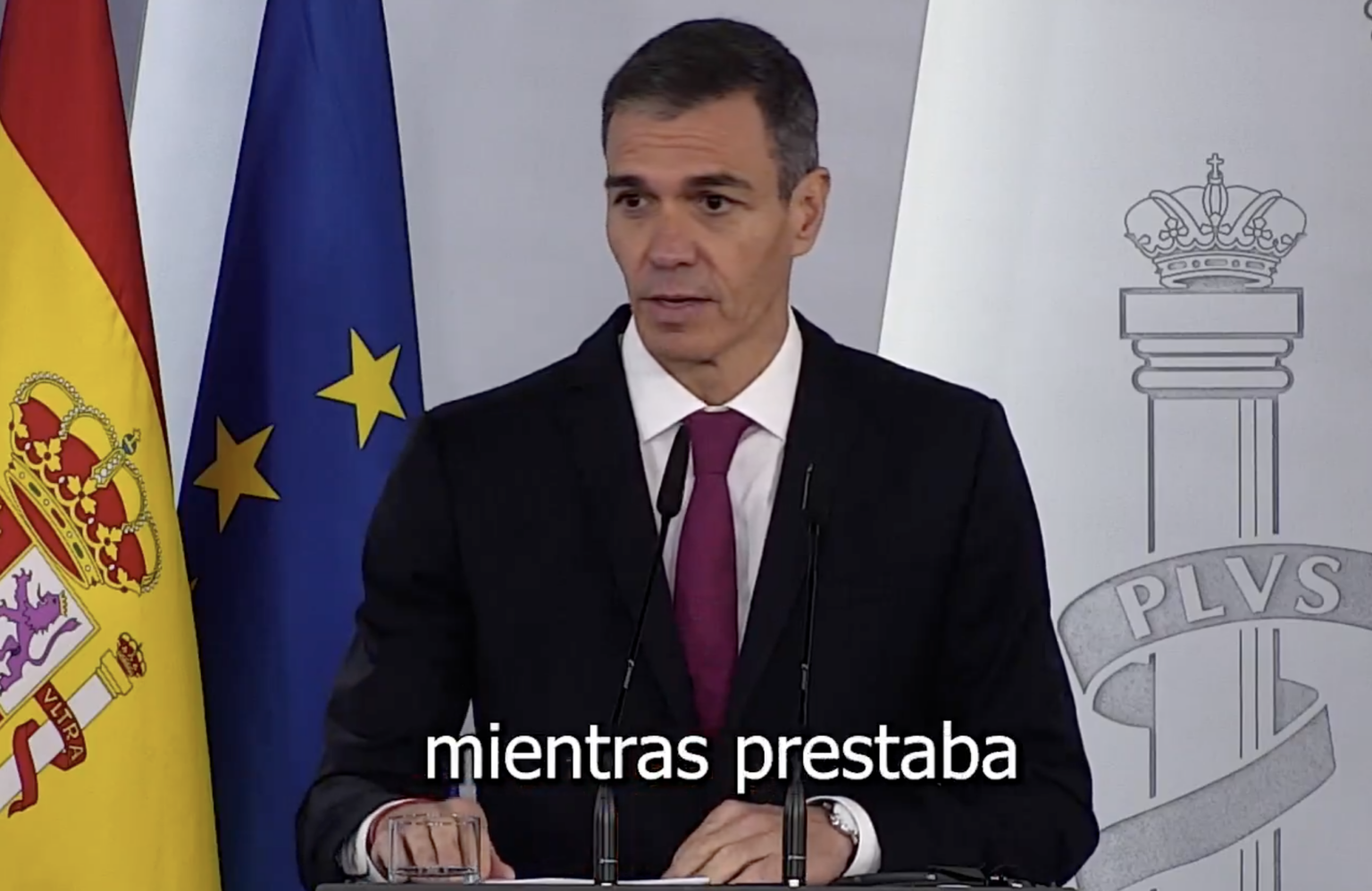

Pedro Sanchez and WHO chief Tedros Adhanom Ghebreyesus have hailed Spain’s handling of the MV Hondius hantavirus emergency as a ‘success’.
It follows the completion of the massive evacuation and repatriation operation in the waters off Tenerife.
During a joint press conference on Tuesday, both leaders praised the international coordination effort that saw passengers from the infected cruise ship evacuated, quarantined and repatriated across multiple countries.
Sanchez defended Spain’s decision to accept the vessel after several days of political controversy and public anxiety surrounding the outbreak.
He said Spain acted for three reasons: legal responsibility under international health regulations, a moral obligation towards affected passengers and a commitment to international cooperation.
‘This world does not need more selfishness or more fear,’ Sanchez said.
‘What it needs are countries willing to step forward in solidarity.’
The Spanish leader also criticised those who had questioned why Spain should assume responsibility for the operation rather than countries such as Cape Verde.
‘The correct question was not why Spain,’ Sanchez said.
‘It was why would we not protect our citizens on that cruise ship and why would we not help people in need if it was within our power to do so.’
Although he avoided directly attacking Canary Islands president Fernando Clavijo – who publicly opposed the ship docking shortly before its arrival – Sanchez criticised those who ‘stood aside in silence’.
The prime minister revealed Spain received a direct request for help from the WHO, the European Union and more than 23 governments on May 5 after the outbreak escalated aboard the ship in the Atlantic.
Spain agreed to host the operation that same day.
Tedros meanwhile lavished praise on Spain’s response, singling out Health Minister Monica Garcia for special thanks.
The WHO chief confirmed the organisation initially approached Cape Verde due to its proximity to the vessel, but authorities quickly concluded the country lacked the logistical and medical capacity to handle a full-scale multinational evacuation.
Tedros said he personally wrote to Sanchez requesting Spain’s assistance and received an ‘immediate’ positive response.
‘In these difficult times, the world needs this kind of humanity and compassion,’ Tedros said.
‘That is exactly what Spain has shown.’
He confirmed all passengers who disembarked from the ship, including some who had left earlier at other ports, have now been located and are being monitored by health authorities in their respective countries.
According to the WHO, quarantine periods should now last 42 days from May 10, rather than May 6 as Spanish authorities had previously indicated.
Tedros also warned that additional positive cases are expected due to the virus’s long incubation period.
There are currently 11 confirmed infections among passengers, including one Spanish national being monitored at Hospital Gomez Ulla in Madrid.
However, health authorities continue stressing the risk to the general public remains low and say there is currently no evidence the virus spread beyond the ship itself.